

The Best Way To Prep Your Hydrangeas For Winter For Stunning Blooms Next Summer
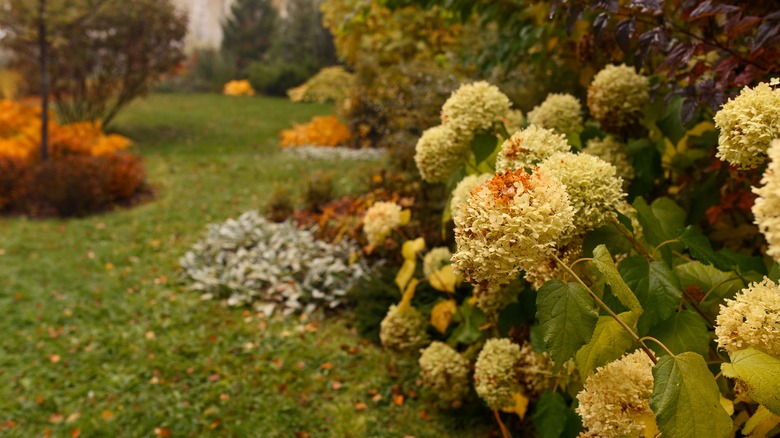
Hydrangeas (Hydrangea spp.) can be the stars of your garden if you treat them well, with their massive summer blooms in bright colors being a sure attraction. However, those summer blooms can face serious challenges in the winter, which can cause significant damage to your hydrangeas. Frequent issues your hydrangeas may encounter over the winter include winter burn, root rot, and a variety of fungal diseases. As such, knowing how to care for hydrangeas in the buildup to the winter months is crucial. The best way to prep your hydrangeas is to water, mulch, and prune them before the first frost of the year. In cold climates, wrap more fragile species of hydrangea.
If you are wondering how often you should water your hydrangeas, know that winter is pretty simple for watering. All hydrangeas in all zones should receive a deep watering before the first frost, and, in zones 3-7, that should be your last watering for the winter. In zones 7-11, you should water them deeply, but infrequently, throughout the winter. By watering deeply before the first frost, you allow your hydrangeas to retain moisture throughout the season. Once the ground freezes, watering becomes much less effective.
Potentially, the most important thing to do for the winter is mulching after watering. By mulching, you create insulation for your hydrangeas and help them better retain moisture. You should wait until after the ground freezes to begin mulching, as you don't want to create a home for rodents. When you mulch, you should apply about three inches over the roots, just not pressing against the bark. You can use bark, pine straw, or another organic material.
Pruning and wrapping your hydrangeas for winter
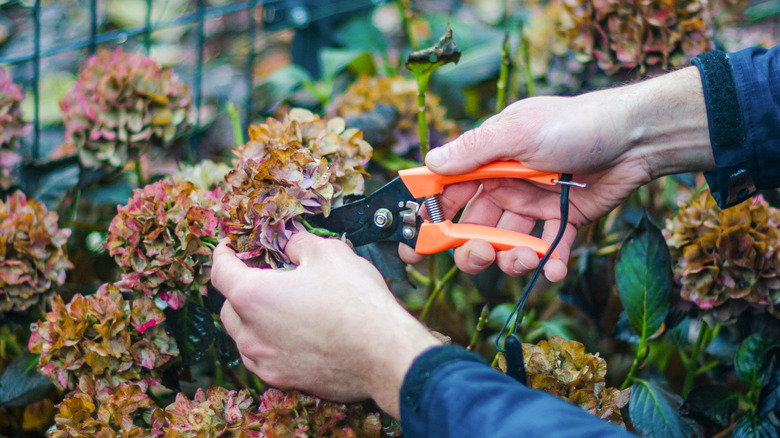
Depending on the type of hydrangea in your garden, you may need to prune them in the fall. If you have a hydrangea that blooms on new wood, such as Smooth Hydrangeas (Hydrangea arborescens) or Panicle Hydrangeas (Hydrangea paniculata), you actually don't need to prune until late winter or early spring. If your hydrangeas bloom on old wood, like the Bigleaf Hydrangea (Hydrangea macrophylla), Mountain Hydrangea (Hydrangea serrata), or Oakleaf Hydrangea (Hydrangea quercifolia), you should prune lightly before the frost hits. Simply remove any leftover dead flower heads, buds, and all dead or damaged branches. You should make your cuts right above new buds and at 45-degree angles. This will strengthen your hydrangea and encourage better blooms once blooming season starts.
In all zones 5 and below, and when you have more sensitive plants such as Bigleaf Hydrangeas and Mountain Hydrangeas, you should also wrap them. To wrap your hydrangeas, you can start by making your own cage of chicken wire around your hydrangea. This cage should not be too close to the plant, as you risk causing mildew by not allowing enough airflow. After you have made the cage, you can fill it with straw for extra insulation. Then, cover the cage in burlap, and your hydrangeas should be all set for the cold winter months. Once you reach the growing season, you can use the orange peel hack that'll help your hydrangeas flourish.