

Start Growing This Popular Herb In Your Kitchen For A Fresh Supply Year-Round
We may receive a commission on purchases made from links.
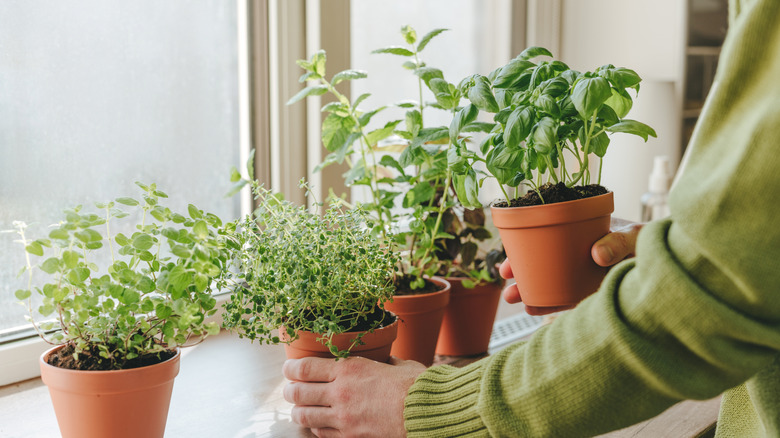
Herbs are ideal plants for gardening beginners because they're generally low-maintenance and easy to cultivate in containers. Plus, you can grow many herbs in your kitchen, making harvesting convenient while you're cooking. These aren't the only reasons to plant an herb garden in your kitchen. Growing herbs inside your house eliminates nibbles from hungry wildlife, and unless you live in an ice castle, frost should be a non-issue. When weather-related constraints are out of the picture, many herbs will grow all year, giving you a steady supply of super-fresh seasonings. Oregano (Origanum vulgare) is one of these plants.
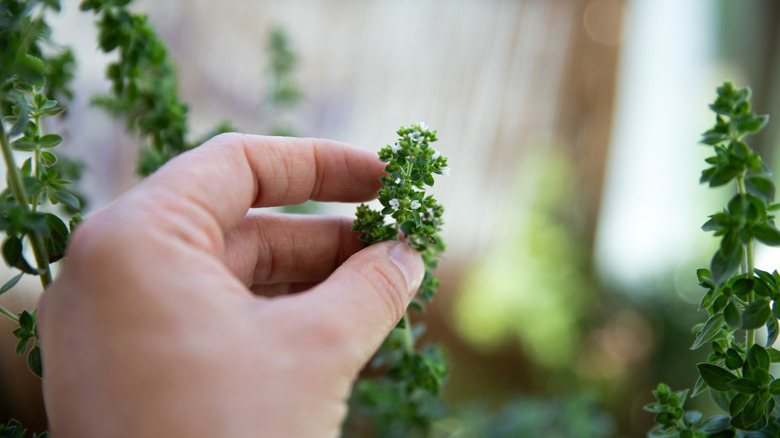
There are some other reasons to consider oregano for your kitchen herb garden. First, it's incredibly versatile. The leaves have numerous uses in cooking, and there's a surprising number of things you can do with oregano flowers, which make nice sachets and vase fillers. Second, oregano smells amazing. You may be able to mask unpleasant odors from a garbage can or a cooking project gone wrong if you plant enough of this aromatic mint relative. Third, there are lots of oregano varieties eager to liven up your kitchen. Greek oregano (Origanum vulgar subsp. hirtum) is most common in spice collections, but branching out can add beauty to your windowsill and new flavors to your culinary creations. Let's talk about how to best care for your indoor oregano plant.
Caring for oregano in a kitchen herb garden
It's a good choice for a spot near a bright window since it needs a substantial amount of light. If you have a choice of windows for this plant, a south-facing one is best. No windows in your kitchen? No problem. Give your oregano plant a grow light that mimics the sun's rays. In addition to giving indoor oregano as much bright, indirect sunlight as you can, monitor the temperature and humidity. Oregano grows best in air temperatures between 60-70 degrees Fahrenheit with 50-60% humidity. To keep tabs on your kitchen's humidity, consider using a product like the ThermoPro TP50 digital hygrometer, which also measures air temperature. Running a fan near your oregano is a smart move as it keeps the temperature consistent and enhances air circulation, lowering the risk of powdery mildew and other fungal ailments.
Good drainage is also key when growing oregano in pots. Choose containers with drainage holes and a potting mix with a neutral pH for optimal results. Also, resist the urge to overwater your oregano, as this sets the stage for root rot. Only water when the uppermost inch of soil is dry to the touch. You can check this by poking a finger or a chopstick into the soil of your oregano plant.
Finally, consider pinching or clipping your oregano's stems right before they flower. This will help the plant form a nice, compact shape. While you're at it, check your oregano for signs of pests. Oregano isn't especially prone to infestations, but aphids, mealybugs, and whiteflies may snack on it if given the opportunity. Spider mites can also be an issue and may spread to your other houseplants if left unchecked. You can banish all of these pests with an insecticidal soap such as Natria ready-to-use garden bug treatment. If you'd prefer a DIY solution, try getting rid of spider mites with thyme oil.