

The Once-Popular Window Treatment No One Uses Anymore (And The Chic Replacements)

When it comes to window treatments, there are so many incredible options to choose from, depending on the functionality you need and your personal design style. While clean Roman shades and modern simple-pleated draperies tend to dominate trends at the moment, this certainly doesn't mean that everyone is looking for a totally streamlined, straight-lined look. For those whose heart belongs to triple pleats and impossibly full, rippling panels, there's a certain magic to these epically draped beauties. However, there is one window treatment style that, despite its prior standing as the picture of elegance, now makes a room look outdated rather than opulent: the tulip shade.
A tulip shade is a type of Roman shade with two tailored stacks of folded pleats and a generous swag at the bottom, a rounded, flowy look. The problem is that overly fussy, swagged drapery has gone out of fashion, with fewer people interested in heavy, ornate window treatments that visually weigh down the space and more gravitating toward airy, lighter folds. What draws people to tulip shades is the romantic quality they bring with their soft lines, imperfect curves, and lush fabric folds. There is absolutely nothing harsh about them; every line flowing elegantly into the next for a feminine and stately appeal.
While these all might sound like positive adjectives I'm using to describe them, the overall style of tulip shades is undeniably stuck in the past. So how can you achieve a similar romanticized look without all of the elaborate, frilly swagging? As an interior designer, I can tell you that the answer lies in both the quality of the fabric's draping capabilities and choosing a relaxed, flowing aesthetic with the same effortlessly luxurious qualities as the original tulip shades.
Fabrics with high drape have the same romantic, lush curves as tulip shades
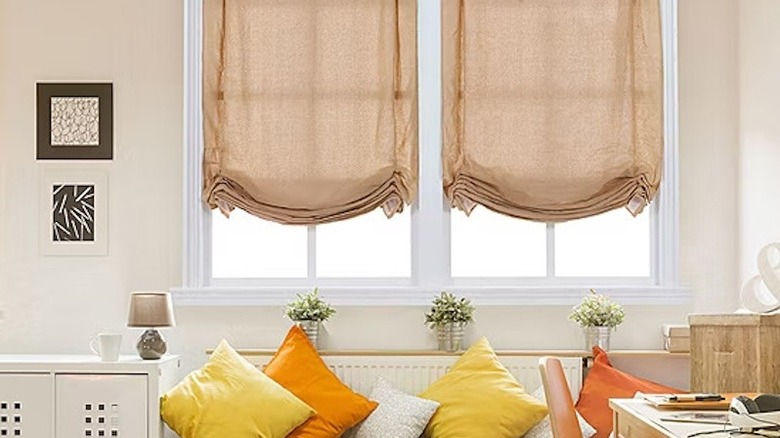
A huge part of what makes a tulip shade feel so luscious and dramatic is its incredible draping that creates impeccable folds. Fabrics with a high drape will have a fluidity and movement to them that more structured, rigid fabrics won't. Typically, lighter-weight fabrics have a better drape, though this is not always the case. High-drape fabrics will also gather nicely in smaller folds similar to the tulip shade. Therefore, to achieve the same curvy, flowing look in your window treatment, you will need to focus on fabrics with an excellent fluid drape and then amp up the fullness for the same grand, curvaceous aesthetic impact.
Flowy, floaty fabrics like rayon or chiffon make stunning romantic sheers. Linen, though slightly heavier in weight, has a light, airy texture with excellent drape, and is ideal for either a gauzy open-weave sheer or a more textural, casual drapery that's so versatile it nearly transcends design styles. This being said, there are other fabric types and blends that can achieve that romantic, flowy look, so it's more about holding up a fabric to see how it falls than it is to hyperfocus on a specific fabric type. Personally, flowy drapes and sheers tend to be an in-person buy for me, rather than online (unless you can get a larger sample swatch), so I can touch and see the fluidity of the fabric for that perfectly imperfect, effortless drape.
Style fluid fabrics as romantic or relaxed
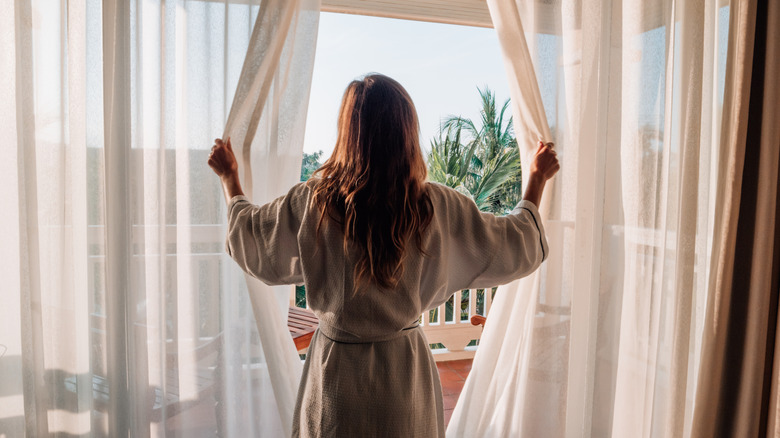
Now that you know what to look for in a fabric that will give you all of the gorgeous curves of a tulip shade, let's talk updated styling. For the same drama and opulence, opt for a full, flowing floor-to-ceiling sheer or drape. For a breezier, coastal vibe (think ocean breezes blowing through open French doors on your favorite rom-com), light sheers have an almost ethereal quality that really elevates a space with softness. For more of an upscale French country aesthetic (Restoration Hardware lookalike vibes), I love an airy yet luxuriously full linen drape. For added drama, puddle the drapes at the bottom for the epitome of curvy elegance.
The flowing drapery aesthetic and functionality are not for everyone, though. For a modernized, slightly more structured take on the tulip shade, look into a gorgeous linen relaxed or balloon Roman shade, which showcases the same soft curves and folds without the fussy swagging. With the simplicity of a Roman shade but without the harsh straight lines, a relaxed Roman shade is a great middle ground between a flat and tulip shade. As with the tulip shades, though, if you plan to have it operational rather than decorative, you'll need to arrange the folds every time you use it, so you may want to consider layering the look with a more functional operational shade underneath so you can leave the decorative relaxed Roman shade looking perfectly effortless all the time.
And there you have it – the key to getting the same luscious, romantic curves of a tulip shade without the outdated fussiness of the swagged silhouette is all in choosing a fluid draping fabric and styling it either as full, flowing drapery or a more updated, relaxed Roman shade.