

5 Must-Have Kitchen Features That Instantly Boost Your Home's Value

There are many ways to improve your home's value by upgrading your kitchen. Considering that home prices have grown steadily for the past five years, increasing almost 40%, but have been stagnant for the last 12 months, it may be time to consider making some kitchen upgrades to make the most of potential home value increases. But you should choose these updates wisely.
You want to be smart about what you invest in, as you tend to get a better return on your investment from a minor remodel, improving home value by about 13% over the remodel's cost. That's an average, of course. Depending on your region, your ROI can vary from 94.5% to 134%. Bigger kitchen remodels tend to be money losers, and even then, mid-range remodels improve resale value more than luxe overhauls.
Best of all, the updates we suggest will help you enjoy your kitchen more while you're living there, because not everything has to be about improving the bottom line, of course. While it's important to understand which kitchen features boost your home's value the most, let's take a different tack here and find kitchen features that will cast the widest net and, so, are most likely to immediately improve your prospects when selling your home.
Know your market, and replace countertops accordingly
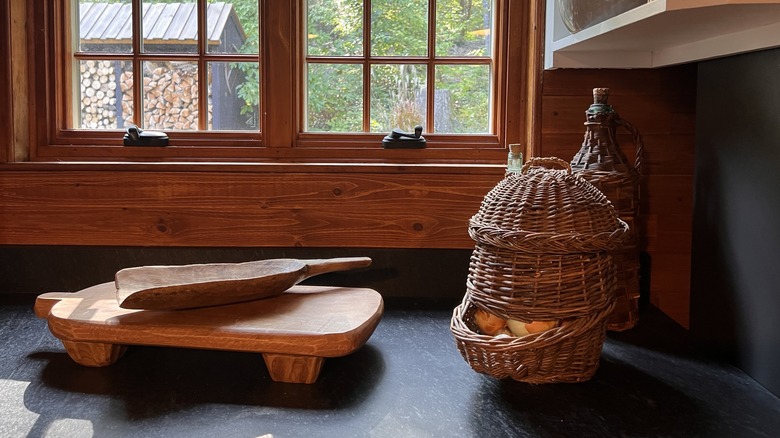
Just as luxury kitchen remodels can be money-losers, so can individual upgrade choices that are out of touch with your home's market. The trick to navigating this issue is to find key upgrades that have a big impact on potential buyers without requiring you to spend an outrageous amount along the way. And a great example of this, as reflected in recent trends, is the soapstone countertop. Soapstone is a natural stone that balances refinement and a sense of the rustic in its textures and veining. It can be bold, but in a neutral palette that works in any kitchen.
Not only is soapstone one of the most trendy countertop choices among designers, but it's also a good investment in terms of home value. And, as with any investment, a key part of soapstone's potential for big returns is its cost. Compared with other popular countertop materials like onyx and quartz, both of which cost $50-$200 per square foot installed, soapstone ranges from $70-$120. That's about 40% less expensive at the high end. You can expect to spend $2,100-7,200 for soapstone kitchen counters, while quartz costs an average of $4,500. And since countertops can have a reasonably good 60-80% return on investment when it comes time to sell, soapstone looks like a wise choice. On the other hand, a bad kitchen countertop choice can tank your home's resale value.
A big island is a functional upgrade you'll love today
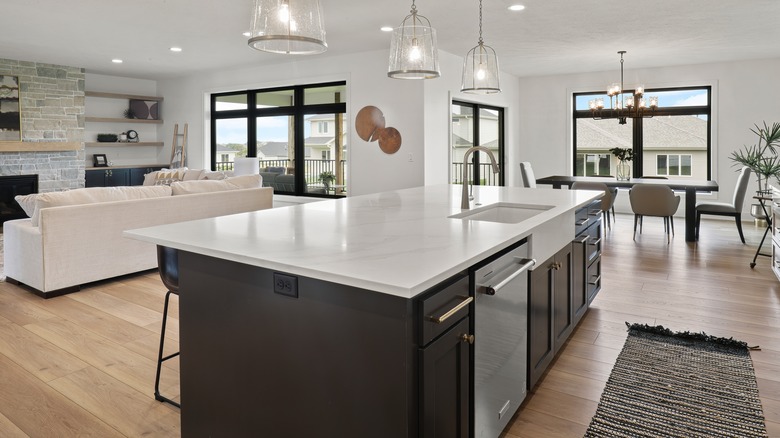
Functional upgrades are a good way to catch the attention of practical buyers who aren't interested in overpaying for luxury but can get behind a luxe feature that is also pragmatic. In a kitchen, many features are arguably functional. But while you might argue about the actual utility of a pizza oven, nearly everyone seems to agree that a large kitchen island is useful. And when it comes to your home's resale value, it helps that big islands are also impactful — kitchen islands are among the most requested features by homebuyers.
It's not uncommon now to see islands stretching beyond 7 feet, and the reasons are clear. It's easy to imagine preparing a large meal or having drinks with friends around a large island. Islands also serve as a sort of foundation for other upgrades, from additional lighting to space for more storage and new appliances.
Kitchen islands can be expensive. While you can spend under $1,000 for a kitchen island cart, larger islands can cost you dearly. Prefabricated islands can cost as much as $5,000, while custom-built islands can top out at around $10,000. Elaborately shaped islands (L, U, and other shapes) tend to cost more than standard rectangular islands. However, you can also expect to recoup 60-80% of your investment when you sell your house. Even if you're not willing to invest in a large island, adding even a small island or a cart to a kitchen can have a meaningful impact on potential buyers, who increasingly see islands as a necessity for a highly functional kitchen.
A pot filler might have an outsized impact on your home's value
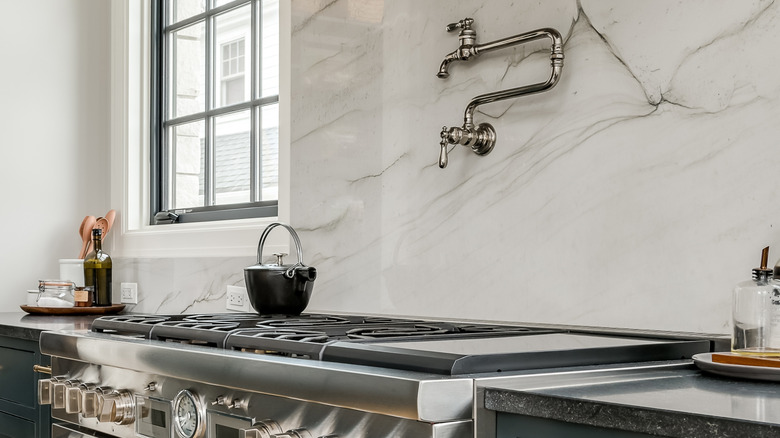
One unexpected place where luxury and function intersect is in the few square feet of wall space above your stove. That's where pot filler faucets live, and where you can expect to find some outsized impacts on home value. As small as the benefit might seem, this bit of function seems to have a strong pull for homebuyers. Interior Designer and HGTV personality Emily Henderson explains, "It is something that people see as a luxury that might shift their emotions towards a kitchen when looking to buy."
Pot fillers are most suitable for large kitchens and are probably most justifiable in the context of a full kitchen renovation. That's because they require running a cold water supply line and often need to be installed on a wall that's often covered in tile or some form of backsplash, requiring some demolition. The $975-$3,000 price of installing a pot filler as a standalone upgrade might seem outlandish, but it's a relatively minor expense in the context of an upgrade that already involves plumbing, tiling, and the like.
Storage solutions are a minor, and profitable, kitchen upgrade
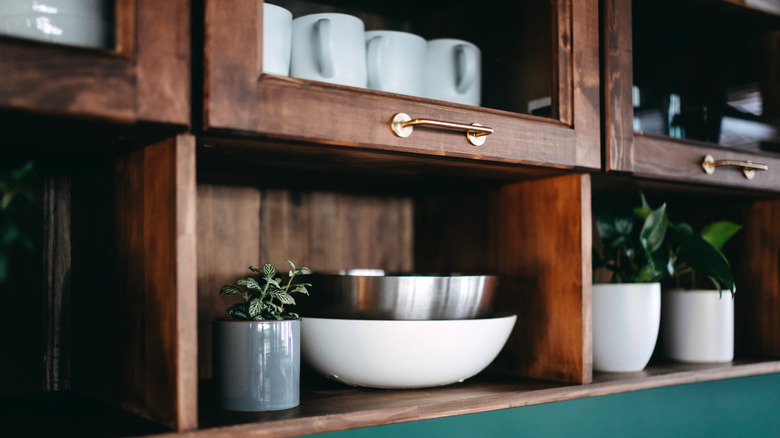
While upscale upgrades can turn off some buyers, everyone can appreciate a good set of storage solutions. In fact, it's a requirement for many house-hunters. An investment in storage can be particularly impactful in a smaller kitchen that, without the storage space, can quickly become chaotic or messy. Even fairly mundane storage-related features can catch the eye of a buyer with any experience in the kitchen. It's perceived as a quality-of-life matter.
The sorts of smart storage that can draw in a buyer range from simple solutions like inexpensive drawer dividers to pricier options like ceiling-height upper cabinets. The nice thing about storage is that it's a buffet from which you can choose as many treats as you wish. Since storage is always a good thing, more storage is always better. Put a lazy Susan in corner cabinets, put large items in your large island, and put pull-out shelves everywhere. Even more novel storage solutions can work, because it's all perceived as part of a functional kitchen by buyers, who will often conclude that the problem has been solved satisfactorily, so there's no need for a remodel after the purchase. And part of that perceived savings can show up in your negotiated home price.
Appliance upgrades have a broad appeal
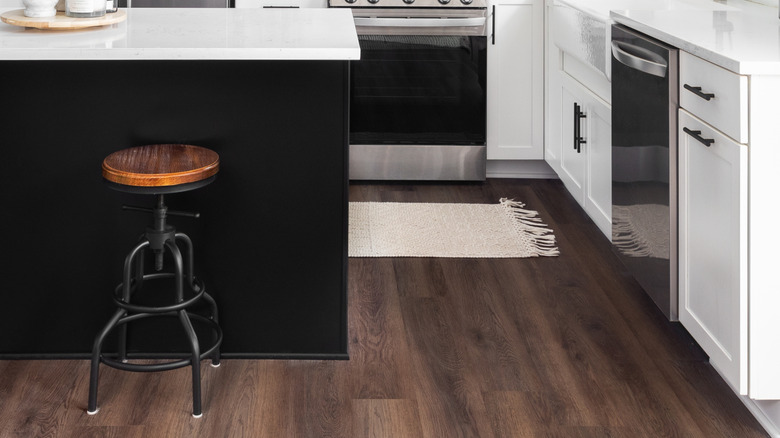
Upgrading kitchen appliances is a smart way to stick to fundamentals while still creating an impression of quality. New appliances can add 2.7% to a home's value, and at recent home prices, that's a lot of cash. You might spend $3,500-$7,000 on new appliances, but you can often count on getting 75% of that investment back when the house sells. However, the number can be a lot higher than that, depending on the appliances and the market. Remember to be cautious about built-in kitchen appliances, which can have hidden disadvantages that buyers pay attention to.
How much impact appliances have depends on a number of factors, like the type and manufacturer of the appliance, how many appliances are new, and what's expected in your particular market. Refrigerators, stoves, and dishwashers add the most to a home's value, and in more specific terms, homebuyers are looking for energy-efficient, stainless steel appliances with smart home features like remote access and integration with home automation platforms. But take care not to invest in overly personal preferences. Consider the pizza oven mentioned above; while Zillow research suggests you might get a 3.7% bump in your home's price for having one, it might seem like a luxury of limited actual utility to many buyers.