

If You See Someone Spraying Their Patio With Vinegar, Take Note — Here's Why
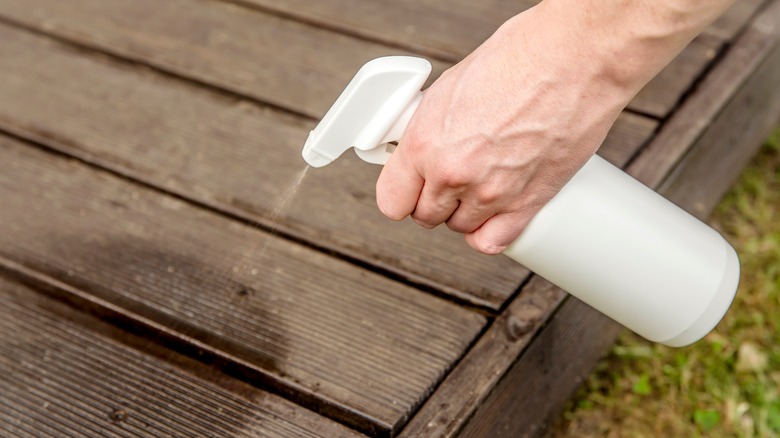
Honestly, is there anything white vinegar can't do? From being a powerhouse multi-purpose cleaner to an effective natural weed killer, the list of accomplishments for this pantry staple is seemingly endless. And today, we can add another household task to the list of reasons to pick up your spray bottle of diluted white vinegar: to naturally repel spiders from your home.
While spiders are actually active — and finding their way into your home — all year, it often seems like their indoor presence skyrockets during the fall months. That's because spring spider babies have grown up, and the mating season of many species falls between September and November. Spiders are exploring their environment to look for a mate, as well as seeking shelter from the approaching cooler temps. This uptick in quantity and activity is precisely why you may be spotting more of them inside your home in the autumn. Most of these creepy-crawly houseguests are harmless, posing no threat by hanging inside, and can actually help you manage the population of other, more harmful insects indoors. However, if they give you the creeps, are one of the two dangerous spider types (more on this below), or you see an egg sac that could hatch and cause a large infestation, it may be best to keep them out in the first place.
Here's where white vinegar comes into play; by simply diluting it with water in a spray bottle and spraying your outdoor patio, pathways, and other potential entry points, you can naturally deter spiders from entering your home. How exactly does this work? Let's dive into the science behind this natural spider repellent, as well as best practices for keeping these eight-legged arachnids from becoming the roommates you never asked for.
The strong smell of vinegar's acetic acid repels spiders
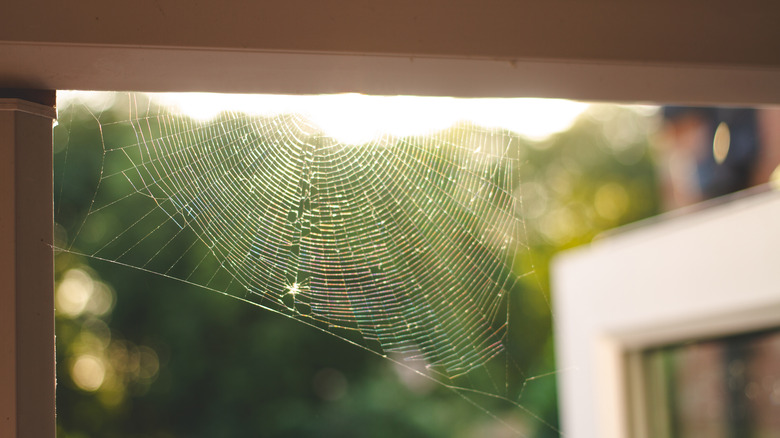
Though scientists are still learning about spiders' sense of smell, recent research has indicated that many species of male spiders actually "smell" and navigate their surroundings with extremely sensitive sensors on their legs. The intense smell of the acetic acid in vinegar can overpower and confuse a spider's olfactory sensors, making areas that have been treated with vinegar uninhabitable for them. Therefore, spraying a diluted mixture of equal parts water and white vinegar (though feel free to make it stronger as needed for added effectiveness) around your home's perimeter and potential entry points like patios, door frames, window ledges, and cracks will help keep the spiders from venturing your way at all.
Still, this preventative repellent approach is temporary, as you'll need to reapply every few days as the mixture evaporates or is washed away by the elements. And while it may not be the most powerful spider deterrent on the market, it is an effective, affordable, and natural option that you likely already have at home.
Be sure to test finishes on your home before spraying to make sure the vinegar won't damage or dull the surfaces. As an alternative to vinegar, diluted essential oils like peppermint, tea tree, eucalyptus, and citrus work in the same way and are more pleasant to smell indoors if you would like to treat interior areas as well. Also, be aware that some of these are not safe for pets, so be sure to use caution before spraying your home with essential oils.
Does vinegar make an effective spider killer?
When it comes to getting rid of spiders already indoors, some claim that directly spraying a spider with vinegar will burn and kill it on the spot, as the acetic acid causes nervous system damage and dehydration, which could be fatal. But the research is a mixed bag, as household vinegars, even undiluted, are often not strong enough to act as an instant spider killer, especially for larger species. Squishing the spider, vacuuming it up, or spraying it with an insecticide would be a more effective way of eliminating an unwelcome arachnid.
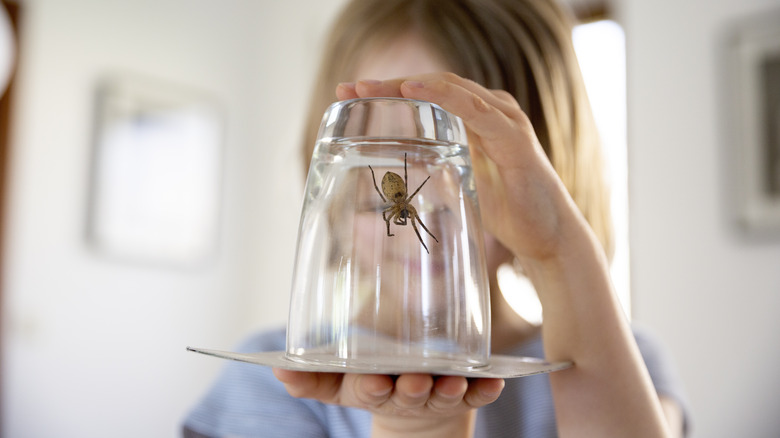
However, you may want to think twice before killing spiders you find in your home, as they work hard as pest controllers for many other unwanted indoor insects. Instead, as long as it isn't a black widow or brown recluse, which have venomous bites that are dangerous to humans, the old trick of trapping it under an upside-down cup, sliding a stiff piece of paper or cardboard underneath as a lid, flipping it, and releasing it outside to continue its hunting of mosquitos, fleas, roaches, ticks, and other far more irritating insects will work just fine. For large, recurring indoor infestations or venomous spiders, it's best to call in the professionals to work their magic and make your spider issues a thing of the past.
So, the next time you have your handy-dandy spray bottle of diluted vinegar out for one reason or another (there are so many!), head outside and spray your house's perimeter to help repel spiders from taking up residence on your home.