

If You Put Hydrogen Peroxide In Your Toilet, Here's What Will Happen
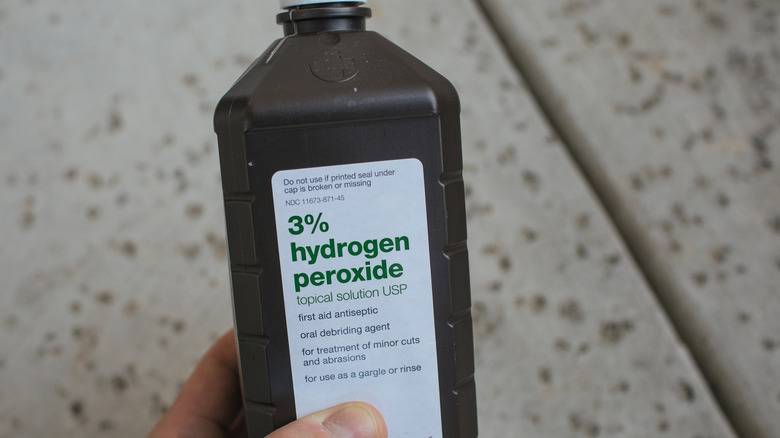
It should come as no surprise that the bathroom is one of the most germ-ridden places in the home, with the toilet being an epicenter of bacteria and viruses. Fortunately, you might already have a powerful weapon in your bathroom cabinet that you can use to clean your toilet: hydrogen peroxide. It works great as a general disinfectant, is low in cost compared to commercial toilet bowl cleaners, and often doesn't require a special trip to the store.
The key to hydrogen peroxide's cleaning power isn't hydrogen but oxygen. When you think of oxygen, you're probably thinking fondly of it as the life-giving gas you breathe or the element that makes up water. But in certain forms, oxygen can be surprisingly aggressive. For example, ozone (O3) is a form of oxygen that is a corrosive air pollutant, and when you add an extra oxygen atom to water (H2O), you get hydrogen peroxide (H2O2). This reactive substance can bleach, kill bacteria, and remove stains.
This makes it a wonderful product to use when you clean the toilet. If you're looking for a safe, effective way to break down the germs, dirt, and accumulated crud in and around your toilet, reach for that brown bottle of hydrogen peroxide. Most commercially available formulas contain 97% water and only 3% hydrogen peroxide. Undiluted hydrogen peroxide is lethal, but a 3% concentration is safe for domestic use and effective enough to remove stains and kill germs.
How to clean your toilet with hydrogen peroxide
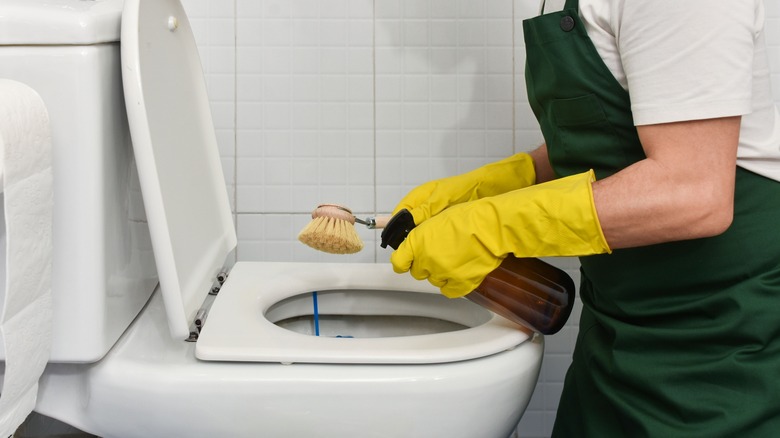
It couldn't be simpler to use hydrogen peroxide on your toilet. Spray or douse your toilet brush with some household 3% hydrogen peroxide and let it dry. Then pour one-half cup of hydrogen peroxide into your toilet, let it sit for 20 minutes, then scrub your toilet with your toilet brush. Be sure to scrub underneath the rim of the bowl, where germs, grime, and mildew can accumulate. If you need a bit of grit to remove any stains, sprinkle a small amount of baking soda around your toilet bowl stains and scrub with your brush again. Repeat the process if needed, then rinse with water.
Hydrogen peroxide won't clean everything. It can remove hard water stains, rust, mold and mildew, urine stains, blood stains, and other brightly colored stains that are usually produced by enzymes, like those in juice. Greasy stains, however, are better removed by surfactants contained in many common household products like dish soap, which dissolve the fats and oils in grease stains.
Hydrogen peroxide has a slight bleaching ability without the off-putting smell of chlorine bleach. Its bleaching power can not only clean your toilet but also bring a shine back to a grimy shower, floors, and tile walls. With hydrogen peroxide, there is no release of toxic fumes and no need to buy a synthetic chemical toilet bowl cleaner made of unpronounceable ingredients. While you're at it, you can use hydrogen peroxide's gunk-dissolving power to fix your slow-draining sink as well. Hydrogen peroxide is environmentally safe, as it breaks down quickly, so you won't be flushing any lethal chemicals down the toilet to make their way into the water stream.