

This Overlooked Kitchen Spot Gets Filthy Fast — And Almost No One Cleans It Weekly
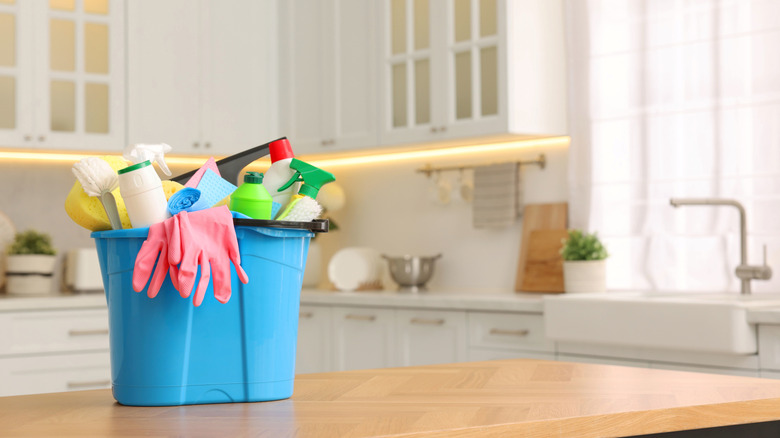
What parts of the kitchen do you clean at least once a week? If you're like most folks, your kitchen cleaning checklist probably includes the sink, countertops, and stovetop. It also makes sense that these areas are the first ones you think of to clean; clutter and debris are more noticeable in these areas, as they're frequently used during cooking and mealtime. But there's a good chance you're missing one spot that's even dirtier: the light switch.
As a surface that's used multiple times a day, the light switch cover in your kitchen might be grosser than you think. In fact, light switches in general have been found to have more bacteria than a toilet seat —at least four times as much. And in the kitchen specifically, many folks tend to handle things like food and garbage, exposing the light switch in the room to even more germs. That being said, it's definitely one of those items in your home you probably aren't cleaning, but really should. So, how exactly should you clean your light switches?
How to clean light switches
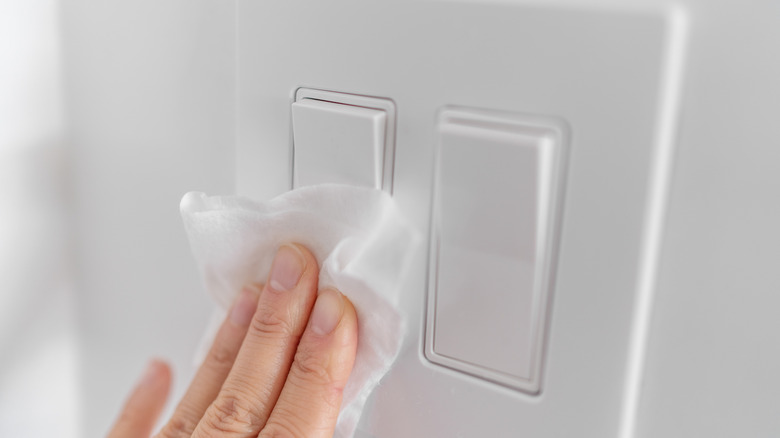
To deep-clean a dirty light switch, start by turning off the power. Using a screwdriver, carefully remove the switch plate, then submerge it in a bowl filled with warm water and some gentle dish soap. After several minutes, scrub the switch plate with a non-abrasive cloth or clean sponge to get rid of grime. You can also use a cotton swab to remove dirt from any crevices. Finally, dry the cover, wipe it down with a disinfectant cleaner, then let it dry again. You can then reinstall the cover on the wall.
How often you really need to clean everything in your home, including kitchen light switches, depends on how much they're used. But at the very least, it's recommended to wipe and sanitize light switches at least once a week. You can use a bit of rubbing alcohol or your sanitizing cleaner of choice. Just be sure to avoid soaking the light switch with liquid, as this can pose a safety risk.