

Read This Before Taking Your Hummingbird Feeder Down
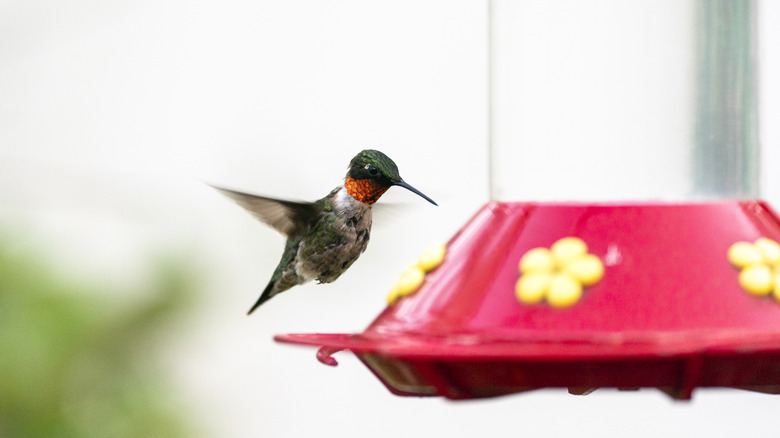
As the weather begins to cool (or not – late summer and early fall are tricky like that) and the first signs of color begin to appear on the leaves, it's easy to get swept up in the transition from summer to fall, especially as those quintessential summer sights, like beautiful hummingbirds snacking at your backyard feeder, become less frequent. However, just because it looks as though the change in season is upon us and you're ready to begin prepping your yard for fall, it doesn't mean that all of nature's creatures are on the same timeline. In fact, though you may be tempted to include the removal, cleaning, and storage of your hummingbird feeder as a part of your autumn transition, now's the time that migrating birds may need that boost in nourishment the most.
You might have heard the myth that leaving your hummingbird feeder up too long in cooler climates can confuse the birds into sticking around too long and missing migration windows, but luckily, the truth is that an abundance of nectar isn't enough to interfere with their strong migration instincts. Hummingbirds begin migration based on a seasonal reduction of sunlight, which causes chemical and hormonal shifts in their bodies that signal both the time for the long flight south, typically to Mexico and Central or South America, and the need to eat more in preparation for the journey. Therefore, it's important to leave your hummingbird feeder up longer than you think in order to provide food and a burst of energy for weary travelers. How much longer? Well, depending on where you live, it could be weeks or months, so let's take a deeper dive into the right time to take down your hummingbird feeder based on your location along the migration path of these stunning jewel-toned, feathered friends.
How long should I leave my hummingbird feeder up for migrating birds based on where I live?
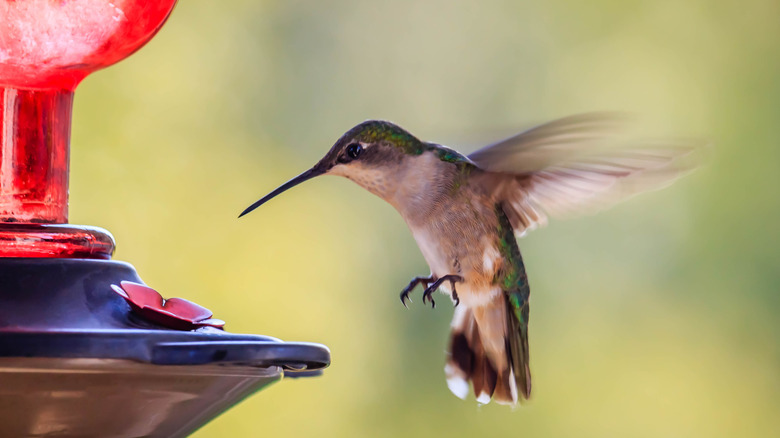
While there are no definitive official dates for taking down your hummingbird feeder due to varying migration dates and paths, there are a few general estimated guidelines on timing based on your geographical location. If you're located in a colder Northern or Midwestern climate, your peak migration timing likely falls sometime between late August and mid-September. For those in warmer Southern locations, it's likely to be approaching mid-September or mid-October before you experience the height of migrating hummingbirds. However, this isn't when you should plan to take down the feeder, as birds passing through need the fuel of your sugar water feeders to make their long journey.
Instead, a good rule of thumb is to keep your feeders up for at least a couple of weeks after you've seen the last hummingbird in your yard. Some people prefer to leave the feeder out a little longer, for several weeks after the last sighting or until Halloween, to ensure any stragglers have plenty to eat. For those who live in warm Southern climates, especially those near the Gulf of Mexico, some species of hummingbirds may migrate later in the fall or even stay the whole winter long, so it may be best to wait until early winter to take down your feeder or leave it up all year long for any overwintering friends. Food scarcity could be deadly for busy migrating hummingbirds, so rather than bringing feeders in too soon, when in doubt, there's no harm keeping them out longer. Just be sure to empty, clean, and refill your feeders at least once or twice a week during fall temps to prevent the growth of bacteria and keep those beautiful little hummingbirds healthy.