

5 Once-Outdated Design Trends That Are Making A Surprisingly Stylish Comeback
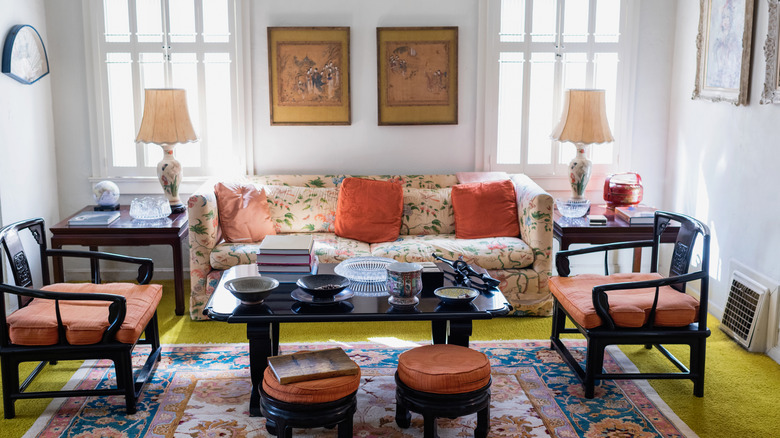
Trends are cyclical, so in general, what goes around will eventually come around again — even if it appears in a variation of the original. Interestingly, it doesn't take long for something to shift from outdated to being called vintage ('90s babies have experienced this recently with the newly "novel" concept of low-rise jeans). Since trends are both temporary and mercurial, it is best to stick with decor that makes you feel good like mood-boosting decorating ideas — or dopamine decorating, if you will.
That said, there are many ways in which to take inspiration from the styles, trends, decor, and fashion that preceded the current day without making your space feel like a time capsule. As these trends cycle back around, many are getting a fresh new vibe — whether that means they are being used in a new way, paired with modern elements, or incorporated into modern pieces, creating a new item by way of blending. Though you may not want to dedicate the entirety of your home to a vintage look, adding some nostalgic pieces can bring a warmth and homeyness to the space, and it is a great opportunity to take advantage of some well-made vintage furniture that you may be able to find cheap and second hand — or for those after a quick find, you can check out some of the best places to buy vintage furniture online. Be aware, however, that not everything labeled vintage will automatically imply taste — some vintage trends will date your space regardless.
Color and pattern drenching
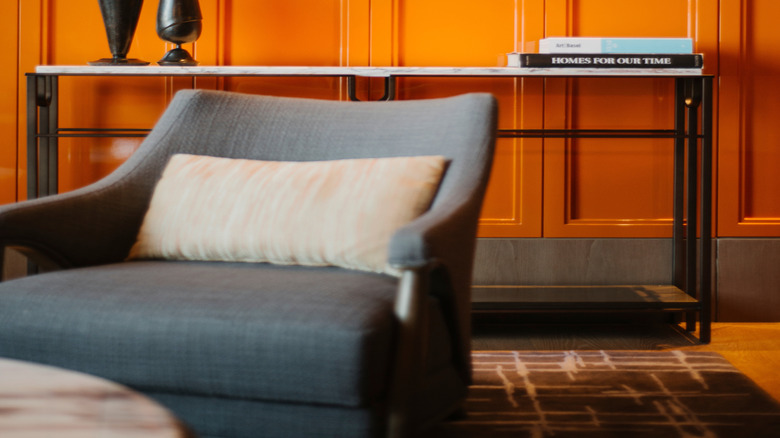
Color and pattern drenching were popular during multiple eras of the 20th century — think everything from Victorian opulence to the pastel craze of the '80s. But once the 2010s hit, there was a significant shift towards minimalism and neutral color palettes, like the stark white kitchen and bathroom trends as well as the modern farmhouse aesthetic.
Though this trend can certainly be bold and bright, it doesn't have to be. In fact choosing a more neutral color or muted pattern can be effective when used in excess, and help to not only make your room feel bigger, but also give it an immersive and serene feel. You can also blend color and pattern drenching by pulling a color from a pattern and using that as your "drenching" color while incorporating the patterned element elsewhere — this works great as a backsplash or as a way to integrate wallpaper as an accent wall while still feeling cohesive and flowing effortlessly in the space. If you really want to lean into making it feel unique and avoid the possibility of drifting into dated, not being afraid to mix and match your patterns is the way to go.
Minds are closing on open concept spaces

It used to be that if a home didn't have an open concept design that it was considered outdated and not practical. But, more recent trends have brought back the compartmentalized, traditional home style. Though open concept can be a good option for those with a particularly small space, or keeping an eye on young children from another room, it definitely has its downsides. One of the most popular setups is a combination living room, dining room, and kitchen. The issue here is that if one room is messy, the rest of the room is messy. Plus, kitchen smells can permeate and stick to fabric, which can pose an issue with keeping your living room smelling fresh and food-free.
Besides the benefits of keeping messes and odors more secluded, having separate rooms also gives you more design freedom. You can have more fun exploring styles and color combos from room to room without having to make a larger, more universal space feel cohesive.
Maximalism is back to the max
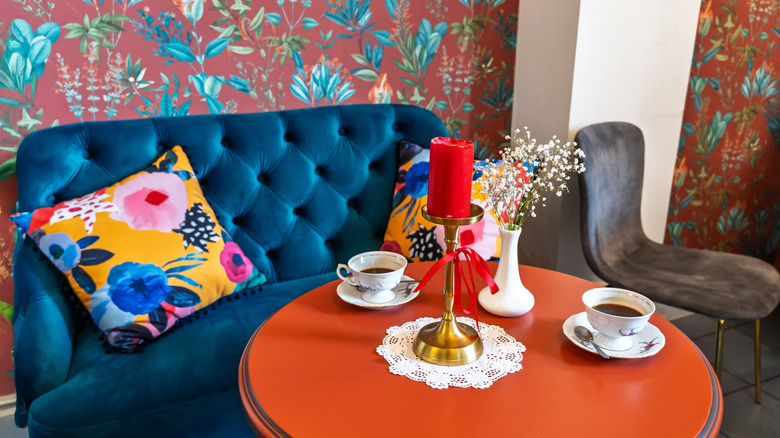
Maximalism doesn't necessarily mean cluttered. Rather, it is based in the idea of embracing colors, patterns, prints, and objects that may not obviously "go" together. Think '90s farmhouse vibes with floral upholstery everywhere, from Laura Ashley curtains to an inherited 1970s couch. If you are wanting to try to integrate some maximalism in your own home, it's best to start small. Begin adding elements slowly — accessories and art are a great place to start because they aren't a large or permanent commitment.
But maximalism also doesn't have to mean incorporating a ton of patterns in your space either. Going back to the idea of color drenching, you can employ this in such a way that you "drench" with multiple colors in a single space so you have large pools of color that intermingle with each other. Applying the unexpected red theory in your home is also a great way to add some fun and create a focal point without diving all the way into a maximalist space.
Couches that make a statement with color, shape, texture — or all of the above
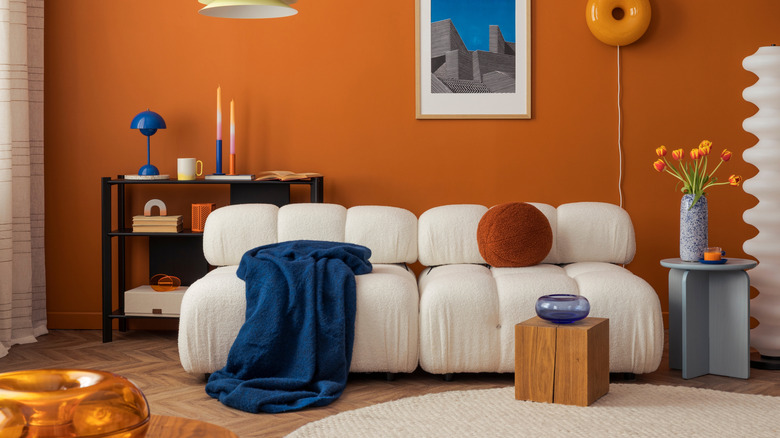
Though the most important factor when choosing a couch is typically comfort, this is also one of the largest pieces of furniture in a room, so many people have been leaning towards choosing colors, shapes, or styles that make a fashionable statement instead of just fading into the background. The key, it seems, is to find a sofa that offers a both structure and flair while remaining functional. Recently, there has been a shift towards those with more rounded edges and sleek curves, as it gives a unique, postmodern vibe look without sacrificing comfort.
But just because your couch is nice to look at doesn't mean that it has to be uncomfortable. If you want to stick with a more traditional couch style, you can make it feel unique with a fun color and fabric choice. Jewel tones are both rich and earthy, so they tend to make a space feel luxurious and bring in some drama without feeling too dark and moody. Something like velvet is a great option if you want to add a bit of luxury, but pairing it with some lighter fabrics and more neutral colors can prevent it from feeling too stuffy or heavy, and can help give your traditional living room a fresh and modern twist.
Got real wood cabinets? Refinish them with a dark stain
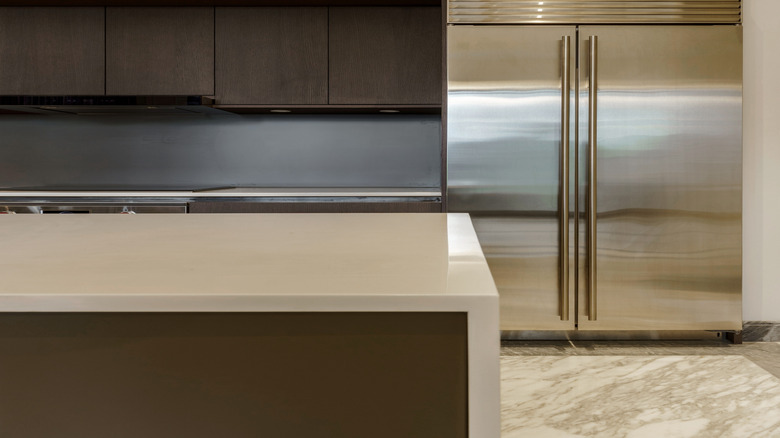
Wood cabinets stained a dark or medium tone used to be one of the first things people would repaint or rip out or redo in a kitchen renovation, but recent trends have been bringing the warmth back into kitchens, especially through wood elements (and yes, that even includes cabinets). Oak, maple, and walnut woods are some of the most popular deep-hued choices for kitchen cabinets. With many designers leaning into moodier and more vintage-inspired palettes and styles for kitchen storage, it's no surprise that this trend of the past is coming back.
If you want to try it out in your own kitchen, you may want to start on the lighter side, as going too dark can make a space feel smaller. It's easy to change from a lighter stain to a darker one, but harder to go the other way around. Or, consider trying dark lower cabinets with a lighter upper cabinet. This mismatched trend is also gaining popularity as of late.