

This Landscaping Mulch Should Be Banned — Here Are The Risks You Need To Know
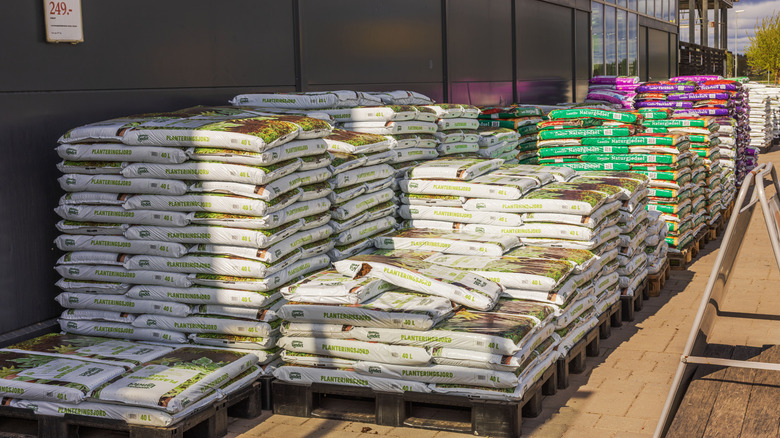
If you've been considering choosing a new ground cover alternative in your yard or garden, you may have come across rubber mulch as a potential option. This material is made up of cut-up tires and is commonly used on playgrounds due to its soft, bouncy texture. It is often advertised as the best type of mulch due to its look — which is similar to that of traditional wood mulch — and its long life. But is it the right choice for your garden beds? Apart from being relatively ineffective at blocking weeds, there are also a range of drawbacks that make rubber mulch incredibly dangerous to humans and animals alike.
One key concern regarding rubber mulch is the fact that it is highly flammable. According to a study done by the University of Nevada, which tested the combustibility of landscape mulches, the recycled-tire option was the most flammable of all those tested in terms of flame size and temperature. In addition, this material is not only more prone to igniting, but it is also harder to put out, as well. This is a particular concern in locations that have a high fire risk. Unfortunately, rubber mulch's flammability is not its only hazardous drawback. There are also multiple concerns about this material's environmental impact and the effect it may have on both wildlife and people.
Environmental concerns of rubber mulch
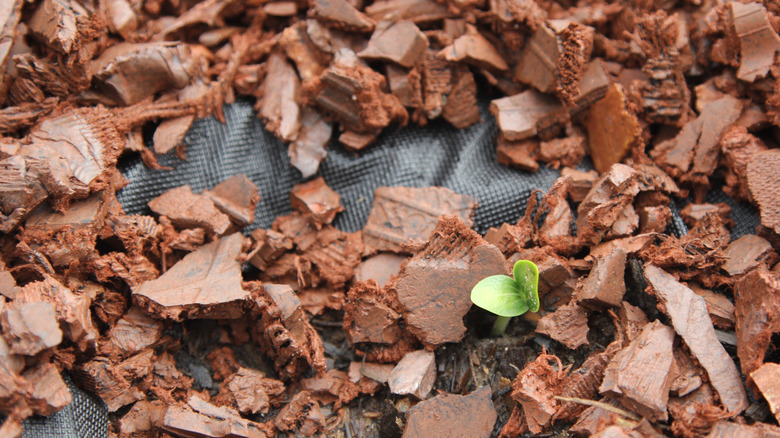
Rubber mulch is promoted as an eco-friendly thing to do for your garden due to the fact that it is made of recycled tires. And, considering how many tires are scrapped every year — over 1 billion, according to Klean Industries — this seems like a responsible way to save some of that waste from ending up in landfills. However, using rubber mulch in your garden actually poses serious health risks to the wildlife and aquatic systems nearby. This is because the tires let out a range of harmful materials as they decompose, including zinc, which can be fatal to nearby plants if they absorb too much of it. In addition, the stuff that leaches from these tires can cause water-based organisms like algae, snails, and even fish to suffer from reproductive issues and dangerous abrasions.
Considering the fire risk and environmental damage that can result from the use of rubber mulch, you may therefore want to opt for a different garden alternative like pine bark mulch. This material takes longer to break down than some other natural mulches and has an attractive rich brown hue. Keep in mind, though, that bark mulch is not suited to windy areas as it is naturally light, making it prone to displacement in high wind or water. Alternatively, utility mulch is a byproduct of trimmed trees and bushes which can sometimes be obtained for free from utility companies who cut them down to protect power lines. However, this mulch may have some invasive seeds mixed in as it is not heat-treated, so it is best not to use it directly on garden beds due to the risk of spreading common lawn weeds.