

The Essential Oil You're Not Using—But Should—For Cleaning Dirty Walls
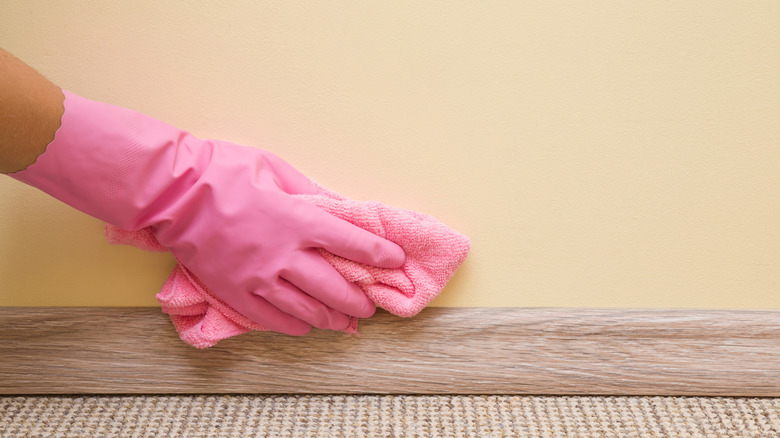
Oh, how easily walls can get dirty! Body oils and dirt can accumulate from frequent touching of walls, especially around sinks, kitchen appliances, dining tables, light switches, door handles, and furniture. Dusting and spot cleaning are probably all you need to keep your walls looking fresh and clean, though an annual full wall-washing can bring the shine back to your walls. In humid seasons or climates, moisture can allow oils floating in the air to stick to your walls, especially in the kitchen, where frying foods sends some of that frying oil into the air. When your walls need a good cleaning – and look closely, they probably do – just reach for ordinary pine oil to remove dirt and grime from your walls, as well as disinfect them from harmful bacteria and viruses. You could steam clean your walls or clean them with vinegar, but pine oil smells much nicer than vinegar and is easier to use than a steam cleaner.
Pine oil, as you might imagine, is an essential oil derived from pine trees. At an industrial scale, it's often extracted using steam distillation from pine tree waste like stumps and sawdust. While you can make your own homemade pine oil from pine needles, you can also find premade pine oil at herbalists, drug stores, and other stores that sell essential oils. Pine oil is 30% α-terpineol, a powerful cleaning agent used in industrial and household cleaners to break apart grease and oils. Pine oil also contains limonene, a versatile cleaner for home use. Let's talk about how it works to clean your walls.
Using pine oil to clean your walls
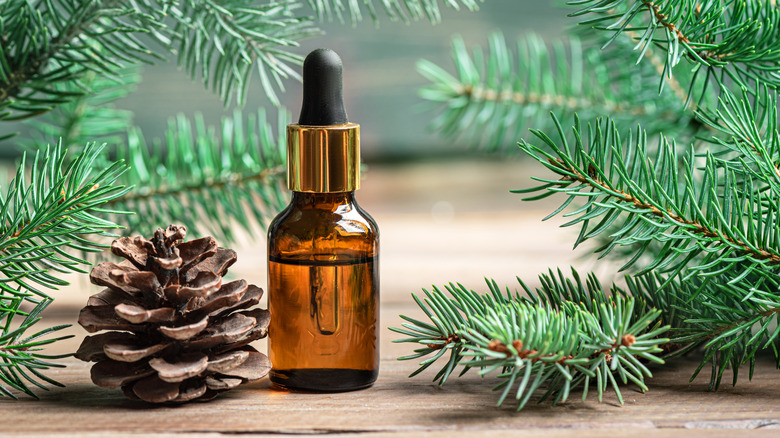
The pine oil you can purchase usually comes in concentrated form, so you'll want to dilute it before using it on your walls. Like many essential oils, the undiluted form can be an eye or skin irritant, so be sure to wear gloves and eye protection when mixing it and using it to clean your walls. People who are allergic to pine trees should obviously avoid using it, and keep it away from children, as ingesting the oil can be toxic. For the same reason, pine oil is also one of those cleaning products to avoid using if you have pets in your home.
To use pine oil as a cleaning solution for your walls, follow the dilution ratio on the bottle you purchased. If your bottle lacks those instructions, you can dilute a few teaspoons (roughly a capful) of the concentrated pine oil in 1 gallon of water. Dip a sponge or cloth into the cleaning solution, then squeeze out any extra moisture so that the sponge or cloth is damp but not dripping. Wipe down the walls, using extra elbow grease on tough spots. Take a fresh sponge or cloth and wipe down the walls with clean water. Allow the walls to dry, then touch up any spots that you missed.