

To Avoid Patchy Grass In The Spring, This Is When You Should Overseed Your Lawn
Our lawns can bring us such pleasure. Lush, healthy green expanses of grass are beautiful to behold, feel wonderful to our bare feet, and keep weeds at a minimum. But keeping our yards lush and green (or getting that way in the first place) can sometimes be a frustrating task. Appropriately watering, fertilizing, and mowing are the basic steps that will lead to success. Taking steps to minimize weed growth is another commonsense action that will bear fruit in your goal of growing a healthy green lawn. One often overlooked step that will start your lawn off successfully in the spring is overseeding in the fall.
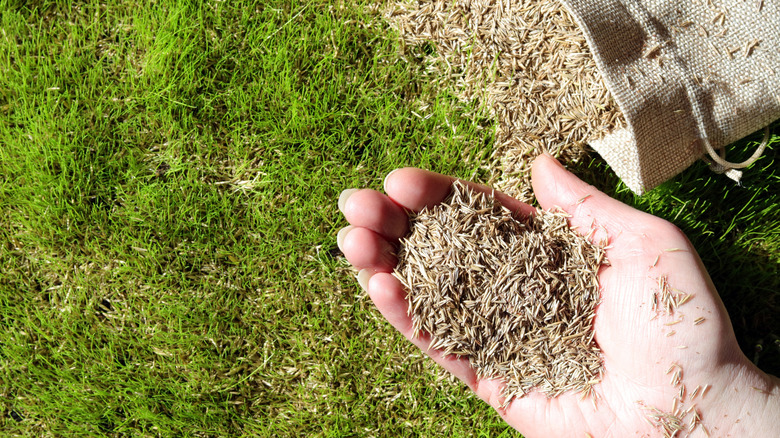
Overseeding is not what it may sound like: Putting way too many grass seeds on your lawn. It is simply applying grass seed over an existing lawn. It is especially good at eliminating those patchy areas of your lawn that may have developed over the hot summer. Overseeding is not a difficult task, but it does require some preparation and some consistent follow-up. Why do this in the fall? Because it can provide perfect conditions for success. Warm soil with cooler weather helps the seeds to germinate and then begin growing in gentle conditions that will not stress the new plants. But how do you overseed a lawn? Read on.
Step-by-step to overseeding

About 45 days before you expect the first frost in your area, start by selecting an appropriate grass seed combination for where you live. Your hardware store or local nursery will direct you in the right direction. Seed mixtures with two or three varieties of grass are a good choice as the mixture will provide seeds that can do well in the shade, in the open, and in high traffic areas – all in one application. Next, mow your lawn shorter than normal. This allows light to reach the seeds and helps them germinate. Use a leaf blower to clear the lawn of unwanted debris. Apply a mulch to your lawn, especially in the distressed areas. Now, spread the seed evenly with a broadcast or lawn spreader. With that done, gently rake your lawn to ensure the seeds are in contact with the soil.
Immediately after you have spread the seeds, follow up with a starter fertilizer. A liquid spray is likely the easiest and most effective way to get that task done. You also need to water your seeds and sprouts religiously. Early on, you need to keep them moist but not floating. If you've applied mulch, a morning watering will suffice as the mulch retains moisture. If you've skipped the mulch step, three light waterings per day are best. After the seeds have sprouted for a while, switch to soaking the sprouts once a day to develop root growth. Don't mow your new grass until it has grown to about 3 or 4 inches tall. Be sure to have a sharp blade on your mower to keep it from pulling the new blades of grass out by the roots.