

The Fast-Growing Privacy Tree That Adds Color To Even The Smallest Of Yards

Getting privacy in your backyard or garden can sometimes feel like an uphill battle. Fences can work great, but they often block out light and may even cause your yard to feel closed off and smaller than it really is. But fear not! There is a way to utilize a creative plant solution for a private backyard oasis of your own. Planting crape myrtle (Lagerstroemia indica) is a wonderful alternative, which helps to increase the level of privacy in your outdoor space and add a pop of color at the same time.
These plants are a great bonus for gardens in hardiness zones 6 to 9, where they grow best, due to their bright flowers and relatively straightforward maintenance. In addition, they grow at a rate of about 1 to 2 feet per year, making them a helpful, fast-growing option to add privacy to your yard in no time. And if you want to see some more color in your yard, you need to look no further than the huge variety of crape myrtles that can be found at tree nurseries, garden centers, or even online. For example, if you're looking for pink flowers, you could go for the 'Splash of Pink' cultivar, or you could choose the 'Miami' variety if you prefer a brighter hue. Alternatively, why not add a timeless white shade to your yard with the 'Pixie White' cultivar? These crape myrtle plants are some of the best shrubs for your landscape, so it is important to know how best to plant and care for them to ensure that they thrive in your yard for many years to come.
How to grow crape myrtle in your yard for privacy
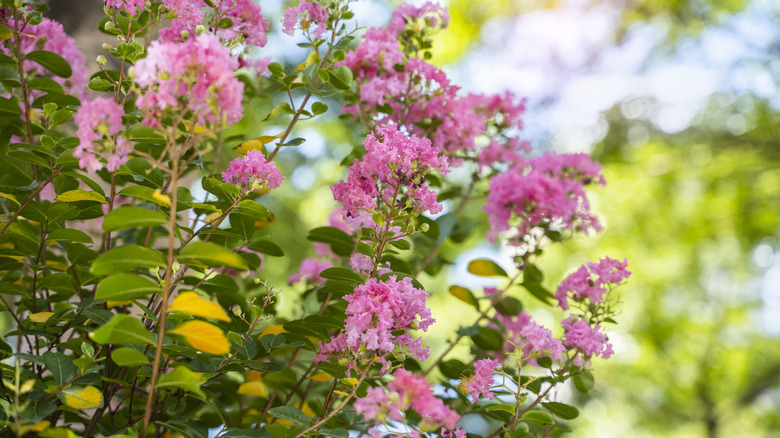
Crape myrtle are some of the best ornamental trees for your landscape, even for small yards, because they grow up to 25 feet tall and 20 feet wide, which is good for adding privacy without taking over your entire space. Planting this tree at the edge of your garden is a great way to increase privacy because the blooms will fill out and offer an attractive screen. However, it is a good idea to check out the area before you plant your crape myrtle in order to ensure it is well-ventilated and has plenty of sun as this will reduce the risk of disease and allow the tree to flourish.
One infection that crape myrtle can be prone to is powdery mildew. This white mold mainly thrives on crape myrtle trees that are placed in shady, wet locations. It is therefore best to plant these trees in sunny areas and in soil which has a good amount of drainage. Additionally, you can opt for one of the variations that are bred to be resistant to this disease such as 'Apalachee' or 'Fantasy' (Lagerstroemia fauriei), which is a type of Japanese crape myrtle. To encourage more flowers, and therefore more privacy, make sure to prune your myrtle towards the end of winter and pick off fading flowers to offer new ones a chance to grow. You should also avoid using too much fertilizer with this tree as this will prompt it to grow more leaves than flowers and lessen its colorful appeal.