

We Finally Found The Best Alternatives To Landscape Fabric For Weed-Free Gravel
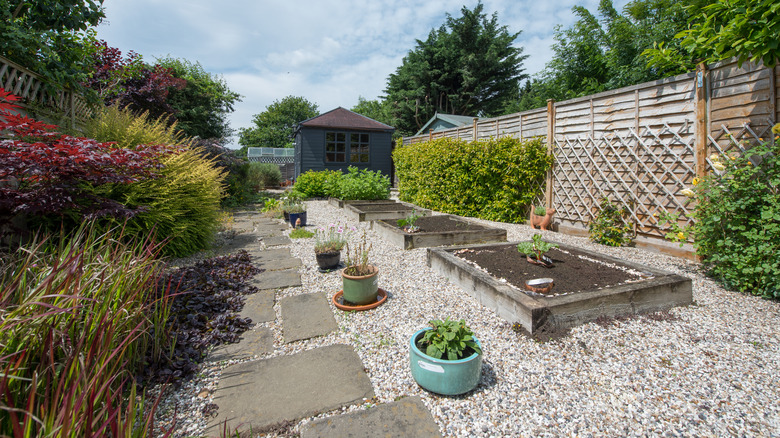
Landscape fabric has long been touted as a brilliant way to stop weeds from popping up in areas like flower beds, vegetable boxes, and even gravel pathways. However, many experienced gardeners have expressed a distaste for the material because it can introduce microplastics into the soil, interrupt natural processes like decomposition, and get in the way of landscaping changes. In addition, users of this fabric have commented that, beyond the first few months, it doesn't actually prohibit the growth of weeds. Instead, it can actually allow them to prosper both under and on top of the material itself when organic material builds up on top or the fabric develops holes. And given that many common weeds like the curly dock (Rumex crispus) can produce up to 29,500 seeds per plant — according to The University of California Agriculture and Natural Resources department — you certainly don't want them taking up residence in your gravel.
So, are there other ways to stop those pesky weeds from sprouting up in between your gravel and ruining its appeal? Yes! There are multiple options for safe and natural weed control including cardboard, organic materials like pine needles, and even an old rug or carpet. Each of these alternatives has a range of benefits for different gardens, so it's a good idea to look into what is best and most practical for your space. For example, natural substances tend to biodegrade more quickly, which makes them a less permanent solution but perfect if you are looking for an all-natural way to reuse the green waste from your own garden. So, let's examine some of the best options for keeping weeds out of your gravel paths or driveway without the need for landscape fabric.
Cardboard
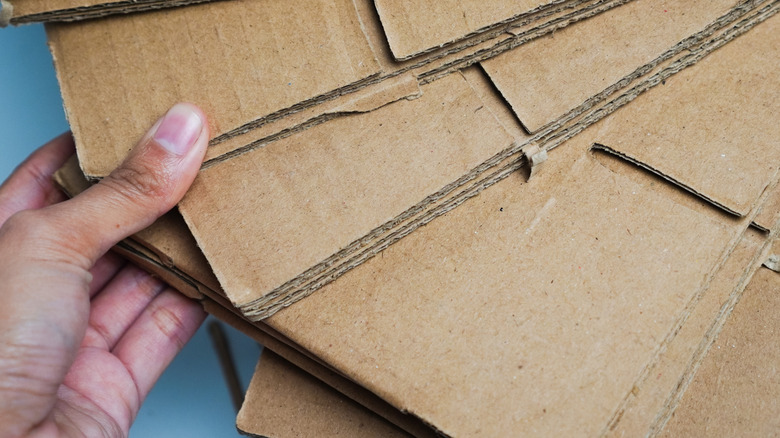
One simple and effective solution to the task of weed control may be right under your nose. Cardboard, an inexpensive material you can get everywhere from your latest delivery box to the grocery store, is actually a great way to stop weeds from thriving amongst your gravel. By placing it down in layers, you can kill unwanted spouts by blocking their ability to get sunlight. And using this material in combination with gravel makes it even more effective at stifling weed growth. Cardboard is also a better alternative than landscape fabric because the weed roots shouldn't be able to cling to it as easily, particularly if you wet it before putting it down. If you do wet the cardboard, make sure to carefully test the gravel on top to make sure it doesn't slide underfoot.
What are some best practices for using cardboard as weed control? Firstly, try to use large sheets of cardboard as this will lessen the number of seams between each piece, where weeds can push through. It is a good idea to take off any tape or sticky labels, which will be harder to remove once they are covered up. One other detail to note is that cardboard is biodegradable, so it will eventually break down and become less effective at blocking weeds from sunlight over time. Cardboard, therefore, works well in areas where you can easily sweep the gravel aside and install another layer after the first has degraded, such as paths or narrow borders.
A rug or carpet
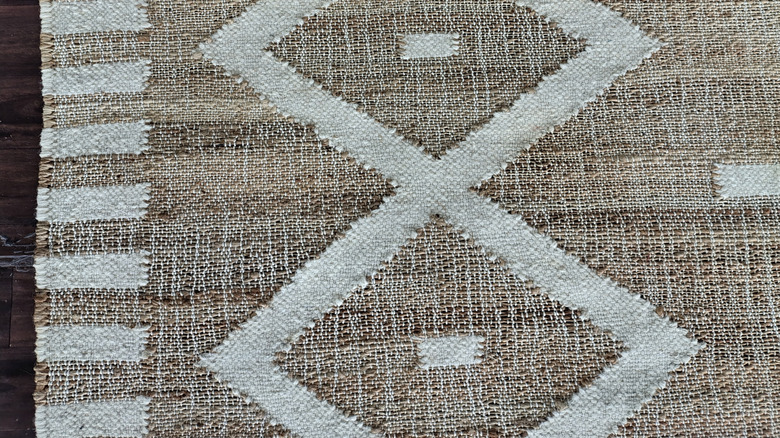
A great, eco-friendly option to buying new landscape fabric is to reuse something from your home. You can actually save an old rug or carpet from the landfill by repurposing it as a weed barrier. This works best (is most environmentally friendly) with carpet made from natural materials like jute or wool, untreated with chemical colors or conditioners. An old rug works for the same reason cardboard does, by blocking the weeds' ability to photsynthesize. In addition, this thicker material often biodegrades at a slower rate, making it a more long-term option for your gravel surfaces. It is also relatively easy to handle and manipulate, meaning you can cut it to fit perfectly around raised beds, concrete, or patios. Many rugs are also designed to be textured and slip-resistant, so they could also be great for keeping your gravel stable and in place. Rugs are also durable and tightly woven, so far more resistant to tears than landscape fabric.
If you'd like to try out this option for weed control under your gravel, make sure to check the materials used in the rug or carpet for any chemicals that could seep into the ground below. A jute rug will typically break down and biodegrade over the course of a year, at which point it's time for a new one. Animal fibers typically break down much slower and could last 2 to 3 years.
Mulch
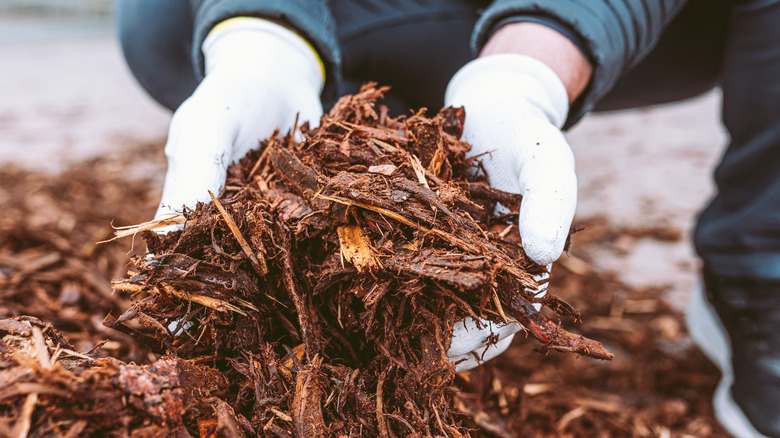
Mulch has long been a favorite with gardeners for keeping weeds at bay in flower beds, vegetable gardens, and borders. But did you know that it can also be a good way to keep your gravel weed-free? Like the other options, this material stops weeds from thriving by blocking their access to sunlight. Mulch is generally made of biodegradable materials like bark which is beneficial for keeping the soil healthy, even under a layer of gravel. In addition, organic mulch is a good alternative to landscape fabric because it allows the soil underneath to breathe and not become too packed down, which can cause flooding and other issues.
To use mulch to stop weeds growing in your gravel, first spread out a layer on the ground. Make sure not to lay it too thickly, as this can cause the mulch to hold moisture and actually encourage more weeds to grow. Due to the fact that mulch is made up of many pieces, it may be prone to mixing in with the gravel, particularly if the area gets a lot of foot traffic. Therefore, it may be a good idea to place the mulch down, then add some soil or compost on top before finishing with the gravel. This will keep the mulch barrier in place while making sure your gravel looks its best.
Garden waste
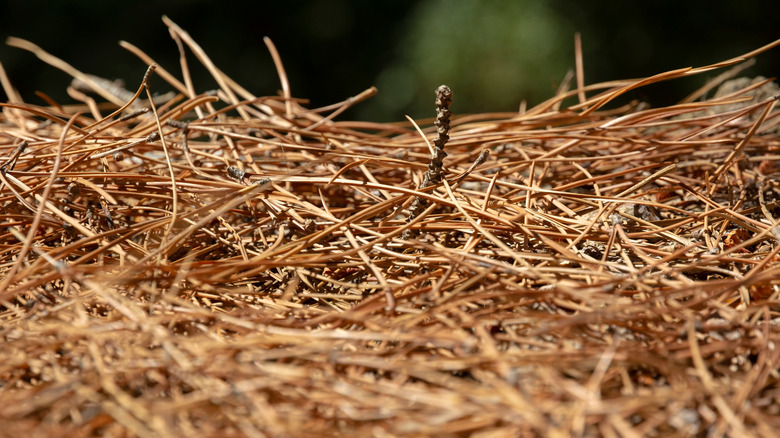
If you have any pine trees in your yard, you may find yourself spending a lot of time trying to figure out how to remove pine needles from your landscaping. However, these — and other organic waste — may actually make for a useful and more natural alternative for weed-blocking which avoids microplastics and chemicals altogether. Laying pine needles and leaves on the ground can block weeds while keeping soil healthy and saving you from having to dispose of it. In addition, you also don't need to worry about the acidic nature of pine needles affecting the ground underneath because they neutralize while they decompose and will therefore not change the pH of the soil.
Similar to mulch, these smaller materials are more likely to get mixed in with the gravel, so you may want to lay them down and cover with something like compost to keep each layer in place. In addition, similar to mulch and cardboard, organic materials tend to decompose faster so you will likely need to refresh the layer at some point in order to keep the weeds at bay. Luckily, a thriving garden typically has plenty of organic waste to go around, making this a cost-effective and environmentally-friendly option.