

The Common Landscaping Tool That May Soon Be Banned In Several US States
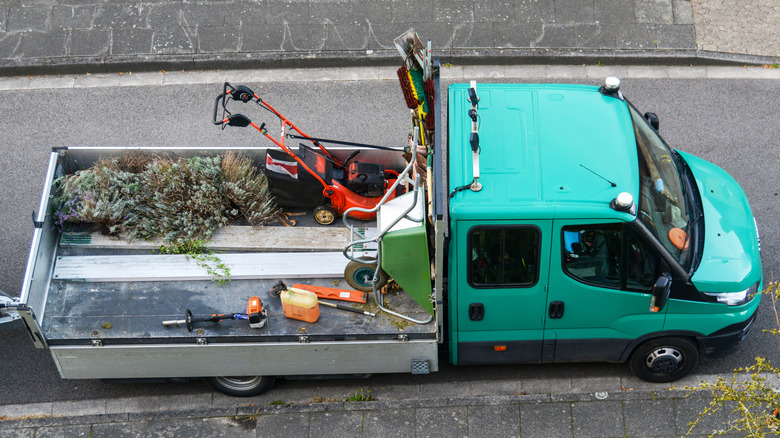
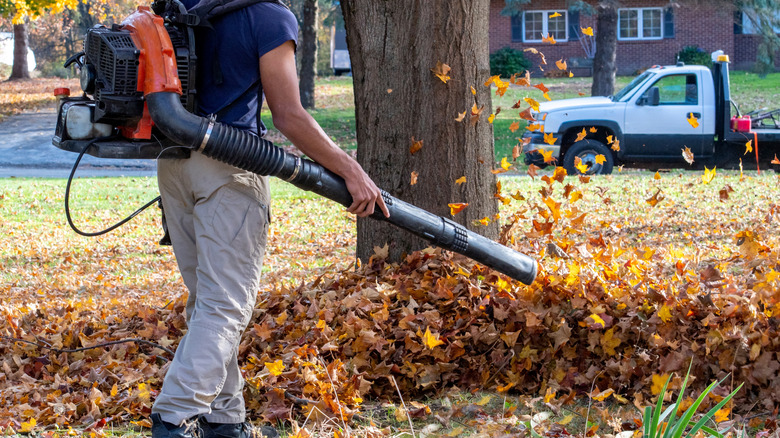
Leaf blowers are convenient, but anyone who has heard them is aware of the ear-splitting sound they make. Less visible but no less toxic are the gases and particulate matter that gasoline-powered leaf blowers emit. Unlike gasoline vehicles, gas-powered leaf blowers are only lightly regulated in the United States. None have catalytic converters removing toxins from their exhaust, nor mufflers to make them quieter, nor efficiency standards to reduce the amount of fuel they burn. There have historically been few legislative pressures on leaf blower manufacturers to develop cleaner, quieter models. That is starting to change, as the move to ban gas-powered leaf blowers is on the rise.
Without federal standards, gas-powered leaf blowers can spew pollutants that other gasoline vehicles can't. And with some 11 million gas-powered leaf blowers in operation in the United States, that's a lot of noise and a lot of pollution. The noise emitted by gasoline-powered leaf blowers regularly exceeds the exposure limit recommended by the National Institute for Occupational Safety and Health.
A report from Edmunds found that you'd have to drive a Ford Raptor truck from Texas to Alaska in order to match the amount of hydrocarbon emitted by a two-stroke leaf blower run for just 30 minutes. Together with gas-powered lawn mowers and other gas-powered landscaping tools, leaf blowers contribute to 4.8% of U.S. carbon dioxide emissions (more than twice that of the aviation industry), according to research in Atmospheric Environment. Further, a study from Air Quality, Atmosphere & Health found these tools account for an estimated 5% to 10% of total U.S. emissions of carbon monoxide, nitrous oxides, hydrocarbons, and particulate matter (PM2.5). PM2.5 emissions have been linked to low birth weight, increased risk of lung cancer, asthma, and heart rate variability.
Where have bans been placed on gas-powered leaf blowers?
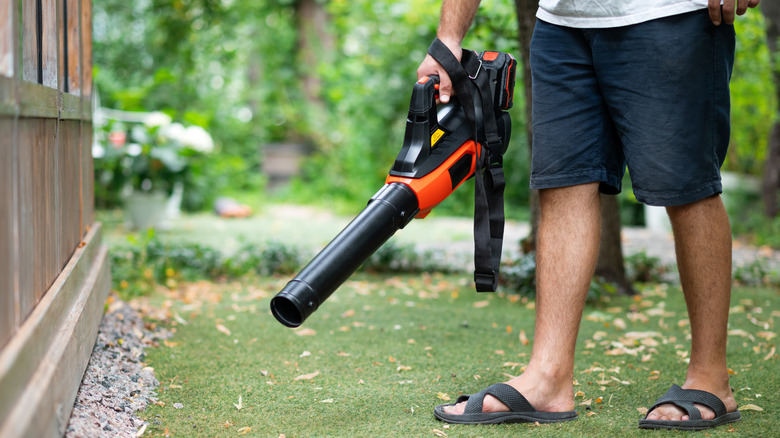
Run your leaf blower at the wrong time of day and you risk provoking a neighborly spat. Bans on leaf blowers are often driven by noise complaints from neighbors, and restrictions exist in numerous towns limiting the use of leaf blowers to specific times of day. Two California towns, Del Mar and Los Gatos, have banned all leaf blowers, gas and electric, while other jurisdictions place limits on their noise level. Battery-powered leaf blowers emit significantly less noise than gas versions, so limits on noise levels may be an indirect way to limit gas-powered leaf blowers without banning them outright.
To date, only one state has completely banned the sale of gas-powered leaf blowers. All newly-manufactured lawn equipment in California have been required to have zero emissions since 2024. In 2025, legislation was introduced in the New Jersey Legislature seeking to ban the sale of gas-powered lawn equipment within three years and its use within five. Other states may follow, but so far, bans have been local in nature. More than 100 cities and a few counties have passed legislation banning gas-powered leaf blowers. Places like D.C., Miami Beach, and Portland have all banned gas blowers. Opting to use a carrot rather than a stick, some cities and electric utilities merely offer financial incentives for switching to electric blowers, advertising them as a highly recommended lawn care tool.
Will the United States see more bans on leaf blowers?
Don't expect a nationwide ban any time soon. Federal clean energy requirements and incentives have come under the legislative and regulatory knife in 2025. Opponents of clean energy in Georgia and Texas succeeded in passing state legislation prohibiting local governments from restricting the use of gasoline leaf blowers. In the highly charged political debate over clean energy, expect to find a mix of bans and bans against bans.
But consumer habits and purchasing decisions sometimes change faster than legislation. As raking fall leaves becomes more controversial, more people are abandoning removing leaves from their yard altogether. Even when they do reach for a leaf blower, it's nearly as likely to be an electric one. Just over half (52.7%) of leaf blowers run on gasoline in 2025, two-thirds of which use two-cycle engines, according to IMARC Group. With the increasing availability of affordable, cleaner, quieter leaf blowers, it's not hard to make the switch to electric even without legislation requiring you to. As battery prices continue to plummet and increased battery densities allow for more powerful and longer-lasting machines, battery-powered leaf blowers become an even more attractive option.
It's not like manufacturers and marketers haven't noticed this trend. Just as you now have a greater choice between electric and gas lawn mowers, manufacturers of leaf blowers have been expanding their offerings as well as developing cleaner, quieter gasoline models. Home Depot expects that by 2028 more than 85% of sales from outdoor power equipment, including leaf blowers, will be powered by rechargeable batteries. If the day comes when 85% of leaf blowers are electric, banning the remaining gas models becomes a lot easier — or even unnecessary.