

Ditch The Vinegar: Here's A Better Natural Solution To Unclog Your Drain
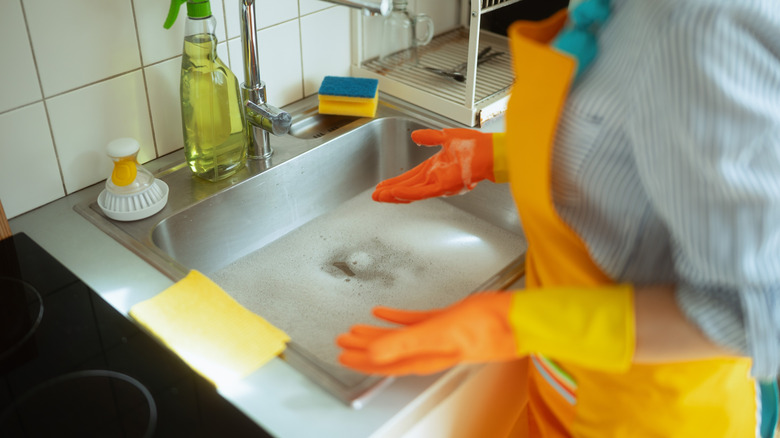
A slow-draining sink can be a nuisance to deal with, but it's also a common problem. Think about it: Soap scum, food debris, and grease go down the drain multiple times a day, making their way through the pipes. Top it off with mineral buildup from hard water, and you've got yourself the perfect setup for a clogged drain.
In this scenario, you may be tempted to reach for vinegar, a popular natural drain cleaner. Many people also swear that you can clean a drain with baking soda and vinegar, followed by a generous flow of hot water. Compared to harsh chemicals like Drano, these products are certainly gentler on your pipes and the environment, but they're not always effective. For a more successful solution, consider enzymatic drain cleaners instead. Enzyme cleaners, sometimes known as bio-enzymatic cleaners, have a steadier effect than vinegar, ensuring your pipes stay clog-free and clean for longer.
How enzymatic drain cleaners work
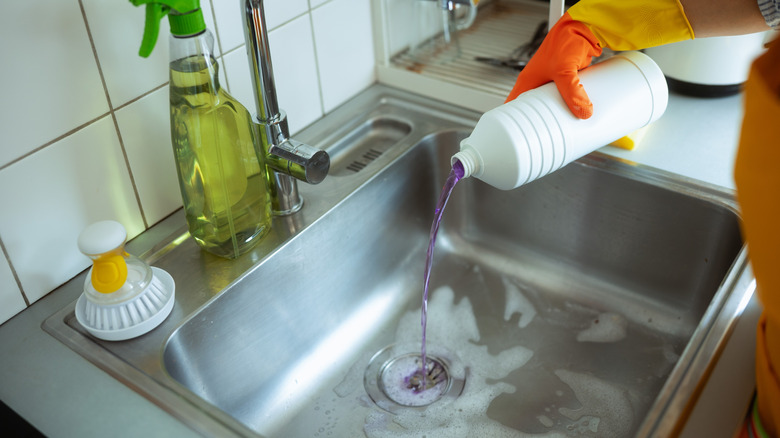
If you're unfamiliar with enzyme cleaners, they're liquid products that rely on enzymes and bacteria to clean. Enzymes are molecules that are naturally produced by good bacteria. Their job is to facilitate chemical reactions between bacteria and other substances; you can think of enzymes like the event coordinators of a party. In science, there are many types of enzymes and possible chemical reactions — but when it comes to unclogging a sink, you'll want enzymes that break down fats, oils, and protein-based substances like food. As the enzymes break down these substances, bacteria can easily consume them, helping unclog your sink.
You can find enzymatic drain cleaners at hardware stores, like Home Depot, as well as Amazon. Simply look for products labeled "enzyme cleaners" or "bio-enzymatic cleaners" that are safe for sinks and pipes. Always follow the instructions on the bottle to unclog a drain successfully. On that note, while enzyme cleaners are generally safer than harsher products, they can still cause irritation if they stay on your skin for too long. Wear gloves to be safe, especially if you have sensitive skin. Also, before using cleaners (of any kind) in a kitchen sink, remove all your dishes to avoid cross-contamination.