

What Ceiling Cracks Can Tell You About Your Home's Condition (& If You Should Worry)
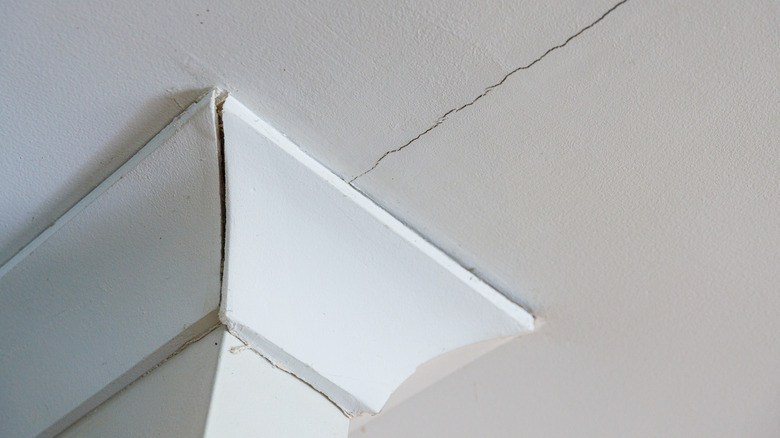
Ceiling cracks are, understandably, a thing of concern. They can possibly be an indicator that there are bigger problems with your structure than just an aesthetic blemish. With that said, while your brain might want to automatically assume the worst, not all cracks are things to lose sleep over. Whether a ceiling crack is a sign of structural damage or other construction issues has a lot to do with the crack's size, placement on the ceilings and walls, and the structure's material. If the crack doesn't check out as something of concern from any of those categories, then likely it's more of an eyesore than anything to stress out about.
Dangerous cracks have to be addressed safely and in a timely manner. Ignoring a major cracking issue can lead to a lot more trouble for you and your house — from lifting floors, to porches and chimneys separating away from the main structure, to exposing the home to dangerous moisture issues, recovery will be harder and costlier if you don't face significant ceiling cracks, head on. The moral of the story is: if the crack isn't something to be worried about, don't fret, but if it's a cause for concern, do the work now to fix it before it's too late.
What different ceiling cracks should tell you about your home
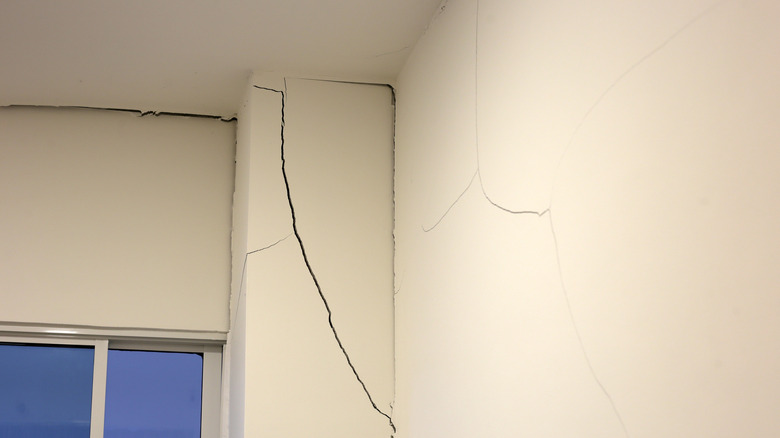
The first thing to pay attention to when you notice a ceiling crack is the location of the crack itself. Straight cracks along the center of the ceiling aren't something to be too concerned about and are likely drywall cracks that can be fixed. However, if the crack is accompanied by sagging or discoloration, it may be a tell tale sign that something above that portion of the ceiling is too heavy to hold, and/or it's suffering from water damage. That's when you should inspect for further issues, like excessive moisture or foundation settlement.
If a crack extends from the ceiling, down the wall, that location might be one of concern too; it can indicate a bigger structural problem since it's likely buckling under pressure. Furthermore, if you notice that the crack runs along the ceiling where it meets the wall, that's possibly a sign that there's a foundation issue, too, which is why the walls are separating where it shouldn't be. If you're noticing any of these crack placements, then you should get them properly evaluated to find out if they are a concern, or just part of normal house settling.
Size and shape of the ceiling crack is also a key way to recognize whether or not to take action. Smaller, thinner cracks naturally occur along ceilings and walls, mostly due to the regular expanding and shifting of building materials over time. Concentrated, radiating cracks are also typical, and probably indicate bad installation more than structural problems. However, if any the cracks you're observing are wider than ⅛ of an inch and longer than 12 inches long, then it may be time to sound the alarm. If you see any gapping or notably deep cracksas well, then get it checked out — either by your handyman, or better, a structural engineer.
Why is the ceiling cracking, and how can you safely fix it?
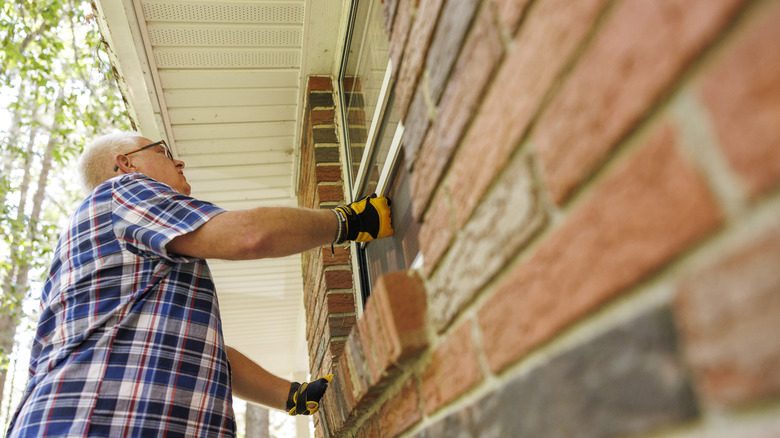
Different cracks form because a variety of reasons. You may see cracking due to a number of structural issues, like foundation settlement or heavy loads on specific pressure points. It can also be caused by poor craftsmanship, like incorrectly or improperly installed drywall or a bad paint job (and these cracks are typically not a structural concern). Cracks can also from environmental issues too such as excessive moisture in the ceilings and walls. Whatever the reason for the cracking, if it fulfills the qualifications of the aforementioned stress tests, from location to size to shape, you should take care of it as soon as possible.
If it's a smaller crack, or your expert advises a DIY fix, you can likely fix it with just some repainting or a drywall repair. But if it is one of those bigger issues we highlighted, you'll want to hire a professional to properly address the problem. An experienced contractor can help zero in on the real issue that the ceiling cracking is trying to communicate and help you find other craftsmen who have the knowledge to fix the problem. If it's a foundation issue, it may require extensive repair, while moisture issues may require additional professionals like plumbers. While it may be tempting to try your hand at a big DIY, the truth of the matter is that it'll be safer and more reliable if you use a professional for this home repair. As a reminder: smaller hairline cracks aren't anything to be too concerned about, but don't ignore the bigger signs.