

The Best Type Of Cutting Board That You Should Have In Your Kitchen
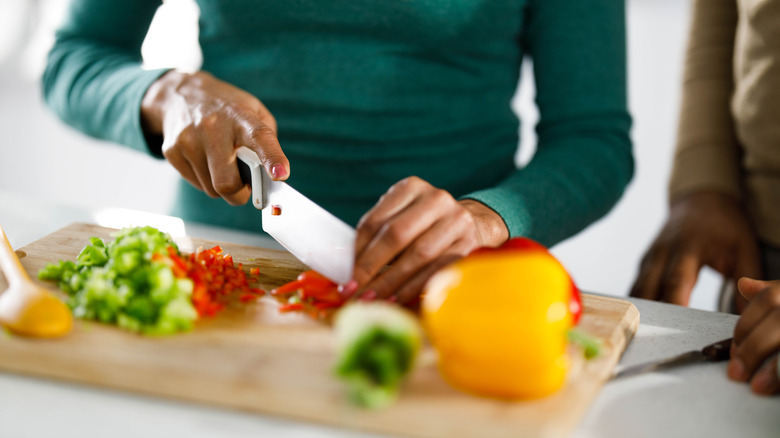
Cutting boards are an essential tool in every cook's kitchen, but there are many cautionary tales when it comes to these kitchen staples, particularly focusing on what material of board you choose. When shopping for your next cutting board, you should be mindful that different materials carry with them varying concerns on food safety, like bacterial growth and food contamination, and knife longevity. While there are several options to choose from nowadays, one cutting board material rises above the rest for a number of kitchen safety reasons: bamboo.
While materials like wood, plastic, glass, and marble are common for cutting boards, most of them come with distinct drawbacks. Wood, for instance, readily absorbs food particles and can lead to bacterial cross-contamination if you don't clean it meticulously. Cleaning wood cutting boards properly makes or breaks it as a viable option. Meanwhile, plastic models are currently under the microscope (literally) for shedding microplastics into ingredients during food preparation and being one of the least sustainable choices. It bears the question, are plastic cutting boards safe? Harder surfaces like glass, marble, and even stainless steel are, indeed, non-porous and prevent bacteria from establishing themselves, but they can quickly dull a knife blade, making your knives' use dangerous without consistent sharpening. Bamboo, however, has a number of qualities that mitigate many of the concerns other materials present, making it a cut above the rest.
Benefits of bamboo cutting boards
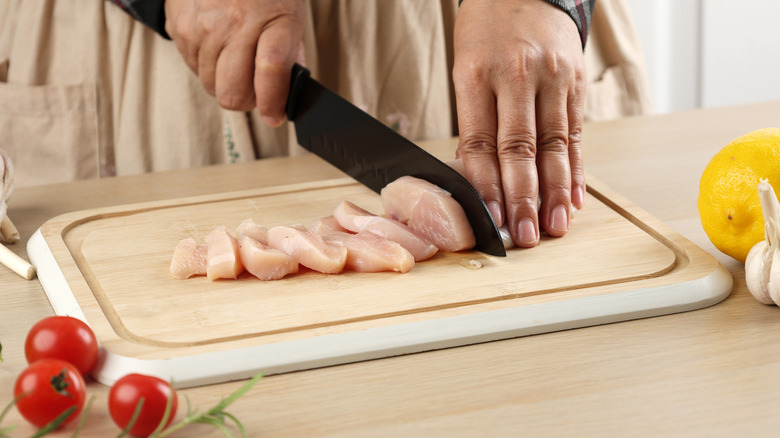
Bamboo cutting boards are an excellent choice for a variety of reasons, particularly for their hygienic properties. Bamboo is a healthy alternative to hardwood cutting boards because it is relatively scar and scratch-resistant from repeated cutting, therefore giving less opportunity for bacteria to grow in those cut marks. Bamboo is also less porous than hardwoods too, further contributing to its bacteria-resistant qualities and preventing cross-contamination.
Given its density, bamboo cutting boards are also less likely to warp from moisture than its wooden counterparts as well. Bamboo is uniquely composed of fiber structures that make it simultaneously dense and yet still soft. This combination of characteristics make bamboo an ideal material for cutting boards because it provides a durable surface for chopping without dulling or compromising a knife's sharp edge as quickly as other harder materials like the aforementioned glass, marble, or stainless steel alternatives.
Kitchen safety benefits aside, bamboo is also an incredibly sustainable material choice as well. It's a fast-growing grass that doesn't require replanting after harvest — which incidentally makes it unruly to grow sometimes and often homeowners wonder how to get rid of bamboo in their yards. This fast-growing characteristic, while annoying for landscaping, is beneficial as a renewable material. It also matures relatively quickly when compared to other woods, making it a speedy and readily available material to work with for household items, like cutting boards.
How to care for your bamboo cutting board
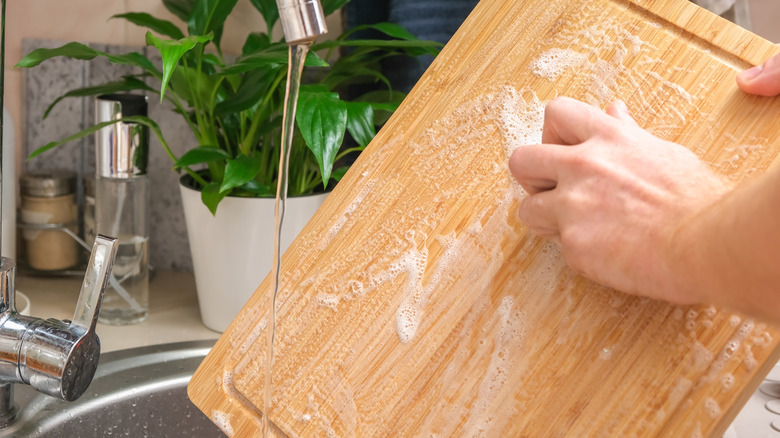
Though less finicky than other materials when it comes to cleaning and maintenance, there are several key things to keep in mind for bamboo cutting board care. To maintain its hygienic benefits, it's best to hand wash the board with hot water, soap, and a soft sponge. Be sure to dry the board with a towel, or give it ample time to air dry before putting it away. Avoid submerging a bamboo cutting board in water and don't place it in the dishwasher, as such prolonged and intense exposure to heat and moisture can cause the bamboo to warp, crack, or split, despite its density. Soaking a bamboo cutting board also encourages absorption of existing food contaminants, something best to avoid for optimal hygiene.
When you're not using the bamboo cutting board, store it vertically to maximize circulation around all sides of the board. To keep your board performing optimally, also consider routine applications of a food-safe mineral oil every few weeks to a month. Using a clean towel or soft cloth, apply an even coat of your chosen oil to ensure tool longevity. This simple, but regular maintenance trick will protect the bamboo, repel moisture, and keep the board looking and performing like new for years to come. With bamboo, you avoid some of those common downsides with other materials, making it one of the best types of cutting board that you should have in your kitchen.