

Want Fewer Weeds? Here's The Best Type Of Mulch To Prevent Them From Taking Over
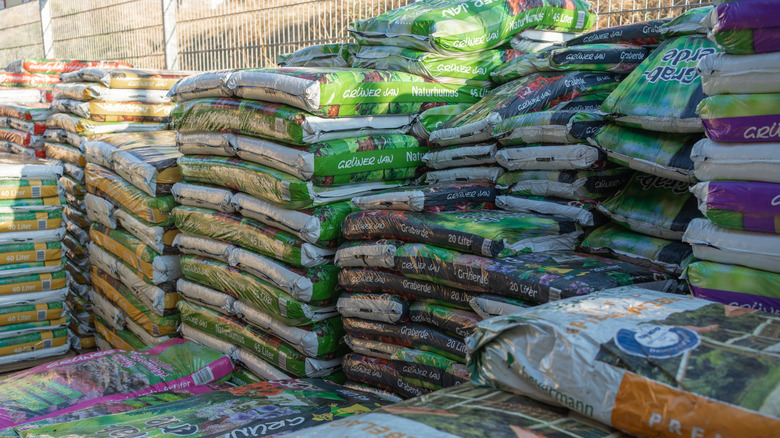
It's doubtful that anyone starts a garden because they love weeding. Weeding is a chore, not an end in itself. Less time spent weeding means more time doing other things, including enjoying your garden. Mulching has long been widely advocated as an effective form of weed control, but which kind of mulch to use? The best type of mulch is one that blocks out the sunlight, preventing weed seeds from even germinating. There are many ways to block the sunlight, including dark plastic or cardboard, but those are only temporary solutions, for who wants to look at a garden covered in dark plastic or cardboard? Bark mulch is the best way to prevent weeds from taking over your garden without sacrificing the aesthetics of your garden.
As its name suggests, bark mulch is obtained from the outer covering of trees. Bark mulch has been proven to be more effective than tilling the soil or even using fire to suppress weeds, as these other methods either don't reach deep enough into the soil to kill weed seeds, or worse, stir dormant weed seeds into germinating.
When considering how much mulch you need to buy, consider that bark mulches are also relatively low in cost. Compared to other types of mulches, such as straw, sawdust, or husks, a course bark mulch is bulkier, allowing you to replace the mulch less frequently, thus reducing your costs. In one study, cocoa husk mulch was found to be marginally more effective than bark mulch in suppressing weeds, but it was also one-third more expensive, which in effect can cancel out its benefit.
Choosing the best bark mulch for weed control
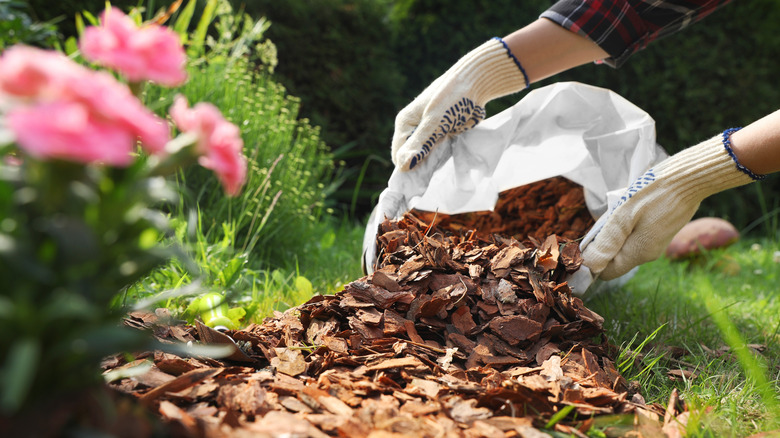
Beyond acting to block out sunlight, bark mulches can also act as natural herbicides. In the evolutionary competition for survival, many tree species, like red maple, red hardwood, hemlock, and red cedar, produce chemicals that prevent the germination of other species, making them highly effective at suppressing weeds. Using these species means you can rely on the natural herbicides found in bark mulch and skip any bark mulch that is treated with synthetic "weed control" chemicals. Some have proven more effective than untreated bark mulch, but these synthetic chemicals can be broad-spectrum herbicides that also harm the plants you want to grow, or can negatively impact beneficial insects that enhance the health of your garden. Research shows that increasing the depth of your bark mulch to 2 ¾ inches provides satisfactory weed control without herbicide use.
Some wood-based mulches are made from scrap wood rather than from bark, so look for a course bark mulch labeled organic. A course-textured mulch made of larger pieces of bark will break down slowly, unlike fallen leaves used as mulch, which can rot rather than decompose. As it breaks down, an organic bark mulch adds nutrients to the soil, increasing the health of your plants and allowing them to out-compete weeds and strengthen themselves against pests. The mulch will also double as a natural habitat for earthworms, beetles, ladybugs, and other beneficial insects, including those that live off of weed seeds, pollinate your flowers, and prey on pests that harm your plants. That way, you'll be better able to enjoy the diverse environment of your garden without spending all of your time in it on your hands and knees.