

The Tip You Need To Keep Weeds From Spreading And Your Lawn Looking Great

If you loved blowing those puffy dandelion seed heads into the wind when you were a kid, then it's just karma coming back to bite you now that you have a lawn of your own. Like the majority of plants, weeds spread by producing seeds. Some seeds are carried by the wind, others by humans and animals, and still others by rain. You can cut back weeds, pull out their roots, use bleach or vinegar to kill weeds, or attack them with herbicides, but if you only do that after you've let them produce seeds, then you're fighting a losing battle. As the saying goes, this year's seeds are next year's weeds. The best way to keep weeds from spreading is to do your weeding before the plant has a chance to produce seeds.
Knowing how weeds grow and reproduce gives you a strong clue why preventing them from producing seeds is key to weed control. Different weeds have different life cycles. Annual weeds like chickweed and crabgrass germinate, grow, produce seeds, and die, all in one year. Biennial weeds like wild carrot germinate and grow leaves in the first year, then flower and produce seeds in the second year. Perennial weeds like dandelions and thistle live for multiple years and can reproduce both by producing seeds and through their root systems. You might have noticed that what they all have in common is their ability to reproduce by seeds. So, before a plant flowers and produces seeds, literally nip it in the bud.
How to care for your lawn to keep weeds from spreading
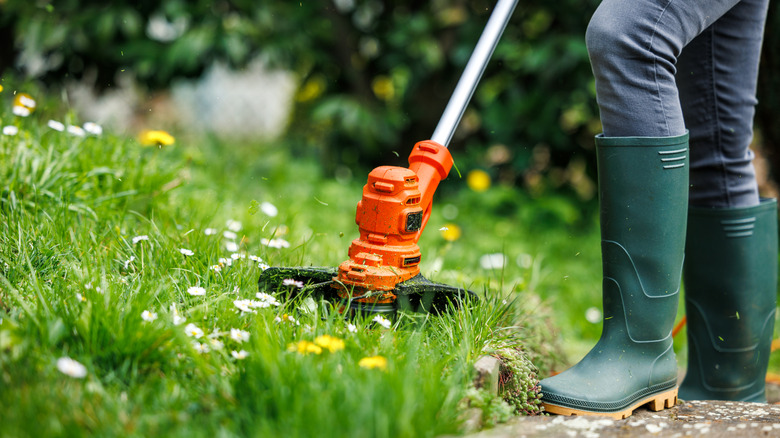
The key, then, is to start early. Many weeds get a head start in spring before your lawn starts greening up. Weeds like dandelions that emerge in early spring can tolerate cooler weather and weaker sunlight. Because they pop up before your grass starts growing, the best way to get rid of weeds at this stage is to pull them by hand out of the ground before they flower and set seeds. Choose a day when the soil is moist, and make sure you get all of their roots. Dandelions have long taproots and can continue to grow from their roots year after year, so a narrow trowel can be a big help in getting all of those roots removed.
Once temperatures warm up and the grass is growing, continue to pull up by hand any weeds that you see, but you can also rely on your lawn mower to prevent weeds from producing seeds. One of the common mistakes to avoid when killing weeds with your lawn mower is failing to raise the height of your lawn mower blade to let the grass grow tall and strong so that the grass shades out and outcompetes the weeds. Mow once a week to cut back any weeds that have emerged. Also be sure you're not mowing any weeds that have already gone to seed, as you can unintentionally spread those seeds with your mower. Whatever weeding method you use — deadheading, mowing, hand-pulling — be sure to bag up your weeds and dispose of them in the trash rather than throwing them in a compost pile where they can wait for another opportunity to germinate.