

The Once-Dated And Forgotten Dining Room Trend That's Coming Back In Style
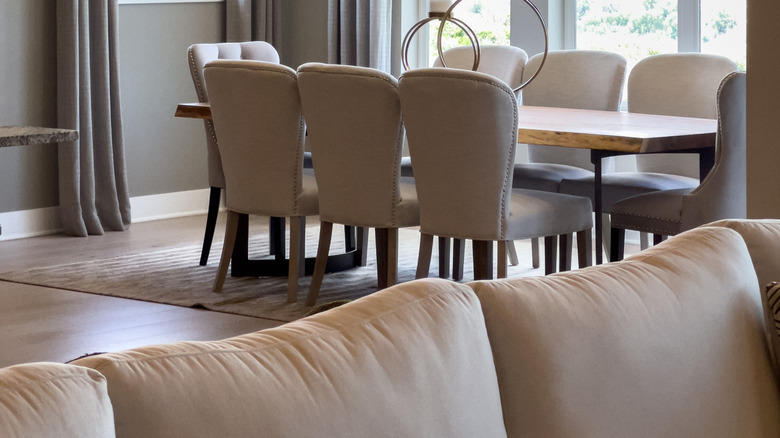
Many homes today boast similar, modern open floor plans. The cornerstone of this popular design is exactly as its name suggests, a floor plan with no major separation between the rooms of the home. When this trend came about, it was a stark divergence from the traditional style where each room, kitchen, dining room, living room, and family room, was very distinctly separated. The open floor plan design came about in the mid-20th century as a staple of a more modern style that promoted seamless transitions, creativity, and connectedness. In areas where home ownership is expensive, it also became a way of trying to stretch your budget by making a smaller home look and feel bigger. Regardless of the reasons, after a hot and heavy few years of a modern style driven by open floor plans, the trend may be finally starting to wane giving way to a resurgence of more classic layouts like an entirely separate room dedicated to dining.
Lately, designers have found that distinct rooms, like the dining room, are in higher demand from buyers and homeowners alike. With recent changes to our lifestyles (like now heavily prevalent remote work) people may be searching for a comforting sense of nostalgia combined with distinct boundaries between our work and home lives. These psychological drives could be behind the push to revert to more traditional closed floor plans. If this idea appeals to you, here are some ways to create a distinct dining room in your home.
How to inexpensively distinguish your dining room
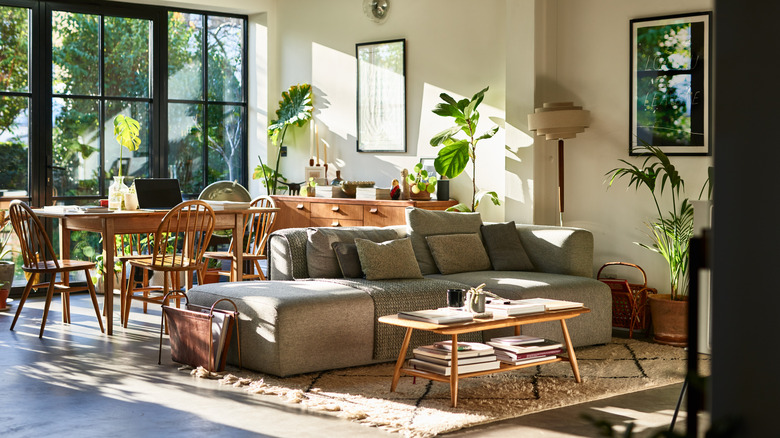
The dining room is an excellent starting place when creating an intentional space to unwind at home. There are two routes you can take to create a distinct dining room if your home is open concept. The first is throwing up walls; the second requires utilizing creative dining room ideas and inspiration to delineate the space from other rooms.
For this less expensive, DIY approach, you can consider options like furniture arrangement, color scheme, and dividers. Fortunately, how to separate living room and dining room layouts can be as simple as arranging furniture in a way that blocks the area off. Consider an L-shaped couch or strategically placed chairs, side tables, and other items (like a console table behind the couch) to create this feeling of separation. If you want to take this design a step further, items like large bookshelves, open shelving, and even antique hutches or china cabinets can be placed to create a major division between open areas. Lastly, consider color. Different color choices for your open dining room and adjoining areas can immediately trick the eye into viewing each as its own space. Remember, though: you want different, not clashing, so choose colors that complement each other and tie them together by including accent pieces in each space in the respective colors.
Considerations for permanently closing in your dining room
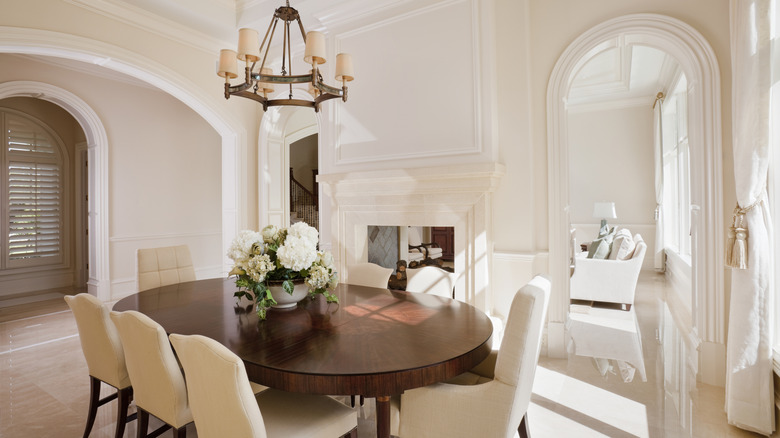
If you'd like to opt for adding walls to your home to permanently create a walled off dining room then let's crunch some numbers. According to Angi, this addition can cost you, on average, $2,065. If that number sits comfortably with you, then you'll want to first start by finding and hiring a trustworthy and licensed contractor for the job. Throwing up walls may seem simple, but it can require things like permits. It's also not uncommon to run into more complex aspects like additional wiring or plumbing, so don't skip hiring an expert when you need one.
When you're ready to design the space, consider decorative finishes like wall panels and trim. These design choices will create a unique room that feels most comforting to you. If walling off your dining room is a little too intimidating for you, but you've got some money for a renovation, look into similar but less committed option. Half glass partitions are unique, gorgeous, and let in light. Creating different style ceilings or ceiling depths (vaulted ceilings, adding coffered ceilings) brings in some dimension along with a differentiation of space. Even adding some vertical columns (complete with architectural interest like artful trims). These additions can be similar in cost to adding walls — or you can go above and beyond for a uniquely segmented space.