

The Best Gravel For A Long-Lasting Patio: What You Need To Know
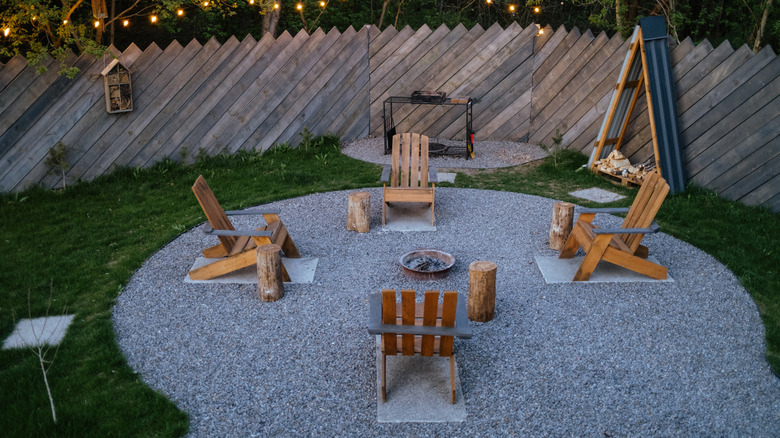
Beautiful interior spaces enrich our lives, adding comfort and a peaceful environment for our families. But adding life to the outside spaces around our homes is a way to expand that nurturing environment — with beautiful yards and especially patios. Patios can be constructed from concrete in many types and styles. Pavers, bricks, and flagstones are common materials as well. One patio material that may not be top of mind for many of us in this country is gravel. Long a primary choice for patio construction in the UK, France, Italy, and Japan (to name a few), gravel may be the perfect choice. Gravel is an ideal product for landscaping.
There are many types of gravel patios, and gravel patios have plenty of benefits. If they are installed correctly, they will last for decades with minimal maintenance. They drain water naturally and do not harm the soil beneath them. Gravel can have a smaller carbon footprint than concrete and other common patio materials. Because it drains naturally, it will not be subject to hard-surface code limits that some communities restrict. It will not store heat like concrete, keeping your patio cooler. Gravel comes in a wide spectrum of colors and textures and is subtly beautiful, complementing all sorts of architectural styles and designs. It is also a DIY-friendly material that is economical to install and maintain.
What is gravel and which type is right for you?
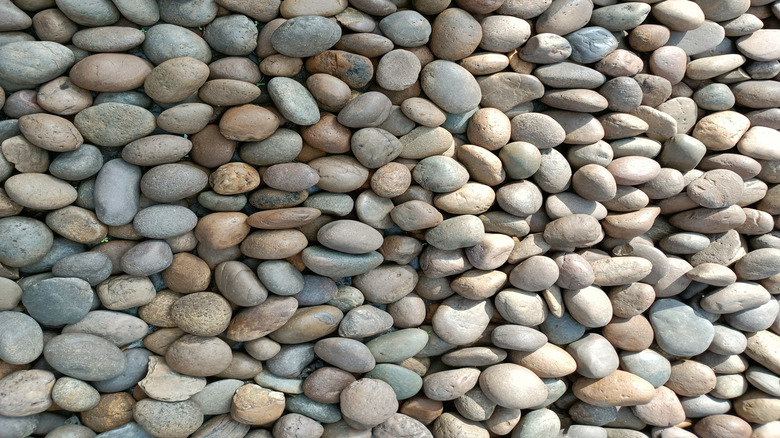
What is gravel and which type is right are trick questions. Gravel is a naturally occurring aggregate, a mix of small rocks, crystals, and sand used in many types of construction, from road base to Japanese Zen gardens. Dug from gravel pits it is versatile, comes in various grades or types and is relatively inexpensive. With that in mind, different types of crushed rock: limestone, marble, slate, granite, and more, are also known as gravel. One way gravel is sold is by the size of the aggregate. Pea gravel is about the size of a green pea, whereas river rock is about 1 inch in diameter. Some gravel has small rocks of various size and is mixed with sand, and another type is "washed" with sand and has small pieces washed away.
When it comes to your patio, the "which type is right for you" questions depend on many factors, with appearance and use being the primary considerations. Do you want a dark color? Nearly white? Do you have kids and dogs? Do you want it to pack tightly or be looser underfoot? Generally, pea gravel or small-sized granite or marble gravel are great choices for a family patio. Crushed limestone is another type that is beautiful and practical. Any of these could be the "perfect" choice for you.
Important considerations when using gravel
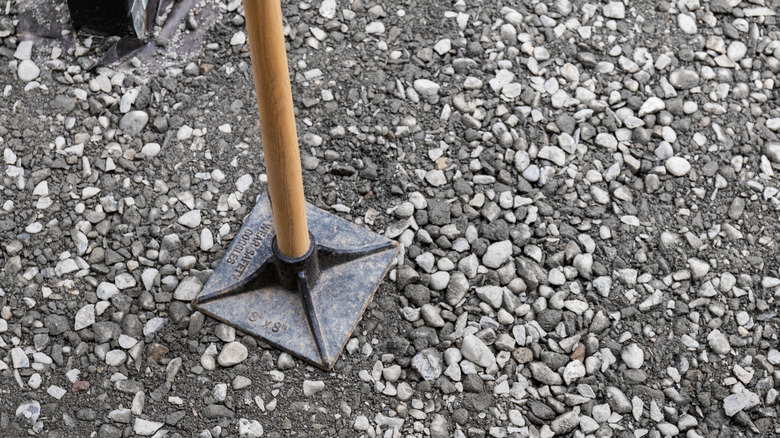
As with any other construction project, installing gravel (whichever type you choose) properly will be the difference between a durable patio and one that will be troublesome. Here are some important details to remember. First off, prepare the space by digging down at least 6 inches, leveling the ground, and packing it tightly. Next, put down a layer of washed granite sand, evenly spread about 1 inch deep. It is a good idea to have some sort of edging around the prepared area to restrict the gravel from spreading. This is especially true for pea gravel, which does not compact tightly. It's less important for angular gravel like crushed granite or limestone, but is still a good idea. Some will advise landscaping fabric over or under the sand layer to stop weed growth. Its efficacy is questionable, as well-installed gravel will stop weed growth, and the fabric will eventually break down. Just not practical. The last layer will be your chosen gravel type. It needs to be at least 4 inches deep, but 5 inches is even better. Smooth and compact the layer, and you are done.
Finally, when choosing the type of gravel for your patio consider these basic ideas to help you decide. Pea gravel is round and has more "give" as it does not pack firmly. As such it is easier on bare feet, but it will scatter outside of your patio area more easily than other types of gravel. Angular gravel like crushed limestone and marble will pack tightly and hold up to kids and dogs with less scattering. Advice from a landscaping professional can add even more details that will help you choose your gravel effectively.