

The Genius Hack That Makes Removing Pesky Stickers From Glass So Easy
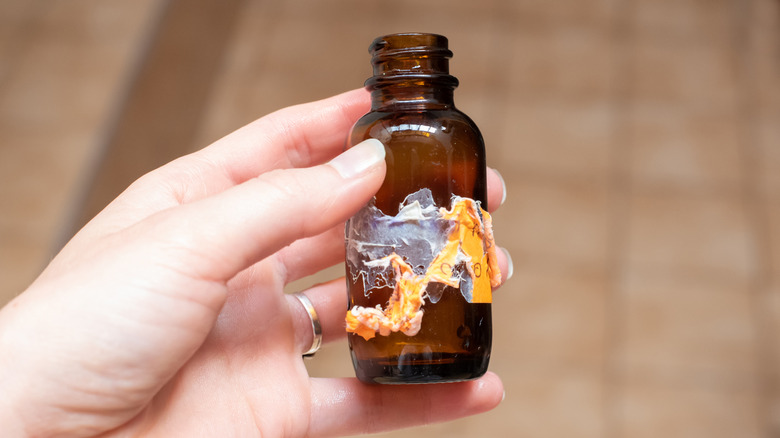
There's a good chance you'll need to remove stickers from glass at least once in your life. This is especially likely if you enjoy upcycling projects, like genius ideas for reusing glass yogurt jars. However, the adhesive on some stickers can be very stubborn, and you might find leftover residue even after you've peeled them away. In other cases, the layers of the stickers might separate, leaving behind a patch of stuck-on paper. Not only can this ruin the look of your glass object, but it can also be time-consuming to deal with. Plus, if you keep picking at the leftover residue, you might potentially scratch the glass.
A citrus-based sticker remover, such as Goo Gone, is a common solution to the problem. But it's also possible to remove glass stickers with ordinary nail polish remover, which you (or someone you know) might already have at home. Just be sure to use the kind with acetone, rather than the non-acetone variety. That's because acetone is a chemical that can break down the bonds in the glue, making it easy to remove adhesive residue from glass. Let's talk about how exactly to use it.
How to remove glass stickers with nail polish remover
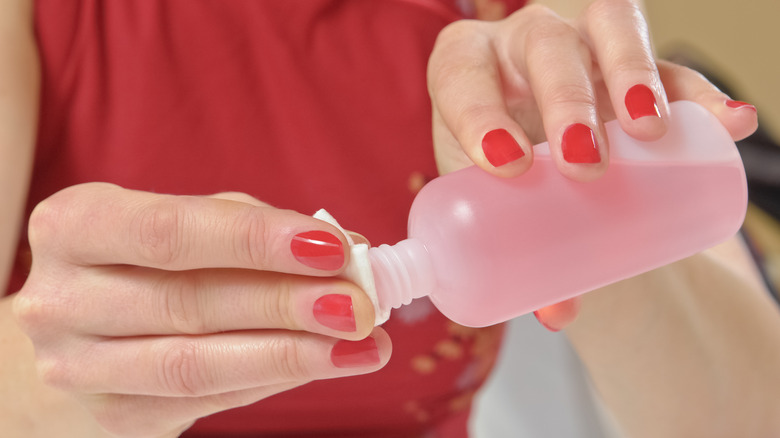
Fortunately, you don't need a lot of nail polish remover to get the job done. All you need to do is soak a cotton ball with acetone nail polish remover, then apply it to the sticker residue. If the affected area is very small, you can use a cotton swab. Alternatively, if you're tackling a larger patch of residue, use a clean cloth. Once you've moistened the sticker with acetone, wait several minutes. Eventually, the residue will soften, allowing you to scrape it off with a putty knife or plastic card, like an old gift card.
As with all techniques that remove sticker residue, there are some things to keep in mind. If your glass surface is painted or decorated, use caution when applying with acetone, as it might cause damage. Do a patch test by applying the nail polish remover to a hidden area, like the bottom of the object, then waiting a few minutes. Check for any damage or discoloration; if the glass is unaffected, you can continue using the acetone. Also, be mindful of the surface you're working on, as the acetone in nail polish remover can ruin materials like treated wood. Finally, if you're wearing nail polish or have sensitive skin, wear rubber gloves. This will protect your nails and skin from the nail polish remover.