

If You Reuse Toilet Paper Rolls In Your Garden, You Might Spot One Moldy Issue
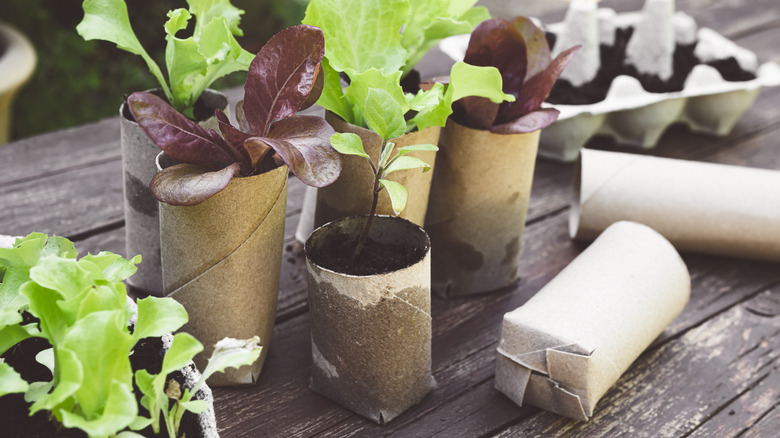
There are genius ways to reuse toilet paper rolls, including the gardening crowd favorite as seed starters. Conceptually, it makes a whole lot of sense — the rolls are biodegradable so you can plant your seedlings, "pot" and all, straight in the ground. You're also giving a second life to materials that you would otherwise think of as trash. And, for budget-conscious DIYers, toilet paper rolls make seedling starters all the more budget-friendly since you don't have to invest in seedling trays. However, there's one issue you may want to keep an eye out for: Mold growing on the roll. While mold itself isn't too much of a concern, it can be a sign of something bigger to monitor.
It may seem concerning at first, seeing spots of spores popping up along the exteriors of the rolls, but rest assured that this isn't an unusual part of the roll's life cycle. Rather, the mold indicates that the toilet paper roll is undergoing its first stages of decomposition,
and it largely won't affect how the plant grows. It's not uncommon to observe mold growing on other surfaces around the plant, like on the soil, either. And while mold on neither the soil nor the toilet paper roll will affect the health of the plant, per se, seeing mold can be a sign that your watering regimen needs to change.
What mold around the plant is telling you
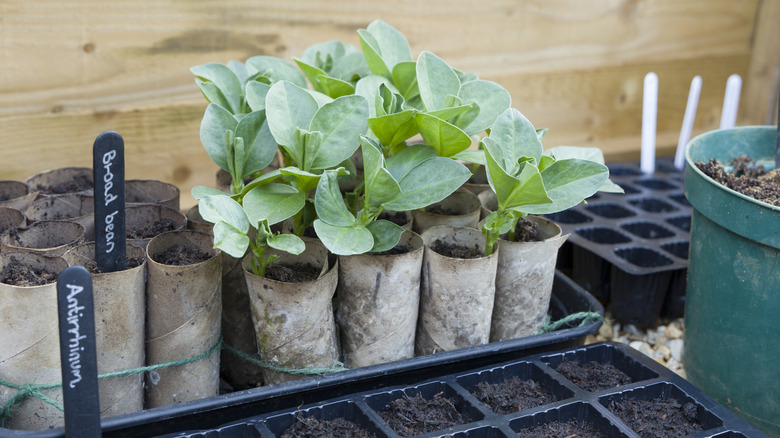
Typically, the white mold you may observe on toilet paper rolls and on top of the soil is the harmless saprophytic fungus. This kind of mold is a natural part of garden growth; it breaks matter down into digestible nutrients that benefit the development and health of the plant. What you should be concerned about, however, is that the mold may be communicating that your watering habits are adversely affecting your garden.
Since ample moisture is necessary for mold to visibly form, it may mean that you're watering your garden too much. It's also possible that your plants aren't draining properly either, so however you're storing your toilet paper roll seedlings, ensure the water can escape from the vessel to prevent excessive moisture. Too much water can lead to waterlogged roots, which later can turn into root rot and even leaf burn. Moldy spores can also indicate that your seedlings are either in a poorly circulated area, and need more air flow, or it's not getting adequate amounts of sun. And again, while the mold itself won't harm the plant, you can treat the mold with a vinegar solution to get rid of those powdery spots.
There are some molds you should be vigilant about, though. For example, black, sooty mold on leaves is treatable; however, if unattended, this mold can block the sunlight needed for photosynthesis and stunt growth. Fusarium, the mold responsible for root rot, can also spread from plant to plant and is immune to fungicides. This is why maintaining proper moisture levels is key to plant health. So though white mold spores aren't something to be fussed about, don't ignore what it's trying to tell you, and don't give other molds the opportunity to form.