

Read This Before You Remove A Tree Stump From Your Yard
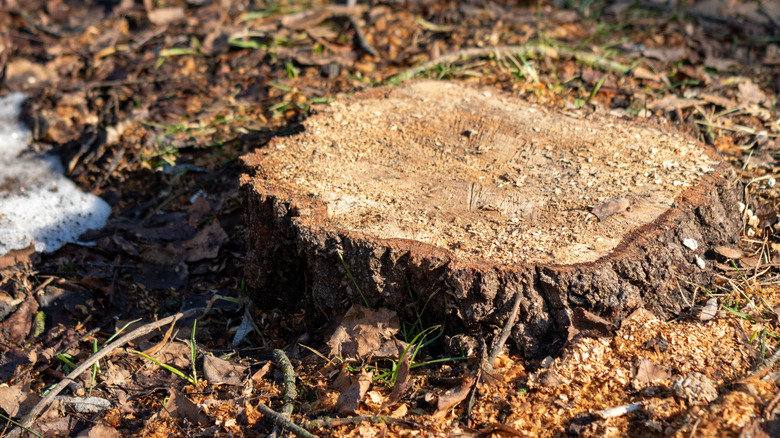
Cutting down a tree can be a lot of work. Adding to the labor-intensive task is the question of what to do with the tree's stump? Really, how many of us know how to remove a tree stump? Do you even want to? It is possible to turn a stump into a planter, removing sufficient material from the core of the stump and replacing it with potting soil. A combination of vining plants and flowers can turn an ugly stump into a beautiful addition to your yard. If the diameter of the stump is sufficiently large, you can DIY a place to sit. Either carving it into something similar to a chair or just a simple "stool." Some folks have used an existing stump to support a birdbath. Creativity is the key if you choose to keep the stump and "upcycle" it. You can even turn it into art by carving it. Leaving the stump in place is one of many options.
If you choose to uproot the stump, there are several different ways to get rid of it. A stump from a tree 6 inches in diameter is a completely different degree of difficulty than a stump from an 18-inch-diameter tree. Some trees have shallow, widespread roots; others have taproots. Another variable is where the stump is situated. A stump in the middle of a manicured lawn can be an eyesore that needs to be removed quickly. Whether you choose to leave the stump or get rid of it, there are pros and cons to all different approaches. If you leave the stump, it may incorporate itself into a healthy backyard ecosystem as a home for fungi and microorganisms. Then again, it may be unsightly if you don't find just the right way to repurpose it.
Grinding, digging or pulling a stump
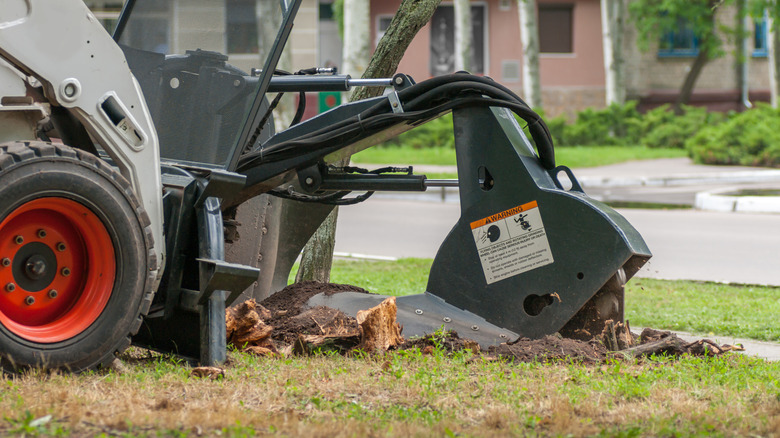
When it comes to medium to large diameter stumps, grinding is the fastest and most affordable way of removal. Those are its upsides. The primary downside is that grinding leaves the root system in place. There will also be a wealth of wood chips produced and a hole to fill. You can hire someone to grind the stump, or you can rent a stump grinder. You will need to be physically able to operate the machine — which can be cumbersome, or potentially dangerous if you don't know how to use one properly.
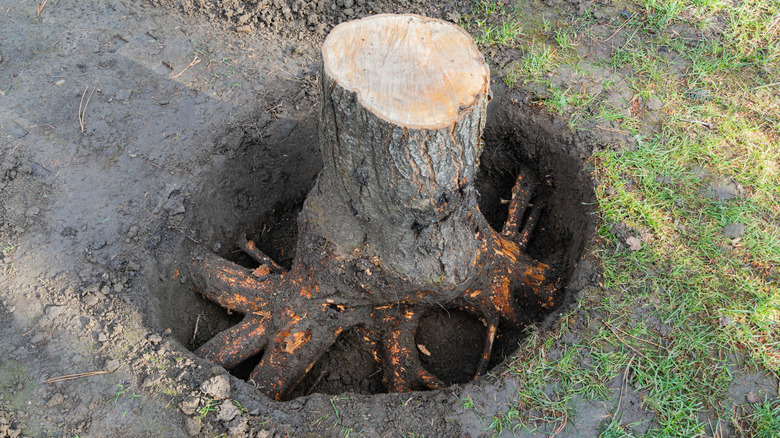
Another manual method of stump removal is pulling it out of the ground. This can be hired done by a professional using machines like a backhoe or skid steer. This method is expensive and leaves a large hole to fill. But it completely removes the stump and most of its roots which has some significant advantages. This is especially important if removing a tree for construction reasons like pouring a foundation.
You can also pull a stump by digging it out by hand. Dig around the base of the stump, then use a chainsaw or root saw to cut through the roots. Continue to dig until the stump is basically free of the earth and then using a large prybar and pushing on the stump, continue to cut away at the roots until the stump comes free. Leave the stump about 6-feet tall in this case to provide additional leverage when pulling it to one side or the other. This method is physically demanding and time consuming. However, with smaller trees it is less so and quite practical.
Non-manual methods of stump removal
If you're not up for manual labor or spending money to hire someone, there are slower methods to be considered. First off, stumps will rot and disappear if left alone. It can take up to 10 years. But, there are steps you can take to speed up the natural decay process. Drilling holes down into the stump and pouring nitrogen-rich fertilizer into the hole, plugging them with soil, and covering the stump with dirt. This method can reduce the time for decay to a year or two. There are commercially available products, but most of them are basically just fertilizer, although some break down the stump with acid. Using a common bathroom staple to break down the stump, Epsom salts, a similar drilling method will also speed up the decay process.
Although you'll find it on the Internet, one idea to avoid is burning the stump. It can be successful, but it is dangerous as the fire can linger unseen in the stump and spark back up when unattended, presenting a risk of out-of-control fire. Plus, many communities prohibit it.
The easiest solution is to repurpose the stump, but if you're set on getting rid of it, look into the safe ways to remove it — whether that means spending a little money or waiting a little longer. Leave it, pull it, dig it, or grind it. The choice is yours.