

Will Cracking Your Garage Door Help Keep Your Home Cool For Less? Here's The Truth
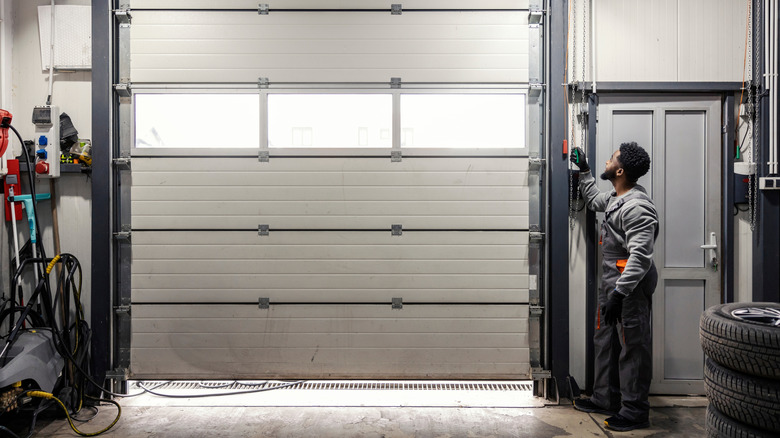
When it's hot outside, you're practically running your air conditioning 24/7, causing a spike in your electricity usage. Your garage is likely far less insulated than your house, so it heats up more quickly than the rest of your home, and now it's piping hot with the sun beating down on it. Some of that heat makes its way into your house, especially if you enter the house through your garage. So you think, "Couldn't I just leave the garage door open a crack to let the hot air escape?" Sadly, no, and there are number of downsides to leaving it open.
It's basic science: Hot air rises. Assuming your garage door opens from the bottom up, opening the door a crack might let a small amount of cooler air in, but the open door won't let any hot air out, since most of it is higher than the crack in your door. Unless you have a way to push the hot air out, you're not likely to notice much of a difference in temperature by leaving the door open.
What you may notice are unwanted visitors to your garage. Dust and dirt can easily blow in, which can negatively affect any vehicles or power tools that you keep in there. A garage door open at night is an invitation to wildlife to find their way into your garage, chew on wires, paw through your pet food or garbage, leave their own messes behind, or even build a home within your home. If the door is open wide enough, you may also be creating a security risk by providing temptation for unwelcome human visitors – especially at night.
Ways to keep your garage cool during summer heat
You can more easily keep your garage cool by keeping basic physics in mind. To release the hot air closest to the roof, you can install a well-sealed roof vent or attic fan without disrupting the shingles on your roof. You also could install two (or more) vents on your wall or garage door: A lower one to let the cool air in and a higher one to let the hot air out. Just remember that vents will let cool or cold air in during the winter, which may not be preferable, depending on where you live. The larger your garage, the more air circulation you'll need, so you may need to add an exhaust fan as well. Fans are rated by the amount of airflow they provide, measured in cubic feet per minute (CFM). A standard one-car garage might require a fan of 200 to 450 CFM; a two-car garage, 300 to 550 CFM.
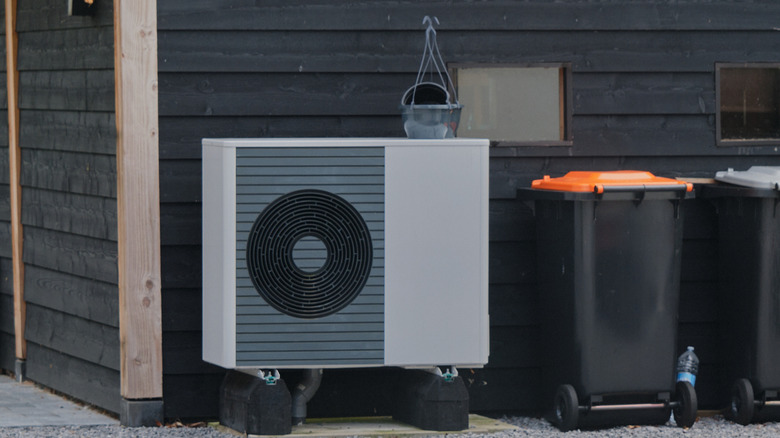
Heat pumps are more expensive (around $2,000) than installing vents or fans, but if you use your garage as a workspace or an exercise space, you can install a mini-split heat pump that can keep your garage as cool as the rest of your house. Heat pumps work by moving hot air from one place to another without the need for vents in your walls or door. Cooling a single space such as a garage does not take an entire HVAC system, and a heat pump doesn't pose a security risk the way an air conditioner sitting in a window might. A heat pump also acts as a dehumidifer, keeping the things you store in your garage drier along with increasing your comfort level if you're working or working out in the garage.