

Sleeping With Your Ceiling Fan On All Night? Here's Why You Should Stop

Many people swear by running ceiling fans at night to help them sleep. We use fans to cool down, so it seems logical that keeping a fan running all night will indeed keep us cool all night. The constant white noise from the fan can also have a calming effect, helping us fall asleep – and help us stay asleep by masking disruptive noises. But how effective are ceiling fans? You may be doing yourself more harm than good – or just wasting electricity on something that does little to help you sleep.
If you use a ceiling fan to keep you cool all night, think again. The motor running a fan actually adds heat to your room – not much, but a fan can't reduce air temperature, merely blow air around. Fans cool you down by evaporating your sweat, which removes heat from your body. A fan will only cool exposed areas of skin, so if you're under a blanket, sheet, or you're wearing pj's, the fan is doing little good. You're just blowing warm air on yourself, and there may be better ways to cool down a room without a ceiling fan.
If you use the noise of the ceiling fan as white noise to help you sleep but don't want air blowing on you, you can replace the ceiling fan with a physical white noise machine (WNM), one of over 250 WNM phone apps or YouTube videos. But results are mixed on how well they work. An article from the journal Clinical Review stated that a review of over 500 studies of the effectiveness of WNMs "remains unclear," as the quality of the evidence "is very low." You might be able to easily reduce your electricity bill without negatively impacting your sleeping habits, but your own experience may tell a different story. Here are some more ways that ceiling fans may impact your health.
Ceiling fans can make respiratory problems and allergies worse
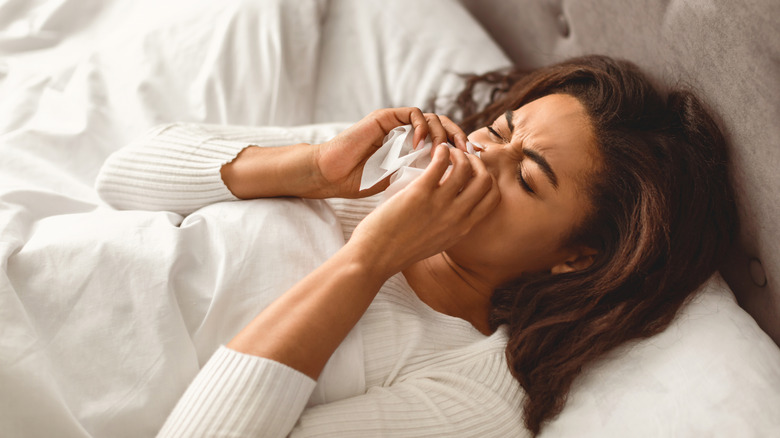
Because a fan removes moisture from your body, your skin, mucous membranes, and bronchial tubes can easily dry out, irritating your skin and exacerbating respiratory problems like asthma, sore throats, and congestion. If you find yourself constantly combating dry skin or congestion in the morning, you can add a humidifier to your bedroom to add moisture to the air, but warm, moist air doesn't always make for comfortable sleeping. Discontinuing your use of a ceiling fan might be a better way to alleviate your problem.
A fan circulating air in a closed room can also spread microbiota like germs, allergens, and dust. Bedrooms are a great place for microbiota to accumulate. More than three-quarters of Chicago bedrooms analyzed in one study published in the journal Microbiome contained allergens, especially in bedrooms with open windows or in homes with dogs. The Journal of Exposure Science & Environmental Epidemiology reports that a study performed in New York City found the presence of yeast allergens in 85% of bedrooms, especially those that were carpeted or, again, in homes with dogs. The dust that can accumulate on a ceiling fan itself gets projected into the bedroom when the fan is turned on. You can keep your ceiling fan dust-free, but if you still find yourself experiencing some of these problems, perhaps it's time to you stop using your ceiling fan. But if you swear that your ceiling fan is helping you sleep better, then stay cool and carry on.