

Why Some People Toss A Coin In Their Freezer When Leaving Home (And If You Should, Too)
If you're planning on going out of town for a long period of time, it's always a good idea to prepare your home for your absence. Whether it's burglar-proofing the house with deadbolt locks and home security systems or making sure you have a clean environment to come back to by taking out trash and setting thermometers, there are several easy steps to take to ensure the safety and cleanliness of your home while you're away. But there's one internet hack out there that claims it can save you a lot of headaches, and even potential illness when you return from your travels.
According to the hack, a coin in your freezer can help you gauge whether or not the power went out in your house when you were away. First, you'll need to fill a small container with water, then freeze it thoroughly so that it's hardened at the surface. Place a coin (many choose a penny) on top of the frozen water and keep the container in the freezer while you're away. When you return and open your freezer, the location of the coin can tell you whether or not your freezer and refrigerator lost power when you were on vacation. If the coin remains on top of the frozen container, then you're in the clear, but if the coin appears to have sunk to the bottom of the container, then that indicates trouble. However, discerning the results may not be as easy — or as strictly logical — as it can sound, and using this trick may lead to making a mistake with your freezer and things inside of it.
Why the location of the coin matters, according to the trick
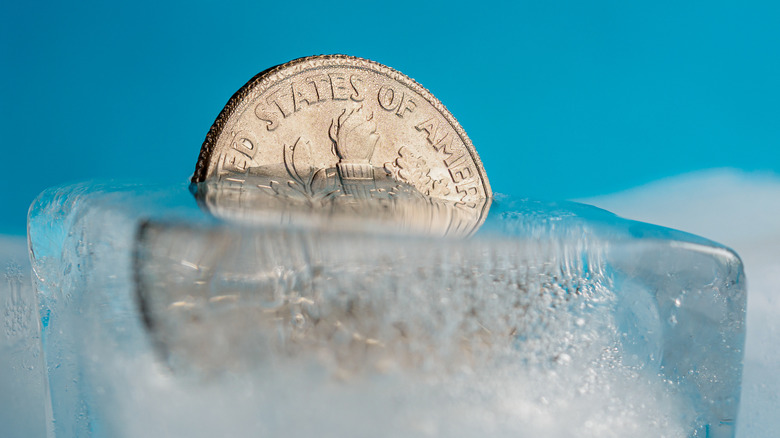
Interpreting the coin's position is supposedly very easy, since it's meant to spell out what happened, in a straightforward way. If the coin is still on top of the frozen block of ice, then it theoretically indicates that you never lost power, and the freezer remained the correct temperature the entire time you were gone. However, if you do lose power, your refrigerator won't work after the outage, and temperatures will rise. Your frozen foods, in particular, can defrost and go bad in the event of a blackout.
Here's where the frozen container with a coin comes in when signaling defrosted foods. If the power goes out, the ice in the container will melt, and then the coin sitting at the top of the container will sink to the bottom. Even if the freezer turns back on when the power is restored, the coin will refreeze, but at the bottom of the container rather than where it started, sitting on top of the ice. If you come home to a sunk penny, even if the freezer appears to be working, then you'll know that your food potentially went bad since it got defrosted, and thus, needs to get cleared out. Simple, right? While everything about this explanation feels logical, though, some netizens point out flaws in the thinking, indicating that this trick isn't as reliable as some folks may believe.
Why we're skeptical
According to myth-busting website Snopes, the hack doesn't account for partial melting. A freezer can lose power for many hours, maybe days, before things thaw and the ice in the container fully melts. In fact, ice will melt around the edges and lower in the container first, and since ice floats in water, the coin could stay on top of the remaining, floating ice pieces for some time. There's even a possibility that the top of the container will never melt before the freezer regains power and refreezes the ice; it'll appear as if nothing happened.
Lifehacker reports when they attempted to test the trick, their coin actually slipped off the ice floe only after a couple of hours into the process, debunking the theory that the ice would've had to completely melt for the coin to drop. Therein lies the issue; it "doesn't tell you how long the power was out," Dr. Marion Nestle, a professor in nutrition and food studies at New York University, tells Reader's Digest. Relying on this method means that either you have food that refroze after thawing, or you're panic-throwing away frozen food that was only without power for a few hours, and thus still potentially safe according to U.S. Food and Drug Administration standards.
The lesson here is in the event of possible electricity loss, be sure to stock up on products that are proven to help you in a power outage. If you do want to take some precautionary measures though, then consider freezing containers of water to act as extra ice packs to keep the freezer cold or even add some dry ice for further security. It's better to be safe than sorry, so don't throw all of your faith behind this kitchen myth.