

Is The Deadliest Plant In The U.S. Growing In Your Yard?
Many plants and flowers often look alike, so it can sometimes be difficult to identify what is growing in your yard at different times of the year. This can be particularly true for those out-of-the-way areas like ponds or dense flowerbeds. However, it is important to be aware of what plants you don't want in your yard because some species, like the deadly water hemlock (Cicuta maculata), can actually pose a serious safety risk to both humans and animals living nearby. But what exactly is water hemlock, and what makes it so dangerous?
This plant is a perennial and belongs in the carrot family; growing in watery areas like marshes, wetlands, swamps, and streams or even in soggy parts of meadows and fields. It can be found in every contiguous U.S. state and Alaska and is considered one of the deadliest plants in North America. It starts growing in spring, dies back in winter, and features a thick root that oozes a brown or yellowish liquid when cut, which smells strongly of carrots. This viscous fluid is called cicutoxin, a kind of unsaturated alcohol that is highly poisonous. Every single part of this plant is toxic to humans and most animals; ingesting any of it can result in convulsions, seizures, vomiting, and often death. So, considering this plant is so problematic to the health of those living near it, how can you effectively locate this plant on your property and safely remove it?
How to identify and remove water hemlock
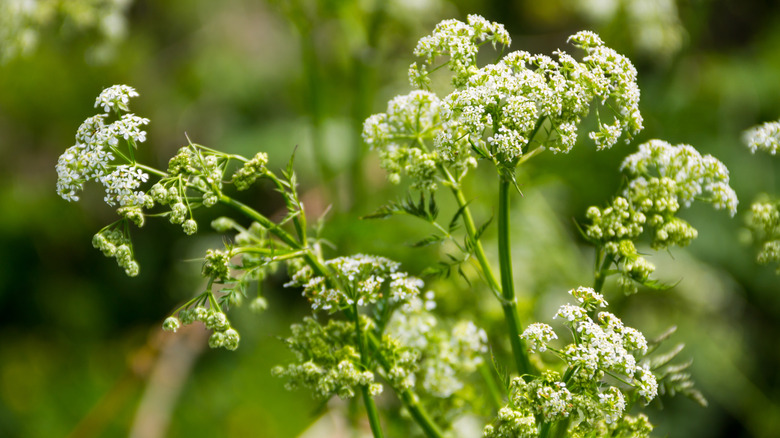
You'll want to check for water hemlock in wet areas in your yard, where it can often be identified by its small white flowers which have five petals and grow in clusters on the top of the plant. Their long, pointed leaves are connected to a smooth stem that can range in color from purple to green. They typically grow to be around 3- to 6-feet tall and attract a range of bees, butterflies, and wasps.
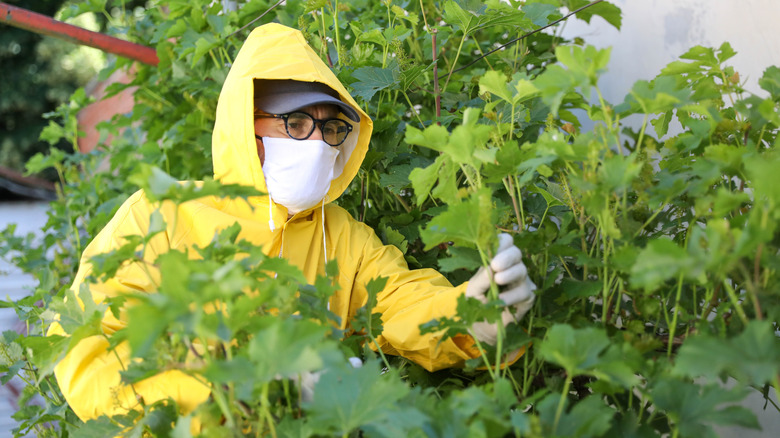
Trying to kill weeds in your yard and garden can be confusing, particularly when you are hoping to rid your land of dangerous plants like water hemlock. Digging the hemlock up by the roots is one way to get rid of it. It is important to wear proper protection, like long pants, a long-sleeve shirt, and gloves, during this process in order to avoid all contact with the plant. In addition, every part of the plant needs to be disposed of safely as it remains poisonous even after being uprooted. Some herbicides like glyphosate and 2, 4-D have also been shown to be effective on water hemlock. However, by far the safest way to remove water hemlock from your yard, particularly when it is found in large quantities, is to call in a professional weed control expert who will know how to kill and dispose of the plant without causing harm to themselves or other living creatures.