

12 Creative Privacy Screen Ideas That Will Beautify Your Outdoor Space On Any Budget
We may receive a commission on purchases made from links.
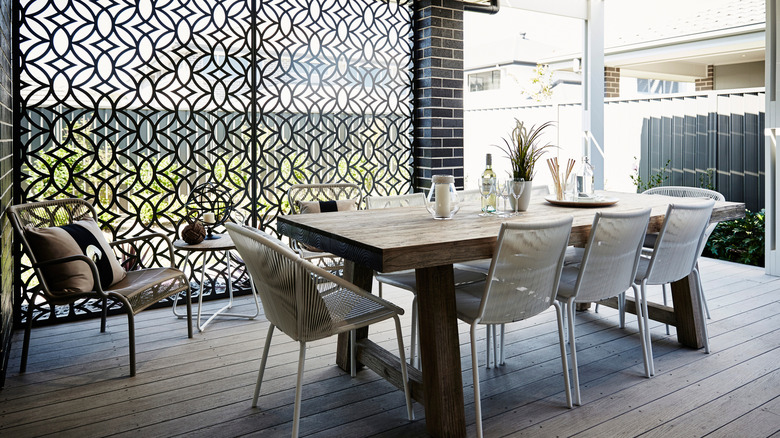
Even if you don't have a nosy neighbor with wandering eyes, installing a privacy screen can make you feel more relaxed in your backyard. Not only will you feel more comfortable when you're spending time outside, but these screens can provide more shade on a hot summer day, act as a windbreaker, and even reduce noise. They're also great if you want to hide the utility boxes in your yard or cover up other unsightly areas. Unlike fences, privacy screens are a more cost-effective option that gives you a little more creative freedom to add a unique touch to your landscape without breaking the bank.
First, think about what your goals are so you can know exactly what you're looking for out of a privacy screen. Do you want to keep neighbors from glancing over at you while you're on your pool deck, or do you want to use privacy screens to create separate zones in your yard? Additionally, make sure to choose materials and designs that fit the aesthetic of your outdoor space. For example, wooden screens fit right into a rustic yard, while metal has more of an industrial feel. Whether you want more privacy in a large backyard or a smaller apartment patio, there's a screen that will look beautiful in your outdoor space.
Use a lattice panel with climbing vines
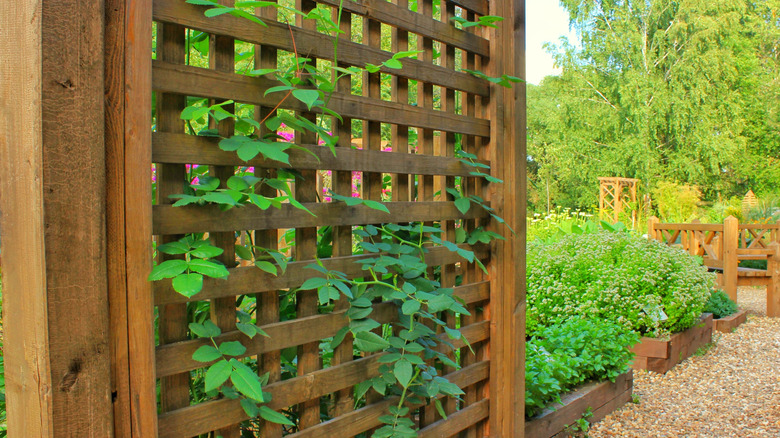
Lattice patterns are popular for trellises because the crisscrossing shape gives climbing plants plenty of areas to grab onto and spread out. When used as privacy screens, they're not only functional, but they make naturally beautiful accent pieces in a garden. By working with individual panels, you can easily customize the shape and size, so they'll fit into nearly any-sized backyard, patio, or outdoor area. There are a variety of lattice panels made of wood, vinyl, metal, and other materials, so it's easy to find a style that complements your space.
To build an easy and inexpensive DIY trellis for climbing plants, you'll need a few lattice panels, a structure to secure them in place, and some basic tools. Once you know where you want your privacy screen, you can either attach the panel to patio beams or an existing garden bed border, or you can install posts for support. Flowering vining plants like climbing prairie roses (Rosa setigera) or clematis varieties look stunning as they climb up and fill out the trellis, and they attract beautiful pollinators like butterflies and hummingbirds. If you don't want to deal with plant upkeep, grab an artificial plant wall, like DearHouse's Artificial Ivy Privacy Screen, and attach it to the lattice for low-maintenance greenery.
Repurpose pallet boards into a rustic screen
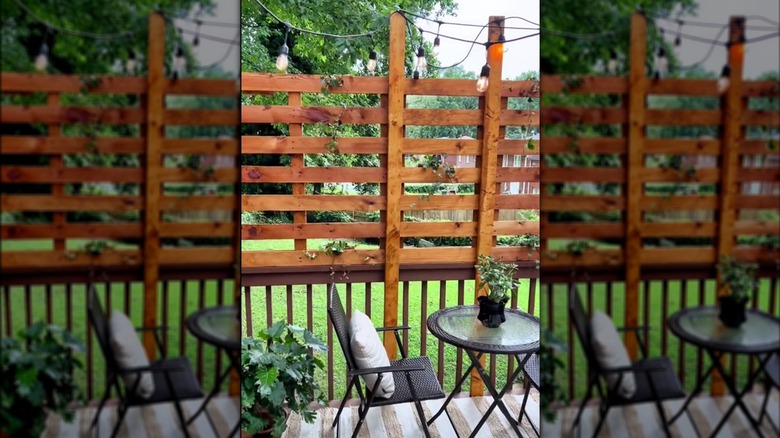
Although wood pallets are typically used for transporting and storing goods, their use goes way beyond their original purpose, including turning them into a privacy fence. Because you can easily get them for free by asking local stores or warehouses, it's an extremely cost-effective project nearly anyone can tackle. Plus, they're made up of horizontal slats, so half of the work is already done for you. All you'll have to do is piece them together to create the height and length you need. Most of these pallets would otherwise end up in a landfill, so turning them into a fence is a great way to save wood and reduce waste.
Before grabbing any wood pallets, make sure they are chemical-free by looking for an "HT" stamp, which indicates they are heat-treated. There are a few ways to build using recycled pallets. The easiest method would be to leave them as-is and attach them using a screwdriver and wood screws. Keep in mind that wood pallets have gaps between each of the slats, so you're not going to get 100 percent coverage unless you use additional boards. If you need more privacy and don't mind using a bit of effort, you can dismantle them and use the boards to create your own custom screen. This option gives you more control to create the exact size, height, and design you want.
Use bamboo reeds to create privacy
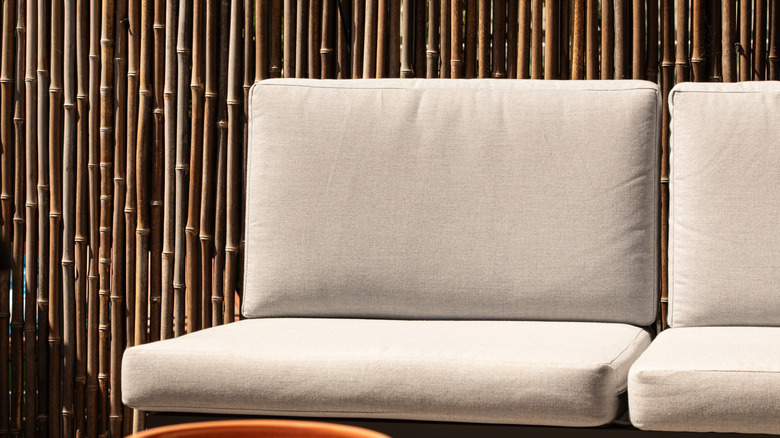
Bamboo is a naturally beautiful material that will make your outdoor area feel more like a spa than a backyard. It's lightweight and durable, so it's easy to work with and makes building an outdoor privacy screen a breeze. Plus, you won't have to deal with staining, painting, or weatherproofing for your screen to look its best year-round. When taking on a DIY project using bamboo, you can assemble the reeds as close together as you like, depending on whether you want light filtering through or an opaque privacy screen.
The simplest way to use bamboo as a privacy fence is to look for a roll, like KOIUEYW's decorative bamboo fencing, which comes in several sizes and is incredibly easy to install. This is a great option for renters who want to create a more private outdoor area without making any alterations. That said, it also works well for larger yards. If you want to install a rolled bamboo fence in your backyard, use wooden stakes spaced about 6 to 8 feet apart to create a sturdy structure, and attach the fencing to each stake using zip ties. Alternatively, create your own bamboo privacy screen by attaching bamboo reeds to a wooden frame if you want more control over the spacing and overall size.
Create a living privacy screen with plants
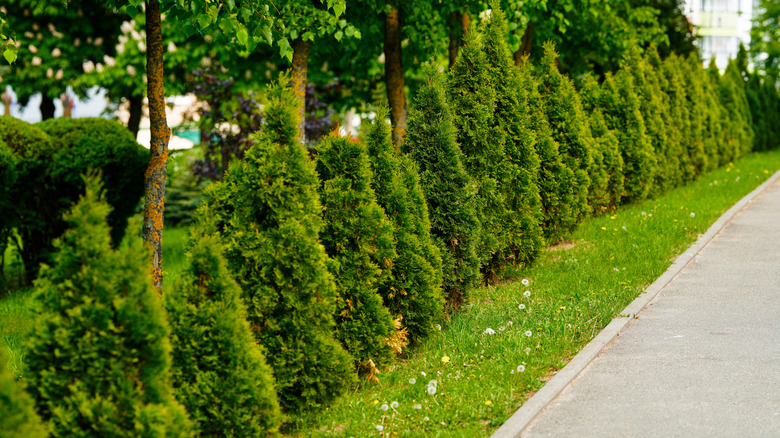
If you want to take an eco-friendly approach, consider growing a living privacy screen with trees or shrubs. Unlike fences or other man-made structures, dense greenery offers a natural windbreak, noise reduction, and even habitat for pollinators, birds, and other wildlife. There are plenty of options to choose from, whether you want native shrubs that add color in every season or evergreen trees that keep their foliage year-round. Plus, you don't have to deal with power tools or an elaborate DIY. All you'll need is a few plants and a shovel to get started.
Before shopping for plants, make sure you know exactly what you want out of your living privacy screen. Deciduous shrubs and trees will give your yard beautiful fall foliage, but drop their leaves in colder months, so there will be some visibility through the branches for part of the year. If you want privacy all year, your best bet is to go with an evergreen that's hardy in your area. The eastern redcedar (Juniperus virginiana) is a popular coniferous tree that works well to create borders because of its dense, evergreen foliage. If its 30- to 40-foot mature height is a bit too tall for your space, try a smaller bush like the Inkberry (Ilex glabra).
Add plants to tall containers
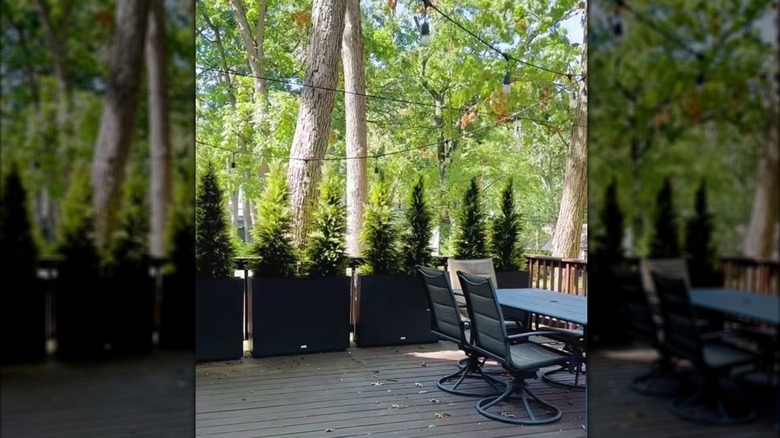
If you like the idea of a living privacy screen but don't want to commit to planting something directly in the ground, you can simply add the plants to tall containers instead. You won't need to deal with a time-consuming installation, and it creates the perfect barrier for decks, patios, or any area where you have minimal space to work with. If you're having guests over and need more room, all you'll need to do is quickly rearrange the planters. This is also a great option for renters who want to feel more secluded when relaxing on their patios, but aren't able to make any permanent alterations.
Choose large, sturdy containers that aren't going to tip over as soon as a gust of wind comes through, and opt for plants that are tall, full, and look interesting throughout multiple seasons. Compact hydrangeas are a beautiful option if you want to add a pop of color to your space, and they're the perfect size for large pots. For more airiness, ornamental grasses add plenty of height and texture, but don't take up as much space. Artificial plants work well, too. TikToker @averagebutinspired created a stunning privacy wall using a few planters and realistic-looking 7-foot-tall artificial trees. To follow her lead, add bricks to the bottom of the planters to give them more stability on windy days. She also added soil around the trees to add more weight and give it a more natural look.
Make macrame dividers for a boho feel
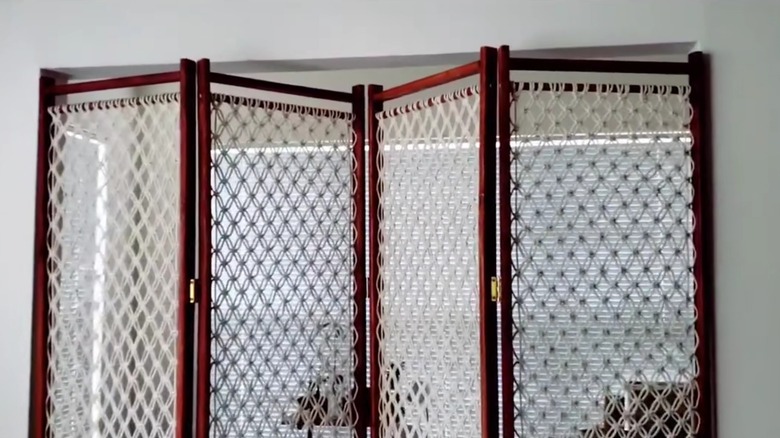
If you're looking for a privacy screen that doubles as art, then a macrame privacy screen may be the perfect solution. Macrame is the art of knotting rope or cord to create beautiful decorative patterns, and it's become a huge trend for those who love the boho aesthetic. Unless you opt for a pattern that's closely tied together, it's not going to be a fully opaque barrier. However, it can be great for dividing off different sections of your garden or adding a decorative element to a patio.
You'll need outdoor cord, wood, and hinges if you want to create a small barrier. If you're going to be doing the knotting yourself, you'll probably only want to take on this project if you're working with a small area. Grab a snack, turn on a show, and have fun as you weave the cords into pretty patterns. There are several easy-to-follow templates and tutorials online with designs that are beginner-friendly, such as My French Twist's step-by-step instructions on building a macrame folding screen. Since you'll be using it outside, you want to make sure it stays in place on windy days. If you plan on using it in the yard, use wooden stakes for the sides of each panel so you can anchor it securely into the ground. For use on patios, it's best to attach it directly to existing structures, similar to Ravelry's macrame patio screen design.
Turn drop cloths into an inexpensive privacy screen
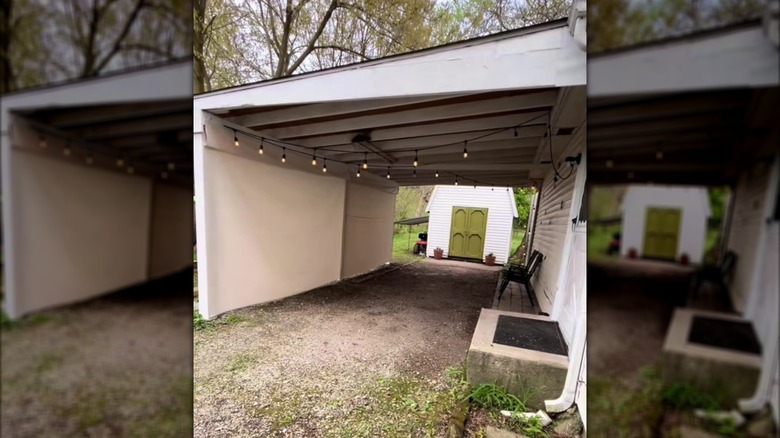
For a quick and budget-friendly privacy screen, head to your local home improvement store and grab some drop cloths in the paint section. Using drop cloths is perfect for those who want an easy solution and don't want to spend an entire day working on a DIY project. Although they're affordable, they can create a cozy, intimate atmosphere in your outdoor area that feels like a breezy beach cabana. Plus, they can double as projector screens, so you can spend summer nights cozied up watching your favorite movies or shows. The material may get a bit dirty over time, but luckily, it's often machine washable and easy to replace.
TikToker @radar.gold shared this genius privacy screen DIY. She attached the drop cloths directly to her covered patio using a staple gun, which keeps the fabric taut and in place. Because this project doesn't require any permanent fixtures, you can easily remove the canvas cloth if it gets dusty or you want to change up the look. To protect your privacy screen from the elements, treat it with a waterproof spray-on treatment that's designed for fabric, such as Scotchgard Sun and Water Shield.
Transform rugs into a privacy fence
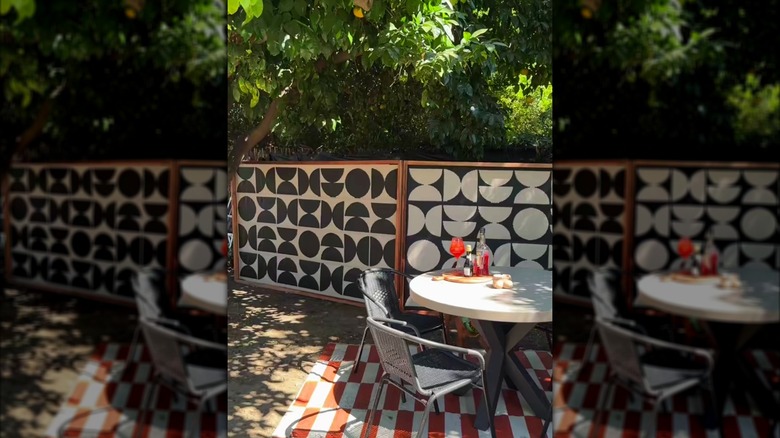
Before you toss out those old outdoor rugs you never use anymore, you may want to see if you're able to repurpose them first. Rugs come in a variety of sizes, colors, and patterns that can instantly make a bland-looking area look intentionally stylish. However, they aren't just an accent piece that works well on the ground; they're surprisingly chic when displayed as a privacy screen. With this DIY project inspired by TikToker @rachromaggie, you can easily create a privacy feature that looks high-end without the high-end price tag.
Not all rugs are created equal, so choose an option that can stand up to rain, sun, and other weather conditions, like Smiry Waterproof Outdoor Rugs from Amazon. If you want an even more budget-friendly option, thrift stores typically have a wide selection of outdoor mats at a low cost. When repurposing rugs, follow the care instructions to give them a good clean before setting them up. If you want to create a hinged frame like @rachromaggie, you'll need some scrap wood, a drill, a staple gun, and a few hinges to complete the build.
Use fence panels to make a privacy screen
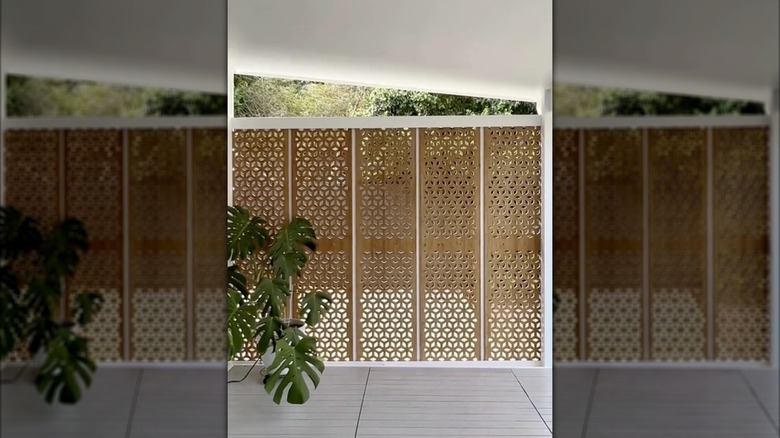
One of the most straightforward privacy fence builds is to take ready-made fence panels and repurpose them as free-standing privacy screens. You can find them at local home improvement stores, though you may even be able to find a few spare panels at online marketplaces at a reduced price. Rather than spending your time and money building an entire fence, all you'll need to do is set up a few fence panels in the areas where they're actually needed. This is a low-effort project that's perfect for those who aren't into building things from scratch.
If you want to create a barrier wall on a covered patio, TikToker @bondall shares exactly how they use fence panels to get the job done. However, if you want to add fencing to another area of your backyard, you could use planter boxes to create a free-standing privacy screen. There are screens that come with attached containers for support, so why not mimic this design yourself? Start by attaching wood slats to the planter box at the points where each panel will be placed to create a sturdy frame. Cut the panels to size, and attach them to the slats and the planter box. Once you have it set up where you want, add a few bricks to the bottom, fill the box with soil, and plant a few of your favorite flowers.
Make a breezy privacy screen using waterproof outdoor curtains
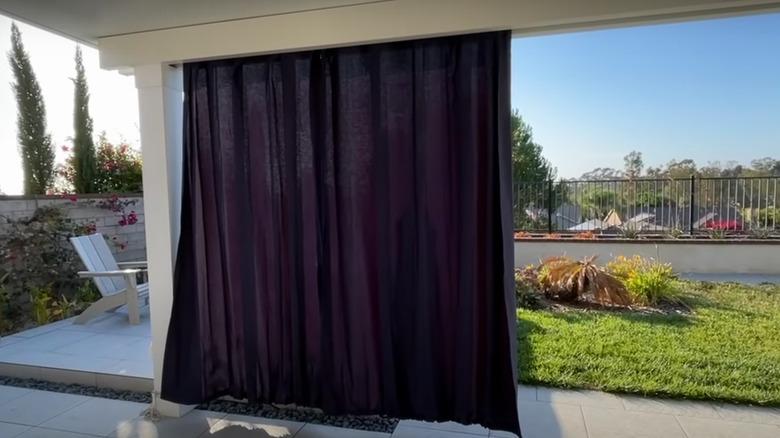
Sometimes you want to step outside and enjoy a little privacy, and other times you may want to watch the sunrise as you drink your coffee. By installing waterproof outdoor curtains, you get to have the best of both worlds. By using curtains, you have nearly unlimited color and design options to match the vibe of your outdoor area. Light-colored fabric will give your patio area a relaxed, beachy feel, while rich, dark curtains can add a dramatic flair to the atmosphere while offering maximum privacy. When you have guests over, you can even swap them out to match the theme of different gatherings. It's a simple setup, so as long as you have a toolbox with some basic tools, you'll be able to create this airy privacy screen.
Make sure you choose waterproof curtains that are meant for outdoor use, like NICETOWN's 2 Panels Weighted Blackout Curtains. Although it may seem like free-flowing fabric may be a bit too breezy, NICETOWN's curtains and similar outdoor options have a bottom hem designed for feeding rope through and tying in place. Aside from the curtains, you'll need a curtain rod and a screwdriver to mount it to your patio. If your curtains don't have a built-in area for rope, decorative curtain weights work well to keep them from blowing around when the wind picks up.
Use IKEA flooring to DIY a privacy screen
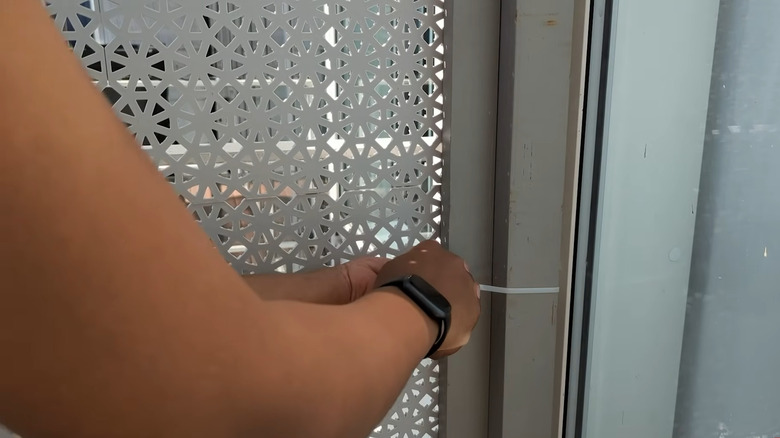
If your outdoor area had nothing but a cement slab, you may have already turned to IKEA's interlocking outdoor floor tiles for an easy transformation. Surprisingly, they look just as good set up vertically as they do on the ground, and they come in a wide range of colors and designs. Because they're designed for outdoor use, you won't have to worry about them looking dingy after being out in the elements over time. They're lightweight and easy to work with, so even beginner DIYers can easily use these floor tiles to build a privacy screen.
YouTuber @ACornerInEurope came up with this brilliant hack and shared how she used the IKEA floor tiles to make a chic patio privacy screen. In her video, she explains how she used some wood boards to create a basic frame, and then attached the tiles directly to it. If your tile pattern doesn't have openings, you'll need to drill a few holes into the frame. Then, you can attach it to your patio using zip ties. Although it may be tempting to skip the frame, it likely won't hold up as well. When set up vertically, there's more weight put on each of the connection points. A sturdy support around each side holds each of the tiles in place, preventing them from shifting and flexing over time.
Hang planters with trailing plants as a living screen
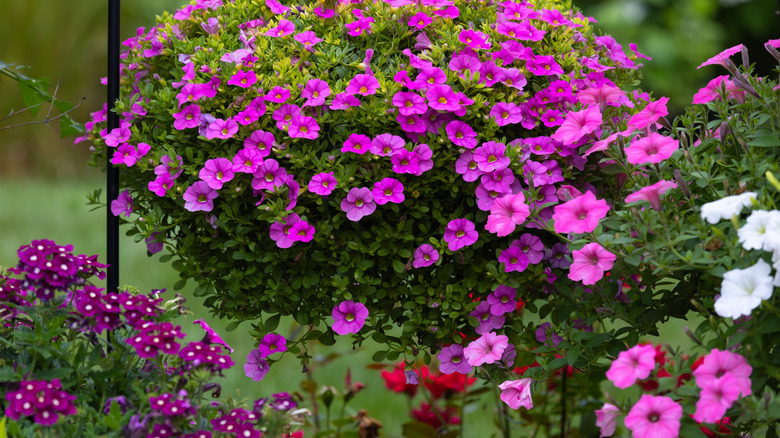
For a softer, more natural feel, hanging planters effortlessly create a lush, green privacy screen. Surrounding your outdoor area with beautiful blooms or even growing an edible garden creates privacy without the area feeling too boxed in. It's a great way to maximize vertical space, especially if you're working with smaller spaces. Even if you're only adding a handful of plants, you still get all the benefits. Flowering species provide food for butterflies and other pretty pollinators, and being surrounded by greenery is a verified mood-booster. You'll be able to mix and match plant varieties or containers as needed, and can easily take them down if you want an unobstructed view.
Using trailing plants to create a privacy screen works best for outdoor areas with overhangs, though you could attach a rod to existing posts. No matter where you plan on adding your baskets, make sure it's in a location where you can regularly check the soil and water as needed. Instead of using the hanging baskets that come with the plants, opt for macrame plant hangers for some extra coverage. Choose lush trailing plants, like million bells (Calibrachoa x hybrida) or sweet potato vine (Ipomoea batatas). For an edible hanging basket garden, bush tomato varieties, dwarf cucumber varieties, peas, beans, and trailing herbs are all great options.