

The Simple, Lasting Fix That'll Keep Weeds Out Of Your Pavers And Cracks For Good
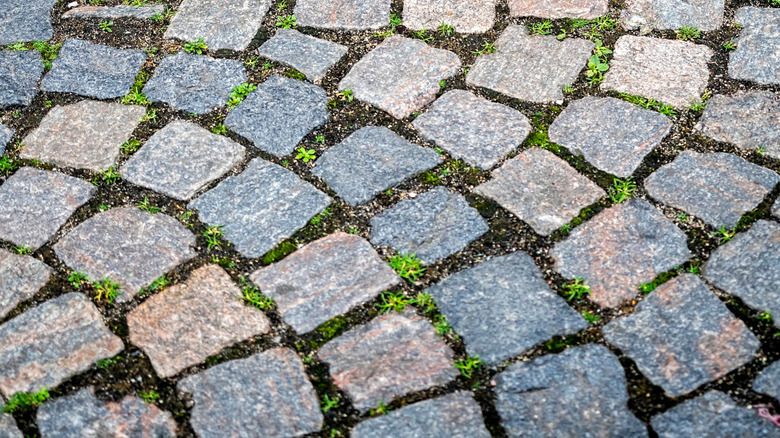
A well-designed patio or sidewalk made from pavers is the very definition of curb appeal. Intricate patterns, paver curves, geometric designs, visual texture, and color options provided by pavers can take a space from bland to beautiful. One common problem that plagues pavers from time to time is that weeds will find purchase in the cracks between the pieces. Weeds, the backyard pariah pestering pavers are persistent and powerful. So, what can be done to keep them from invading your pavers? There are a few things to keep in mind, but one relatively new and effective option is polymeric sand installed between the pavers.
It is a common installation technique to fill the gaps between pavers with sand. It provides drainage, allows the seasonal expansion and contraction of the whole paver installation, and looks great. But even the special sand traditionally installed will wash out of the cracks and allow weeds to sprout. Polymer sand, as its name implies, is a special mixture of sand with ingredients — including polymers — that solve many of the problems that come with traditional sand. It hardens when it gets wet. But even in its hardened form, it remains plastic enough to allow expansion and contraction while still being solid enough as to not provide weeds a spot to sprout. It is durable with an effective life of 5 to 15 years, and it's even available in multiple colors.
Installation is easy but has rules
Even if you plan on using polymeric sand in your patio or path, the pavers still need to have proper site preparation. You'll need to dig to the proper depth when installing pavers, leveled the area, and designed the patio or walkway with an understanding of drainage. Then, lay a layer of gravel followed by another layer of sand. Both the gravel and sand are specific types appropriate for pavers to be laid over. This preparation both provides a smooth layer that will allow the pavers' surface to be evenly aligned and adds its own weed prevention characteristics.
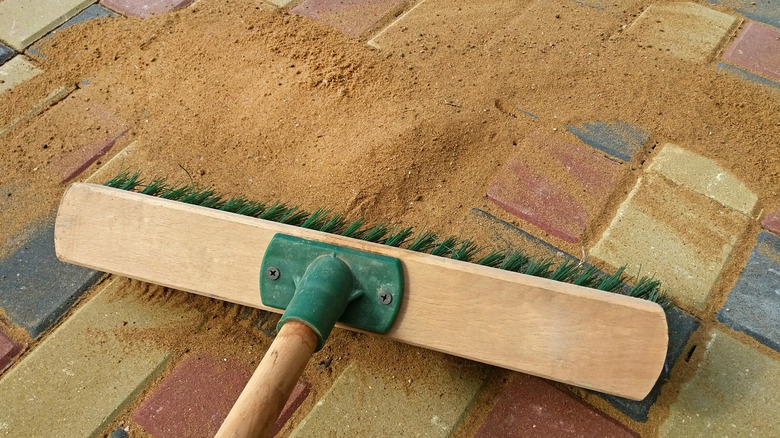
When the pavers have been installed on the prepared surface, it's time to break out the polymeric sand. Use a push broom to spread the sand into the gaps between the pavers. Fill the gaps up to about 1/8 inch below the surface of the pavers. Put small piles of the sand around the surface to make this easier. When it is evenly spread, tamp the tops of pavers to help the sand settle. Clean away any sand that is still sitting on top of the pavers — a leaf blower on a gentle setting will work well. The next step is to wet the paver surface, following the directions on the bag of polymeric sand.
One or two things to avoid: Do not attempt to spread the sand if it is raining or the pavers are wet. It will harden before you can properly install it. Second, make certain that the sand has been cleaned from the surface of each paver. If it remains, it will harden and possibly discolor the pavers.