

Common Laundry Stains And Odors That Can Be Fixed With A Little Bit Of Baking Soda
We may receive a commission on purchases made from links.
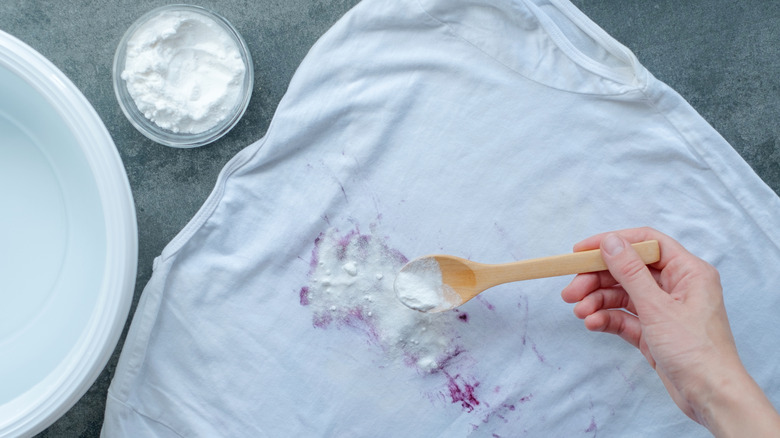
A household pantry staple with many versatile uses, baking soda can clean things that you never thought of like carpets, plumbing, and appliance surfaces. But where baking soda really shines as a cleaning agent is in the laundry. Officially known as sodium bicarbonate, baking soda is actually a salt compound that's naturally alkaline and crystalline in structure. As a slightly basic substance, baking soda is known to neutralize acidic materials, and its coarse structure makes it slightly abrasive — enough to cut through various stains. Its ability to alter the pH levels of stains to help break them down paired with its coarseness makes it the perfect stain fighting agent.
But as we know, not all stains are created equal, and some are definitely more stubborn than others. Baking soda works particularly well against stains with that aforementioned acidity since it works to break them down by compromising the structures of the acids. Effectively, the molecules of the acid and baking soda react, removing ions that keep the stains together. Similarly, baking soda is effective against grease or oil-based stains because it simultaneously absorbs excess oil, dries the stain out, and breaks down the grease's composition, allowing for other cleaning agents to get in there and lift the grease away. Given its scientific super powers, baking soda should be the next thing you reach for if your clothing is at the mercy of any of these following common laundry woes.
Tricky oil stains
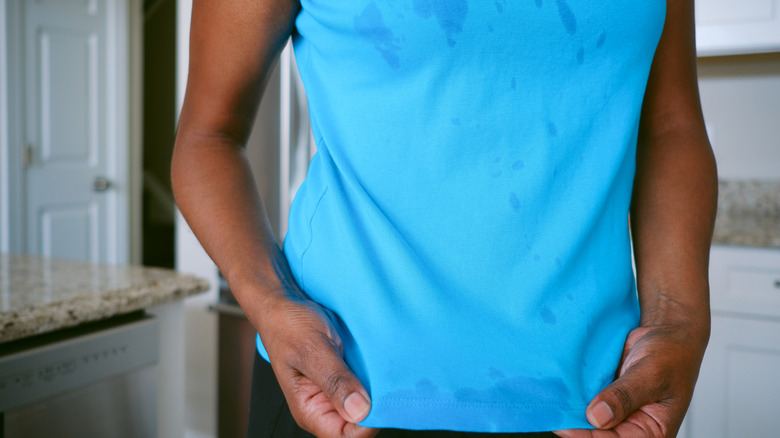
Oil stains are always a pain to try to coax out of clothing. Since oil and grease are hydrophobic and can't be banished with plain water and weak detergents, sometimes a regular old washing just doesn't do. Likely, you'll need to pretreat the stain with something that will both soak up excess grease or oil and break down the setting stain. This is where baking soda becomes the best tool in your laundry arsenal. Through a molecular process called saponification, in which substances like grease or oil are converted into washable fatty acids through the introduction of alkaline solutions and heat, baking soda serves as said alkaline catalyst.
First, sprinkle a small amount of baking soda directly onto the grease stain to begin that absorption process. Then, apply a modest amount of dish soap onto the stain as well. If the stain is large, work the baking soda and dish soap combo into the fabric with your fingers gently to agitate the chemical process and break down the grease in the material's fibers. If the stains feel like they're a bit more on the stubborn side, leave the baking soda and dish soap solution on those spots for several minutes, before either working the stain with your fingers or putting it directly in the washing machine for its regular cleaning cycle. Once it comes out of the wash, those grease stains should be gone for good.
Yellow sweat stains
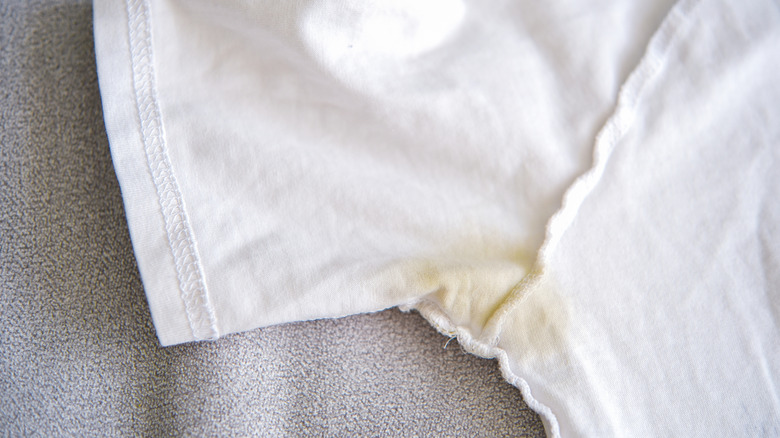
Those yellowing stains on white clothing or bed sheets aren't only because of wear and aging — they're actually the result of sweat reacting with your skincare and the environment. While sweat itself is colorless, it's composed of a nitrogen-based compound called urea; when urea gets into contact with certain ingredients in our skin and body care products, like the aluminum in deodorant for example, it reacts and yellows. Coupled with the proteins and fats found in sweat and the ever-present bacteria and fungal matter on your body, all of these substances produce a yellow effect on white fabrics. But baking soda is the ordinary pantry staple to use to remove such discoloration.
Mix a quarter cup of baking soda, a quarter cup of hydrogen peroxide, and a teaspoon of salt to form a thick paste-like substance. Using a soft brush, apply the paste onto the yellowing spots of the shirt or sheet. Begin working the stain out with the brush by gently rubbing the paste. After sufficiently covering the stain and preliminarily scrubbing a bit, leave the paste alone to set for a half hour. Once the fabric is ready, rinse the paste out and flush it with cold water. Throw it into the laundry on your regular cycle, and your sheets or clothing should be as crisp and white as the day you bought them.
Unsightly blood stains
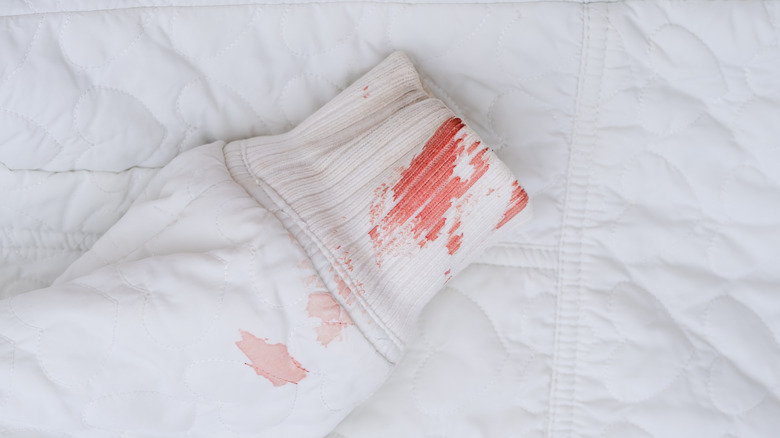
Blood is a tricky stain to work out since it's an organic substance composed of proteins that bind together and onto surfaces like clothing, especially when heated up. Everyday laundry detergents may not be equipped to tackle these protein bonds, so you have to turn to materials that will actually help break down said proteins. And washing blood stains in warm water or creating friction actually makes the stain set even deeper. Therefore, using baking soda on this stain isn't so much about using its coarseness to rub the stain out, but rather, it's usefulness lies in how it breaks down those protein bonds.
A DIY baking soda paste (made of water and baking soda) is the best way to tackle these kinds of stains. Apply the paste directly onto the blood stain, letting it sit on the spot for a half hour or more. Rinse the paste out after a sufficient amount of time, and then proceed to blot the site of the stain with another damp cloth for a little extra absorption. When finished, set it aside for regular laundry. This baking soda trick works particularly well with stubborn, old blood stains, but should also work on fresher spots. Just remember not to use heat when washing the article of clothing in question, nor use warm or hot water when you initially tackle the stain.
Unpleasant urine odors

As a parent, we've all been there — your toddler is going through potty training, and accidents are aplenty. Unfortunately, sometimes those urine smells can cling onto their clothes or sheets, no matter how many times you wash them. Like blood, urine is composed of proteins, as well as uric acid that can stubbornly bind onto fibers. Luckily, baking soda's alkalinity works wonders to deodorize urine smells and address stains from potty accidents.
To put it simply, baking soda neutralizes the uric acid in urine, canceling out the substance that produces the unpleasant, acrid odor. There's a few ways to leverage baking soda's stain and odor fighting power when it comes to urine stains. One way is to separately wash the soiled clothes or sheets in a hot water cycle with 1/2 cup of baking soda added directly into the washer's drum. If placing anything other than detergent into your washing machine makes you uneasy, opt for a laundry detergent with baking soda in it as a main ingredient, like Arm & Hammer Powder Laundry Detergent.
Another incredibly effective way of addressing both the stain and the odor of urine is to use baking soda as a pre-wash treatment in addition to regular laundering. For this trick, fill the sink or tub with warm water, and add baking soda so that it's evenly dispersed in the water. Soak the fabric for at least 15 minutes before draining the tub and rinsing the baking soda out of the garment. If the item still smells, repeat the process. Finally, launder the garments in a regular wash cycle.
Bright wine stains

Wine stains can be the ultimate party pooper when you're having a good time hosting friends, only to accidentally knock over a glass onto yourself or onto carpets and blankets. But never fear, baking soda is the perfect ingredient to stop the spreading and setting of red wine stains on fabric. Red wine, in particular, contain chromogens, the binding agent that allows the red color of wine to stick to fabrics. The red color itself is derived from anthocyanins, or water-soluble pigments found in the skin of grapes. Baking soda effectively breaks down the chromogens to dissipate the anthocyanins. In regular speak, baking soda disrupts the red pigment from setting on fabric.
The key here is to make sure to tackle the spot as soon as you can so that the stain doesn't set too deeply. For carpet or other surface stains, first grab a cloth or paper towel and do your best to absorb the liquid as much as you can off the fabric. Once you're satisfied, sprinkle baking soda onto the stain so that it can absorb whatever you weren't able to get from dabbing. You may find that the stain starts changing colors, and that's okay — it's a sign that it's working! Let the baking soda absorb overnight. The next morning, dab a vinegar-soaked cloth onto the stain, then vacuum up the baking soda. Replicate this process with wine-stained clothing, only instead of vacuuming, carefully wipe off the rest of the baking soda with the vinegar cloth, and then wash normally. Like with the other common laundry stains mentioned before, baking soda will do its best to work the stain out to make your item feel new again.