

The Fast-Spreading Invasive Vine You Should Never Plant On Your Property
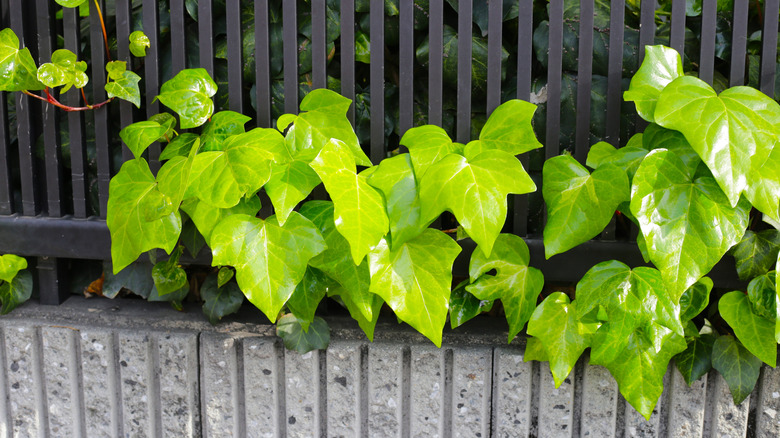
Finding plants for your garden that thrive in shade and provide attractive, healthy-looking ground cover can be difficult. As such, it can often be tempting to choose any option that will grow quickly and in a range of different soils and conditions. Watch out, however, because some of these are actually invasive garden plants that can end up taking over your garden, disrupting local ecosystems, and may even require extensive control efforts to keep them in check. Algerian ivy (Hedera canariensis) is one of those intrusive plants.
One of the reasons this ivy is so invasive is because it is incredibly hardy. It thrives in a variety of soil types and can even grow well in beach locations due to its high tolerance of salt levels. It can survive in temperatures as low as 10 degrees Fahrenheit, and it can thrive and spread in hardiness zones 7 to 11. Though it prefers a shady, windless location, this plant is tough enough to climb up anything from buildings to trees using aerial roots that cling onto a variety of surfaces. In addition, Algerian ivy is also not a good choice for your garden because both its foliage and berries are toxic, making it a danger to small children, pets, and even passing wildlife. But how do you effectively spot and remove this invasive plant if it's already in your yard?
How to spot and remove Algerian ivy
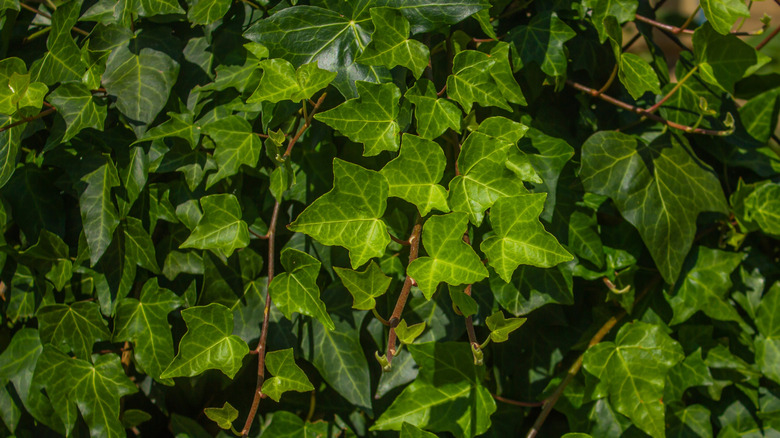
Algerian ivy has dark green, arrow-shaped leaves that grow on a red-brown stem. It can be found growing along the ground or climbing up trellises, fences, or even other plants. You may notice it looks stunted in areas of full sun. In some cases, this ivy can grow small groups of green-white flowers which produce toxic, dark-black berries. According to a study in the Berkeley Scientific Journal, there are two ways of getting rid of Algerian ivy that produce similar results: manual removal and herbicide application.
To manually remove ivy, you can pull up the roots using a shovel, making sure to get any runners growing off the main stem. However, it is important to wear gloves during this as the leaves may cause an unpleasant skin reaction if touched without protective gear. If using an herbicide, you can either opt for one that is misted directly on the leaves or use a 'cut-stem' version, which is sprayed onto the stem of the plant after it has been mowed or cut with shears. Always make sure to follow package instructions for proper application and disposal, as some herbicides such as glyphosate can be harmful to wildlife. One other option for removing Algerian ivy is solarization, which is a safe and natural method for weed control in the garden. To do this, cut down the plant and cover it in plastic; this then heats up the ground, killing the plant and any of its seeds. Afterwards, you can fill the space with something non-invasive such as bearberry (Arctostaphylos uva-ursi), which is a popular ground cover you'll want to plant to add lasting color to your yard.