

The Easy And Affordable Cleaning Hack That Will Make Your Bathtub Sparkle
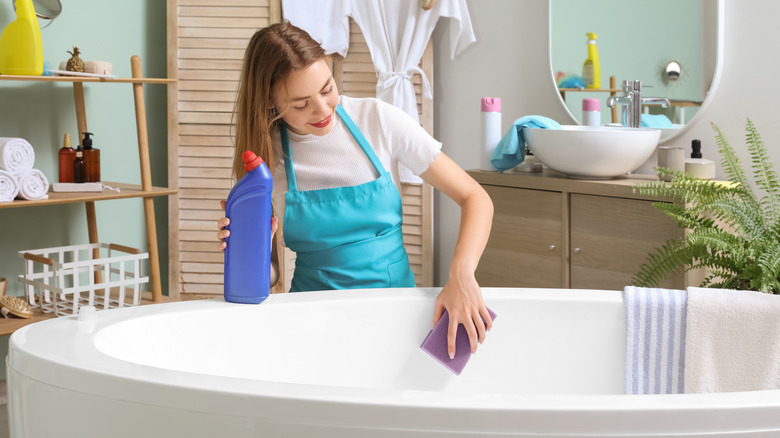
A long soak in a bathtub can be a luxurious treat to ease tension and relax from a stressful day. Bathtime for toddlers is often an aquatic adventure as well as way to remove a day's layer of floor level play. Both of these bath experiences (and others) are more enjoyable if your bathtub is sparkling clean. Hack your way to that sparkle with baking soda and a little know-how.
The know-how has to do with knowing what kind of bathtub you have. There are three basic types: porcelain, acrylic, and fiberglass. Let's go through how best to clean each material, starting with acrylic, a type of tub with many pros and cons. In a bowl, mix baking soda, water, and a small amount of dish soap. Mix them together, adding baking soda until the mixture becomes a paste. Wet the surface of the tub with warm water, then with a microfiber cloth, rub the paste onto the tub using a circular technique. Then allow the paste to work for about 15 minutes to do its magic. Remove the paste with hot water and a microfiber cloth, rinsing residual baking soda away when you are done. Good work, you've got a clean, fresh-smelling tub!
Cleaning a porcelain bathtub

Full disclosure: there are three sub-types of bathtubs that we are calling porcelain for our purposes. (We will go over how to determine what type of tub you have shortly.) Porcelain covered cast iron, porcelain covered steel, steel and iron tubs covered with enamel. Confusing, perhaps, but we are grouping them together due to their substantial durability and similarity of surface. Short answer: You clean them the same way. Even with their superior durability when compared to acrylic and fiberglass, you should avoid using harsh chemicals such as bleach or strongly abrasive cleaners. As a side note, if you are thinking of replacing an existing or purchasing a new tub, use this information to help you when choosing a type of bathtub that is right for you.
The process for cleaning these tubs is essentially the same as for the acrylic tubs. Make your paste from baking soda, water, and a drop of soap. Scrub it on, let it sit and then rub it off, rinsing to remove any remaining cleaning mixture. There are a couple of reasons this baking soda hack works so well. First off is the alkaline nature of the baking soda, sodium bicarbonate. It breaks down oils, fats, and soap scum chemically — which is why you let it sit for 15 minutes or so. Second, it is mildly abrasive. The crystalline nature of the baking soda provide just a bit of bite to help remove dirt. As a third benefit, its alkaline (chemically basic) nature has a mild antiseptic effect as well as anti-fungal and mold cleaning properties.
Figuring out fiberglass
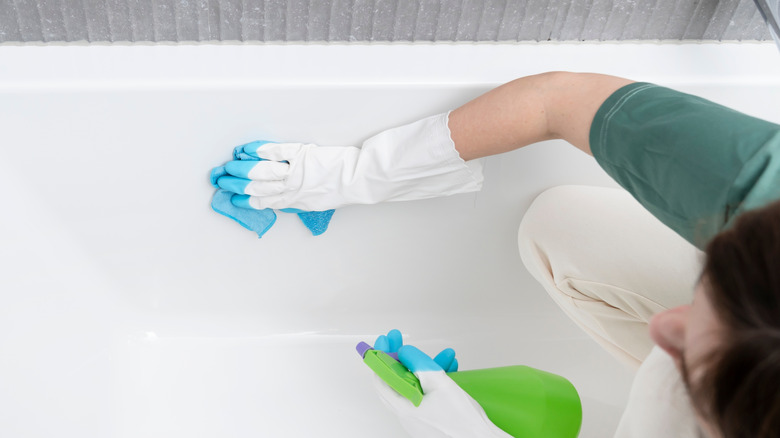
Fiberglass has a different cleaning process, so determining if your tub is made from fiberglass is important. The best way to know is if you have documentation. If you bought the tub or if the homebuilder or previous homeowner can tell you. Otherwise, examine the tub. Are the edges of the tub thin? That is a fiberglass clue. Tap on the tub with your knuckle — does it sound hollow? That is another indication. (If it is hollow sounding with thick edges, it is likely acrylic.) And finally, if the side of the tub is easily flexed, that is another fiberglass characteristic. Cast iron or steel? Check with a magnet,
Fiberglass is the least durable, but most affordable, of the three types of tubs. Affordability is one reason many homeowners choose fiberglass bathtubs. To clean, start by wetting the tub and then spray the surface with a 50/50 mixture of vinegar and water. Sprinkle baking soda on the tub and allow it to sit there for at least ten minutes. With a wet microfiber cloth, scrub the surface until clean. Rinse the tub thoroughly. With all of these tub types and cleaning methods, it is important to clean your tub regularly, a minimum of once per week.
Finally, although the above method puts baking soda on a vinegar wet tub, it does so for the fizzy chemical reaction it creates. In general, mixing baking soda and vinegar to make a cleaning solution is a poor idea, despite hundreds of online articles recommending it. In fact, mixing the two counteracts their inherent cleaning properties as one is a base and the other an acid. Mix them together and you get a neutral liquid not useful for cleaning.