

The Cleaning Trick That'll Get Your Stained Toilet White And Bright
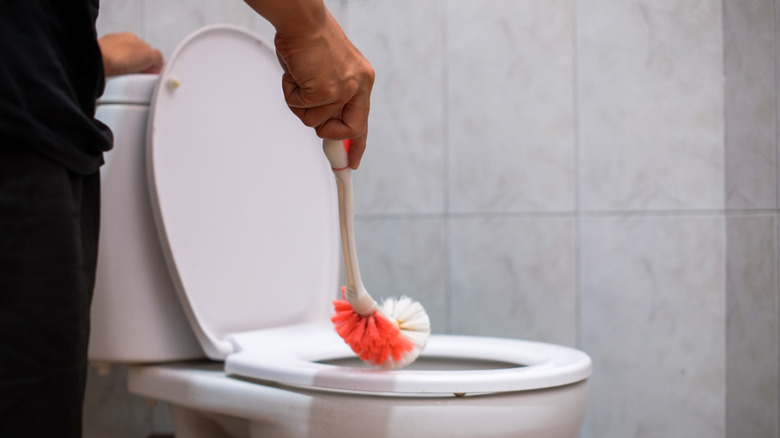
It's not secret that cleaning the toilet can be one of the trickiest and least pleasant tasks of all. Not only does it get nasty quickly due to being, well, a toilet, but water quality or poor flush performance can also lead to more stubborn stains such as limescale, rust, and even urine scale. Worst of all, many traditional cleaners and disinfectants are powerless against these stains, meaning you'll have to spend even more time doing a task you probably prefer to avoid. But there's one cleaner that can knock out many of these common issues, and it's not some ultra-toxic synthetic toilet cleaner. No, all you really need to treat toilet bowl stains is some citric acid.
Citric acid is a naturally occurring compound and can be found in citric fruits like lemons and oranges. However, most commercially available citric acid is derived from a fermentation extraction process. No matter how it's been harvested, citric acid is a very stable, safe ingredient that has many uses around the house. Thanks to being an acid, citric acid can chemically break down alkaline stains, such as magnesium, calcium, iron, and other minerals, as well as urine buildup, making it a top toilet cleaner for hard water stains. We'll walk you through how to use citric acid to make cleaning the toilet easier than ever.
How to clean your toilet with citric acid
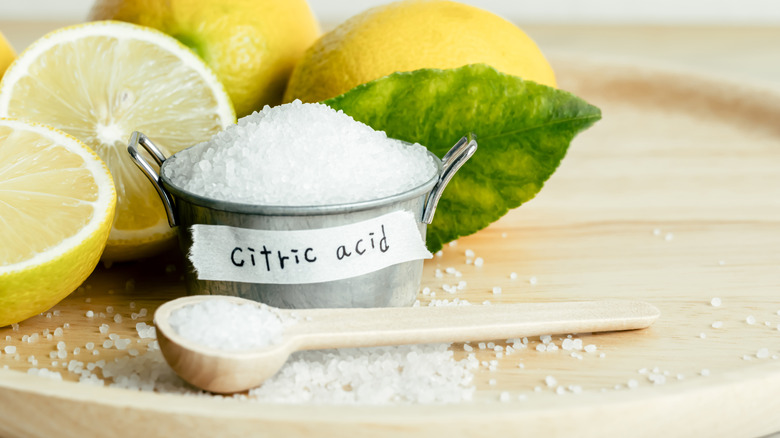
To harness the power of citric acid against your toilet stains, you just need a tub of citric acid and some warm (but not boiling) hot water. In a pot or kettle, heat up the water until it's steaming but not at a rolling boil, as the temperature shock of boiling water can cause porcelain to crack. The hot water can start to soften the stains, as well as give the citric acid something to cling. Then take several tablespoons of citric acid and ensure the bowl is well covered. Some of it will sink to the bottom, which is totally fine, as this is a hot spot for stubborn stains.
Allow the citric acid 20-30 minutes to work its magic. When time is up, grab your toilet brush and get to scrubbing. Thanks to the chemical reaction between the citric acid and the stains, and the abrasive properties of the powder and the scrub brush, everything should lift up easily, though you may need to repeat this process if the buildup is particularly bad.
A few things to keep in mind with this toilet cleaning method: Citric acid is not a strong disinfectant on its own, even though it has some antibacterial and antimicrobial properties, so you may want to follow up the cleaning routine with a bit of bleach, white vinegar, or your other preferred germ-fighting disinfectant. Additionally, while citric acid is very safe to work with, it can irritate skin, so pop on a pair of disposable gloves when handling it.