

Are Red Pepper Flakes The Secret To A Thriving Garden All Season Long?
Gardening can be a funny thing — on the one hand, it can be an incredibly relaxing, almost meditative hobby. On the other hand, trying to find ways to keep your plants healthy and happy, free from toxic chemicals, and rid of any pests or hungry critters can feel like a full-time job. So, of course, when you see a hot tip that a simple ingredient can solve your problems, you want it to be true. That's why when we saw that using red pepper flakes in the garden was a great, natural way to keep insects and foraging animals away, we wanted to verify it.
Red pepper flakes are dried and crushed red chili peppers, most often used to provide a spicy kick to dishes. That kick is thanks to a chemical called capsaicin, and is responsible for that tingling, warm sensation that you either love or hate. This can keep critters like rabbits away your yard, as many animals are put off by the smell, taste, and sensation of red pepper flakes. Beyond mammals, capsaicin can also repel some insects and mites by disrupting their nervous systems. But before you go raiding your spice cabinet, we'll walk you through the possible downsides and how to get the most out of your red pepper flakes.
What to know about using pepper flakes in the garden
First, let's talk about the downsides of using red pepper flakes in the garden. Just like us, too much spice can upset our pets' stomachs, so if you have a furry friend that likes to sniff around the garden, don't just sprinkle red pepper flakes around. Additionally, outdoor pets, wildlife, and children can get the pepper flakes in their eyes, which can be very dangerous. Sensitive plants can also be harmed by overexposure to red pepper flakes, specifically the capsaicin. Not only does capsaicin burn your mouth, it can actually singe plants like basil and parsley, so be cautious if you choose to apply it. Ultimately, there aren't too many dangers associated with this deterrent method.
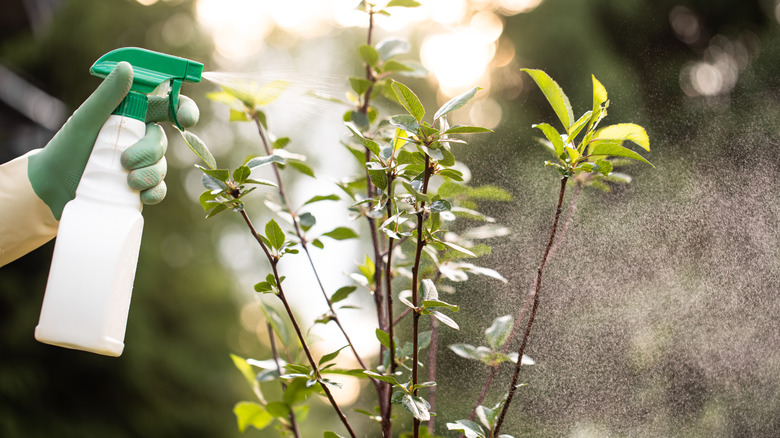
Rather than dumping your spice jar into your garden, we recommend making a hot pepper spray instead. You'll simply steep a few tablespoons of red pepper flakes in hot water overnight, strain, then transfer the solution to a spray bottle. To help the spray actually stick to plant leaves, add a few drops of dish or castile soap. Shake the DIY pest repellent well to combine, and then get to spraying! If you're nervous about possible adverse effects, just spray a small patch of your garden and see how it goes. Watering, rain, and time will cause the spray to lose potency, so you'll need to reapply every 7-10 days. You should always wear gloves and eye protection when handling spicy peppers or your pepper spray, and do not spray it on windy days, as you certainly don't want to accidentally get any on your skin or in your eyes. Finally, please consult a physician and a veterinarian prior to using it in order to have the most information on how this spray may impact your children, pets, and wildlife.