

The Harmful Reason Why You Should Throw Out Your Plastic Cutting Board
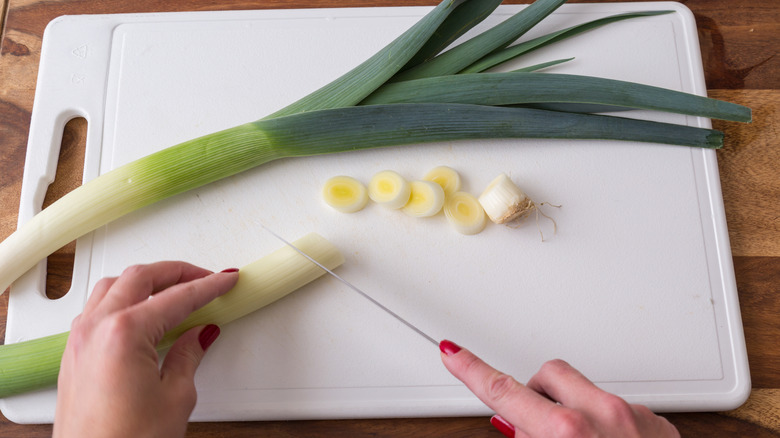
All of us try to protect our families from harmful contaminants in our food and drink. Environmental dangers are common, often secondary to products that create convenience in our lives. One of those dangers is the plastic cutting board that you use in your kitchen. Most of us started using plastic cutting boards because they are affordable and because we thought they were safer in terms of lowering our exposure to food-borne bacteria. Washed in a dishwasher, the plastic just seemed cleaner than traditional wooden cutting boards. (More on that later.) What we did not consider was the additional exposure to micro- and nanoplastic particles from plastic cutting boards. What are micro and nano plastic particles? The U.S. Food and Drug Administration (FDA) defines them this way: microplastic particles are less than five millimeters in size in at least one measurement, and nanoplastic particles are less than one micron in size in at least one dimension.
A derivative of plastic pollution, these particles are everywhere in our environment. They can have been manufactured at their tiny size or become so as a result of larger plastic products breaking down in our environment. They are found in our soil, oceans, Arctic ice, and even at the peak of Mount Everest. They are also found in our bodies. They've been found in our brains, lungs, bloodstream, in our organs, placentas, semen, and urine. The discovery of the saturation of these particles in our environment and our bodies has sparked concerns regarding their effect on our health. Initial studies are mostly in early days, but the results are troubling. Concerns about impaired immune systems, increase cardiac risk, reproductive system harm, and potential cancer-causing effects are being studied. So, let's take a look specifically at plastic cutting boards.
The problem with plastic cutting boards
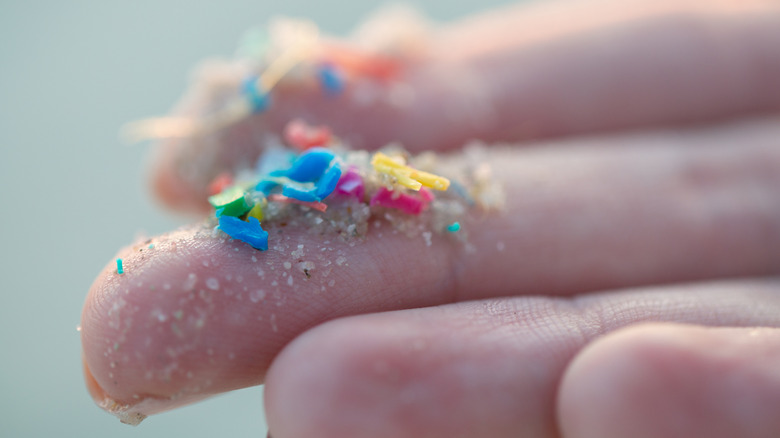
A study published in the Ecotoxicology and Public Health Journal estimated a per-person annual exposure of 7.4–50.7 g of microplastics from a polyethylene chopping board and 49.5 g of microplastics from a polypropylene chopping board. A University of North Dakota (reported via the Environmental Working Group) study estimated that cutting carrots on a plastic cutting board can generate up to 50 grams of microplastic particles per year. (This is roughly equivalent to 10 plastic credit cards.) Not all of those particles will end up in your food, but some of them absolutely will.
The only way to avoid ingesting microplastic particles from your cutting board is to not use it. Wooden and metal cutting boards will keep you and your family safe from that specific source of microplastic particles. Wooden cutting boards are safe to use, easy on your knives, and inexpensive (like IKEA's APTITLIG bamboo board). There have been studies that found bacteria growth on wooden cutting boards to be less than on plastic cutting boards. Wash them after each use with soap and water, and they will be perfectly safe for your food production. Metal cutting boards, like those made from titanium, will not create plastic micro particles. While considerably more expensive than wooden cutting boards, they are safer than plastic boards. You can wash titanium cutting boards in the dishwasher. Switching to a non-plastic alternative will protect your family and you.
Avoiding micro- and nanoplastics is likely impossible, but some basic steps are easy to do. Avoid plastic food storage containers, utensils, and plastic wraps. Use glass or metal storage containers, as well as glass and ceramic drinking vessels. Avoiding the consumption of micro- and nanoplastics is a difficult but worthwhile task. Getting rid of your plastic cutting boards is an easy place to start.