

We Gave This Dryer Lint Trap Cleaning Hack A Shot, And In One Word: Yikes
We may receive a commission on purchases made from links.
Laundry, the job that is never done, at least for me. I am blessed with efficient and time-saving washers and dryers, but even though I know how to use a clothes dryer, my hamper is never empty. Electric and gas clothes dryers are hardworking appliances, but in part because of their heavy workload, they need upkeep to operate safely and efficiently, and without problems (like rust stains on my clothes). Preventing lint buildup is critical. Lint can clog your venting, making your dryer far less effective. It can also be a fire hazard. Lint filters are your first line of defense, and you should be checking and clearing them before and after each use. But the filters are not foolproof, and lint sneaks around them and gets lodged in other areas of the ducting and venting that lead to the outside. How do you clean them?
One such area is just behind the lint filter. It is a notoriously hard-to-reach place. The opening is narrow, and it is hard to really see into it. There are specialty brushes that you can buy to do the job, but recently I heard of a hack using chopsticks to reach into the void and pull out the lint. This struck my fancy for a couple of reasons. First, it just sounded so clever. And second, I love chopsticks. In fact, I make custom chopsticks and give them away as gifts. I just had to check this out.
Reaching into the unknown
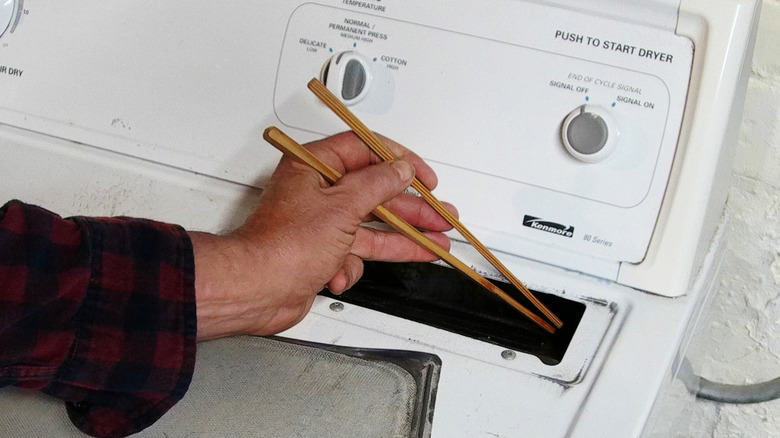
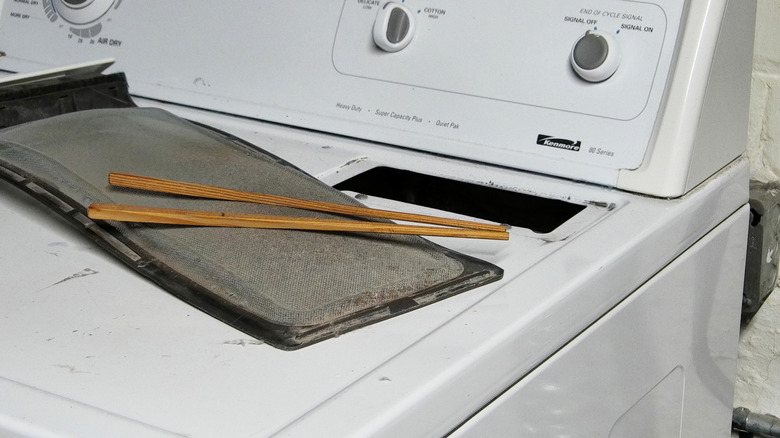
I got started by removing the lint filter and completely cleaning it. I set it aside and used the flashlight feature on my phone to try to spot random lint buildup behind the filter. Success! I could see a small buildup of lint way in the back, where the vent turned downward. (Curiously, I could see the lint more easily using the flashlight with the laundry room lights turned off.) I grabbed my chopsticks and got busy. The problem was that my chopsticks were not long enough to reach the place where the lint was building up. I was using my handmade chopsticks that are a bit over 12 inches long. Considerably longer than the inexpensive unfinished chopsticks you get at most Asian restaurants. Still determined, I shifted from proper (eating with them) chopstick technique to grabbing the end of one chopstick and carefully reaching in as far as I could manage. Scraping it back and forth, I got a small amount of lint out with this effort, but most of it was left behind.
My conclusion, after giving this idea an earnest try, is that it's not a practical idea. (Trust me, I really wanted this to work.) Perhaps in dryers with a front-mounted lint trap, chopsticks may work better. Because lint removal is such a prime safety concern, I recommend using one of the long, flexible brushes made specifically for this task, like this one at Amazon. This is true regardless of whether you have a gas or electric dryer.