

Downsides That May Make You Reconsider Choosing Granite Countertops For Your Home
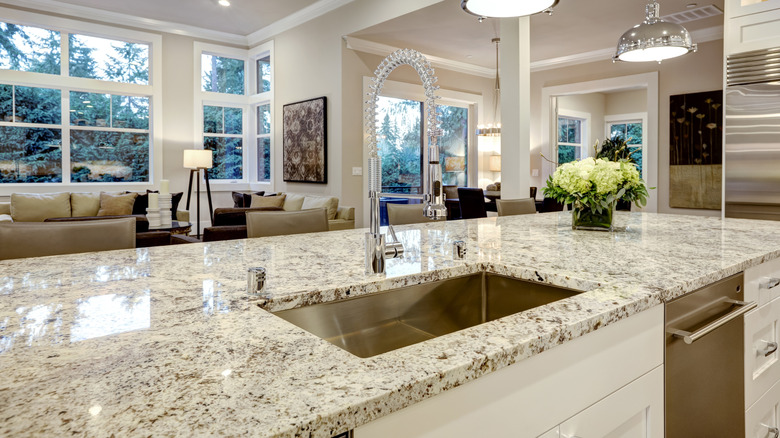
Granite has long been a favorite countertop material for homeowners who love a durable surface for cooking and eating – its relative hardness (a 6 to 7 out of 10 on the Mohs hardness scale, in fact). Its long-lasting nature makes it an attractive material, especially for those who cook often in a well-loved kitchen. It's notably heat-resistant compared to alternative materials, meaning you can typically set hot pans or dishes straight onto your counter for a few moments, without worry of blistering or melting. It's also relatively scratch-resistant given its hardness rating, too. However, with all of these pros to the material, there are also some potentially big cons that you should consider when deciding if granite is the right countertop material for your kitchen.
First, granite comes in many varieties, and while most are as durable as we mentioned, not all kinds are created equal. Granite is a natural stone, predominantly composed of quartz, feldspar, and other minerals — the varied composition of which gives the stone distinctively varieties of colors and patterns. With this variety of granite, though, comes some vulnerabilities that can make some granites much less desirable than others. Weaker granites tend to have lower quartz content, like Brazilian Santa Cecilia granite. Having to be cautious about what kind of granite you select is just the tip of the iceberg, though — there are certainly other downsides to the stone that may have you reconsidering what you want for your home.
Granite maintenance and potential damage
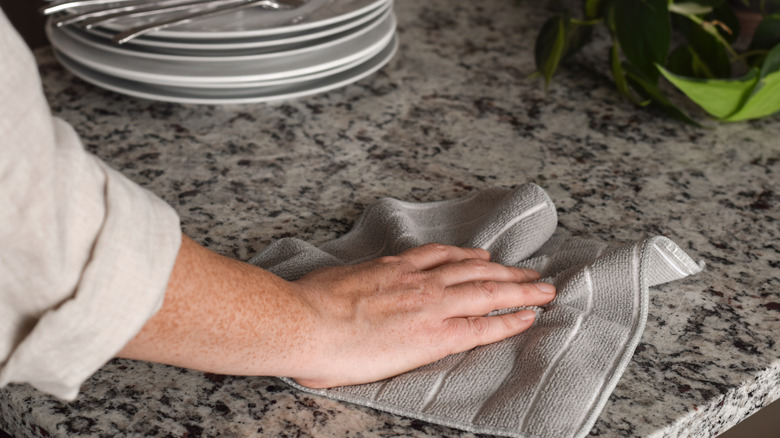
A truth for many varieties of granite is that the cleaning regimen you have to undertake for this material may be more intensive than you desire. You can't use any old household cleaner, or any natural cleaners that are acidic in nature, like vinegar. Anything that is too acidic or abrasive can harm the countertop's sealant, damaging or dulling the finish. Cleaning and disinfecting granite countertops is a chore within a chore, since you must find cleaning products that are pH neutral to avoid damage. Furthermore, you have to be diligent about resealing granite countertops, too.
Additionally, while granite's heat resistance is a selling point for the material, with repeated introduction, extreme heat can actually make granite prone to cracking or chipping. It's also not entirely scratch-proof, so repeated damage can lead to bigger stress cracks. Granite is known to splinter under the weight of heavy objects too, so if you have a child who routinely gets up on the counter to reach for snacks, for instance, granite may not be able to hold under that sort of consistent weight. This is only exacerbated by natural pitting and fissures in the stone that makes it vulnerable to damage.
The most frequent sources of damage to granite countertops, however, are certain liquids that are present in kitchen environments. Acidic substances, like coffee, lemon juice, orange juice, and tomato juice, can all leave stains and rings on a granite surface. If you aren't up to date on sealing your countertops properly and don't wipe away these stains in a timely manner, then these spills can corrode away at your granite's surface, permanently damaging it.
The cost of granite can be a con
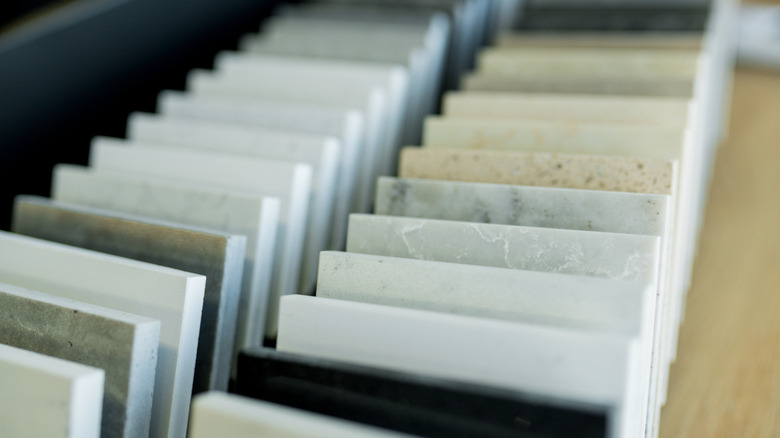
Another potential downside to choosing granite for your home is the cost. Some varieties of granite can cost upwards of $150 per square foot. If you are choosing granite for your home, you need make the potential high cost worth it by being picky about your granite selection and ensuring that you're buying slabs of granite that are smooth, clean, high-quality, and sealed properly. Most varieties of granite will, truthfully, run closer in the $40 to $100 per square foot range; however, nicer compositions can even be more expensive than marble.
The cost of the material and installation is just the start of granite's spendy qualities, however, since there are regular maintenance costs that come with granite. As mentioned, you'll have to prepare for regular sealings to maintain the health of the granite; sealing prevents staining and also dangerous bacterial growth. Not doing so is one of the primary maintenance mistakes that ruins granite countertops. The process can cost hundreds of dollars, and it's recommended that you do so every two years. Sealing granite countertops combats the stone's porous nature, ensuring your granite lasts longer, but it's no secret that it's costly and a bit of a maintenance pain. However, if you're aware of all it takes to keep up with granite, and you're willing to dedicate the time, energy, and money, it is a beautiful choice for your countertops.