

11 Essential Oils That Can Help Keep Pests Out Of Your Home And Garden
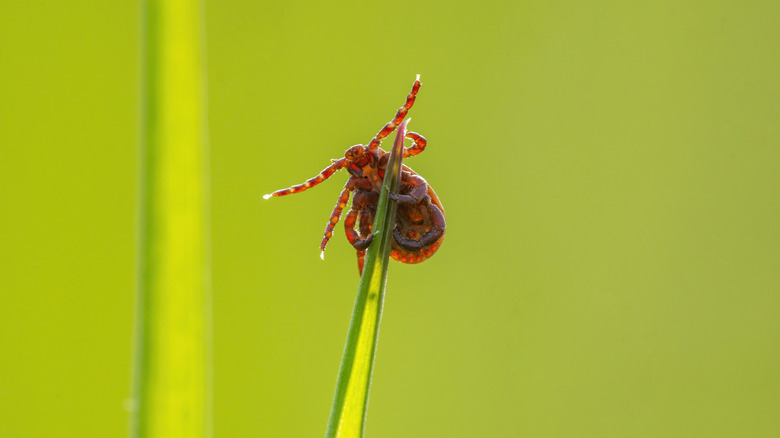
Glancing across the room to see a mouse run by or a cockroach creeping up the wall isn't just unsettling; it can be a sign of a bigger issue. Whether you're dealing with insects, rodents, or garden pests, these unwelcome visitors can quickly turn into a full-blown infestation if left unchecked. While calling an exterminator or using pesticides might be necessary in some cases, essential oils have been shown to be a natural and effective way to keep many pests away. Using eco-friendly alternatives to chemicals isn't just safer for household members and pets, it also helps protect beneficial insects, birds, and other animals.
So, what makes essential oils so effective against pests? Essential oils are concentrated plant extracts with strong scents and natural compounds that vary based on the plant they're derived from. Compounds like eugenol and carvacrol can disrupt an insect's life cycle by affecting their ability to eat, reproduce, or even survive. Because of their effectiveness, certain compounds are registered as natural insecticides and used in pest control products. Although they tend to be a safer alternative, you should still use them with caution, especially in their concentrated form. If you have pets or children, it's best to consult with your veterinarian or pediatrician for guidance before using any of these oils.
Citronella oil

Nothing ruins a relaxing outdoor day quite like seeing a swarm of mosquitoes swarm into the yard. If you're prone to their bites, you've probably already tried a citronella candle or spray to keep them away. Citronella-based products and the essential oil itself contain aromatic compounds, like citronellol, citronellal, limonene, and alpha-pinene, which are known for their ability to ward off pests. Their strong scent works by masking the smells that typically attract mosquitoes, making it more difficult to find you. Not only does citronella oil repel mosquitoes, but it can keep away other insects like flies, fleas, and ticks.
Rather than stocking up on lotions, candles, and other citronella-based repellents, you can use the essential oil itself in several ways to keep bugs away from your home and yard. To make an insect repellent, add 10 to 15 drops of citronella essential oil for every ounce of water in a spray bottle. Since essential oils don't mix well with water on their own, you can also add a dispersing agent like Solubol to help everything blend better. Give the bottle a good shake before each use to keep it mixed. If you'd rather apply citronella oil directly to your skin, it's important to dilute it first with a carrier oil, like jojoba or coconut oil. Use 6 drops of citronella oil to every ounce of carrier oil for a mild 1 percent dilution.
Peppermint oil
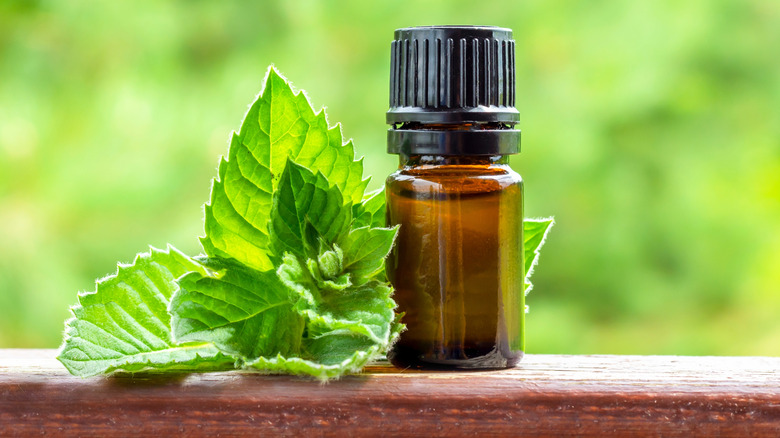
It may smell refreshing to us, but the menthol and menthone in peppermint oil make its scent unbearable for many common pests. A study published in the Journal of Economic Entomology found that peppermint oil had repellent properties against two out of the three spider species tested. There's also evidence to suggest peppermint oil may be a natural solution to repel other household pests, like cockroaches and ants. This minty-scented oil isn't just helpful indoors; its powerful aroma and chemical compounds can be useful for managing the typical garden invaders, including spider mites, aphids, and whiteflies. A 2022 study on house mice also showed that these rodents can be temporarily deterred by the smell of peppermint.
To control indoor pests, place peppermint oil-soaked cotton balls in areas you've seen cockroaches, spiders, or other pests. Refresh them every few days to maintain their potency. While some people suggest spraying a peppermint oil mixture onto garden plants, others have reported leaf burn after application. To be safe, spray around the garden area or near the soil rather than directly on the plants, especially during the hottest part of the day.
Lavender oil

Lavender essential oil is one of the most popular scents used in aromatherapy for promoting relaxation. Although its aroma helps us unwind after a long day, it seems to have the opposite effect on insects. In fact, lavender's pest-repellent reputation dates back over 100 years ago, when lavender bundles were used in closets to protect fabrics from moths, long before we started putting it in oil diffusers during yoga retreats. The fragrant oil is packed with pest-repelling compounds, including linalool and camphor, making it a great option to deter a range of pests, from moths to mosquitoes. Linalool is a registered pesticide that works by disrupting the pest's nervous system. Together with camphor, it helps lavender oil effectively repel spiders, fleas, and ants.
To give your laundry a moth-repelling boost, add a few drops of lavender essential oil to dryer balls. Not only does this help deter moths while keeping sheets from balling up in the dryer, it'll also give your linens a fresh, relaxing scent. You can also place cotton balls soaked in the oil in your closets, near windows, and other areas where pests may sneak in. Because the fragrance fades over time, you'll need to reapply the oil every week or so to maintain its pest-repelling aroma and keep your space smelling fresh.
Cedarwood oil
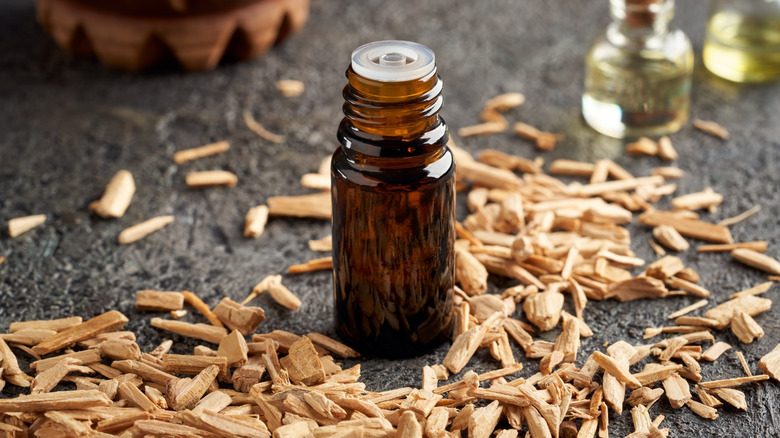
A day spent outdoors can quickly go from peaceful to irritating when fleas, ticks, ants, and other irritating pests follow you inside. Funny enough, the secret to keeping them away is hiding in the trees they came from. Cedarwood oil, sourced from Eastern redcedar trees, is the active ingredient in several pesticides. In one experiment published by the Agricultural Research Service (ARS), filter paper with cedarwood oil repelled up to 94 percent of tick nymphs 30 minutes after application. This potent oil can also help control biting insects like fleas and chiggers by acting as a pheromone disruptor that repels them, and in some cases, even kills them on contact.
If you want a more eco-friendly approach to managing pests hiding in the grass, add cedarwood essential oil mixture (about 1 ounce per gallon of water) to a hose-end sprayer, and coat your lawn, garden beds, and the perimeter of your home. Unlike most pesticides that harm every insect they touch, cedarwood oil is safer for beneficial insects when used properly (and it smells better than chemicals, too). Because pollinators like butterflies and bees find their food through sight rather than pheromones, it won't interfere with their senses. However, little is known about its overall toxicity to these insects, so it's best to apply it after sunset when pollinators are least active.
Bergamot oil

Mice may be small, but the last thing you want to do is underestimate them. These agile little creatures can squeeze their bodies through holes as small as a dime or cracks the width of a pencil, jump over a foot high, and run up a wall with ease. On top of that, they have 1,200 odor receptors (nearly triple what humans have), so they can sniff out the tiniest crumbs from long distances. Luckily, we can use those powerful senses against them with the help of bergamot essential oil. Research in the journal Environmental Science and Pollution Research International found that bergamot essential oil showed strong repellent abilities on house mice, making it a promising way to keep these rodents out of the home. Its key compounds, including linalool and other monoterpenes, appear to have a mild sedative effect on mice, making them less alert, which may help explain why they tend to avoid it.
In addition to sniffing out food, mice rely on pheromone trails left behind by others, so your first step is to deep-clean any areas with signs of mouse activity to remove any lingering scents. Then, soak a few cotton balls in bergamot essential oil and place them anywhere you've seen droppings, scratch marks, or mouse traffic. Instead of catching the scent of crumbs or familiar trails, they'll be hit with the strong, citrusy odor of bergamot and leave in search of an area that doesn't overwhelm their senses.
Oregano oil

Oregano is best known as a flavorful kitchen herb, but its essential oil is a surprisingly effective pest deterrent. Over half of oregano essential oil is made up of phenolic compounds, like carvacrol, which can disrupt an insect's nervous system and overstimulate their sensory receptors. A study published in the Journal of Arthropod-Borne Diseases showed that at 40 percent strength, oregano oil repelled 100 percent of bed bugs for up to 24 hours. They found that oregano essential oil worked just as well, and in some cases better, than commercial DEET at keeping bed bugs away for longer. While more research needs to be done, these findings suggest that oregano oil may be a potent, plant-based alternative to traditional pesticides.
While oregano oil is powerful, it's best used in combination with other methods to get rid of bed bugs. Start by stripping your bed and washing all linens, pillowcases, and blankets, then toss them in the dryer on the highest heat setting; the heat should be enough to kill any bed bugs or eggs hiding in the fabric. While everything's washing, mix 10 to 15 drops of oregano essential oil with in water with an emulsifying agent (like dish soap), then give it a good shake. Then, spray the mixture along mattress seams or furniture gaps where bed bugs love to hide. You'll likely need to repeat this process a few times, especially if you're dealing with an ongoing infestation.
Clove oil

Clove oil is one of the most effective essential oils for indoor and outdoor pest control, with its insecticidal properties recognized even over 100 years ago. The secret behind its effectiveness is its main active compound, eugenol, which is an ingredient used in some natural pesticides. In fact, although eugenol is found in other plants, it's most commonly extracted from cloves due to their high concentration. Not only does eugenol work as a repellent, but in some cases, it can kill insects on contact by disrupting their cell walls and membranes. According to the New York State Integrated Pest Management Program, evidence shows clove oil has the power to repel or kill mosquitoes, bed bugs, termites, and some garden pests like spider mites, whiteflies, and psyllids.
To use clove oil for pest control outdoors, combine 10 drops of clove essential oil with each quart of water and pour it into a spray bottle. Adding an emulsifier like dish soap (a couple of drops) will help everything blend. Since clove oil can sometimes dry out or damage certain plants, it's best to test a small area first before treating any affected leaves or stems. It doesn't damage roots, so you can safely spray it on the soil to create a scented barrier as a preventative measure. If you want to repel biting insects, like mosquitoes, add 5 to 10 drops of clove oil to an essential oil diffuser and place it on a patio table to fill the air with its strong aroma.
Rosemary oil
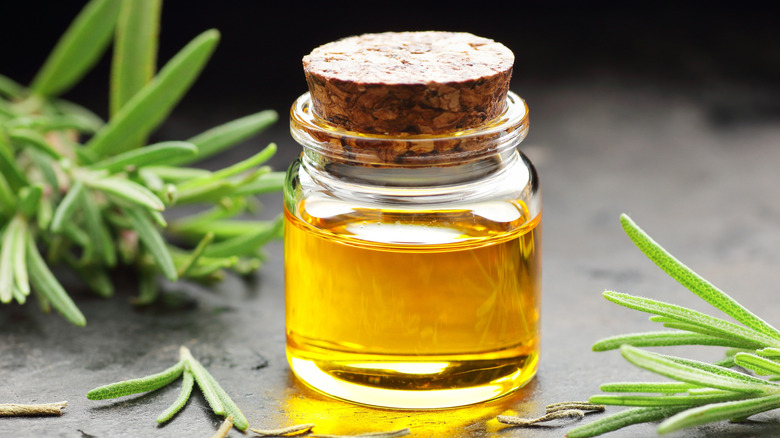
Rosemary isn't just a kitchen staple; its essential oil is a potent natural insecticide and is even the active ingredient in many pest control products. It contains a variety of insect-deterring compounds, like 1,8-cineole, alpha-pinene, and camphor, that are unpleasant to fruit flies, mosquitoes, moths, and other irritating bugs. There's also growing evidence that rosemary oil may be effective against certain arthropods. In a 2016 study, tests against brown-banded cockroach nymphs, rosemary oil had a 100 percent mortality rate, making it the most deadly oil evaluated. Additionally, according to a study published in the International Journal of Entomology Research, rosemary oil also significantly repelled red flour beetles, a common pantry pest, with strong effects seen just two hours after exposure.
If you're dealing with flying pests like mosquitoes or fruit flies, add a few drops of rosemary oil to a diffuser and let the scent fill the space. The strong aroma from the active compounds makes the area less appealing, encouraging them to fly elsewhere. For crawling pests like cockroaches or beetles, rosemary oil works well when added to cotton balls. Stick a few cotton balls in areas where these bugs hide, like the pantry, behind appliances, or along baseboards, to overwhelm their senses and keep them from wanting to come back. Just be careful not to leave the cotton balls where children or pets can access them.
Thyme oil
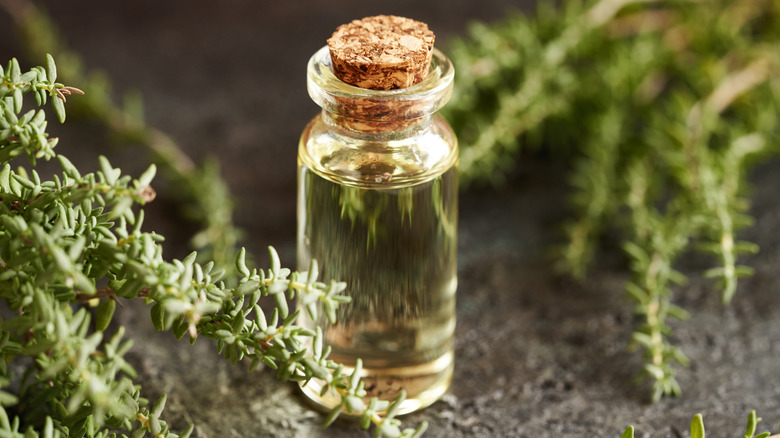
If you prefer to opt for natural pest control remedies to keep bugs at bay, thyme essential oil is a must-have in your toolkit. According to the New York State Integrated Pest Management program at Cornell University, thyme oil works well to manage a wide variety of pests by either repelling them or killing on contact. You can use it against household nuisances like mosquitoes, ants, earwigs, fleas, ticks, moths, and even spiders. It's also a useful outdoor pesticide against aphids, spider mites, armyworms, billbugs, chinch bugs, and leafhoppers, and other pests that can wreak havoc on your garden. Plus, because of its other active ingredient, carvacrol, it can also help keep out houseflies and cockroaches.
Because thyme oil repels so many different pests, how you use it will depend on what you're targeting. To make a natural spray that targets an array of garden pests, add about 10 drops each of thyme, rosemary, and peppermint essential oils to a spray bottle filled with water. Apply it all around the garden or on houseplants to keep the critters away from your plants. If you're dealing with creepy crawlies that prefer to lurk indoors, soak cotton balls or pads in thyme oil and place them near entry points, under sinks, or anywhere you've noticed pests crawling around.
Catnip oil

Your cat may love the scent of catnip, but certain pests loathe its strong, earthy aroma. A study from Acadia University in Canada found that nepetalactone, a component of catnip, is an effective repellent against the deer tick native to North America that carries Lyme disease. A DIY tick spray can be made from about 10-20 drops of catnip oil in a spray bottle, mixed with 1-2 tablespoons of white vinegar (which will help repel the ticks) and 2 tablespoons of vodka or witch hazel to help the mixture blend.
You can also keep roaches away from your home and garden by combining equal parts water and rubbing alcohol with a few drops of catnip oil. You can also combine it with other potent oils, like rosemary or thyme, to give your spray double the fighting power. A study in the Federal Polytechnic Ilaro Journal of Pure and Applied Sciences showed that catnip oil was a potent pesticide worthy of fighting off the American cockroach.
Cinnamon oil

There's nothing like making your home smell like cinnamon around the holidays. Although it's cherished for its spicy, cozy fragrance, it makes pests feel anything but comfortable. While cinnamon oil is mainly used as a repellent according to Cornell University, it can also kill certain pests on contact in higher doses. Thanks to its active compounds, including cinnamaldehyde and eugenol, cinnamon oil can be a potent insecticide to control some species of garden pests like aphids, thrips, and spider mites. There's also evidence that shows it's effective indoors, too. According to tests conducted by The Society for Vector Ecology, cinnamon essential oil also had near-total effectiveness in killing housefly larvae and repelled them from treated areas.
Cinnamon essential oil works best combined with other potent oils, like citronella, clove, or eucalyptus. Together, they create a powerful blend that repels common household pests, including houseflies, fruit flies, and mosquitoes. You can diffuse the mixture indoors or use the oils to make an easy DIY bug spray. To create an insect repellent, combine the oils, witch hazel, and apple cider vinegar in a spray bottle. This concoction doubles as a surface cleaner, so you can use it to clean surfaces while emitting an insect-repelling fragrance. For managing pests outside, dilute cinnamon oil in water (about 10 drops per cup) and spray it on your plants or around your garden to keep them at bay.