

The Inexpensive Trick To Make Scratched Wood Furniture Look Like New Again
We may receive a commission on purchases made from links.
Wooden furniture has been enhancing our lives since our ancestors learned how to chop down a tree. As a professional woodworker whose work has primarily centered around designing and building custom furniture, my average work is a little more sophisticated. When people learn that I make furniture I often get questions about how to fix surface scratches and blemishes on wooden furniture that they own and love. While there are multiple ways to fixed scratched furniture, one often overlooked technique is to use wood filling markers, regularly called wax sticks, wax finishing sticks or just fill sticks. Not to be confused with wood repair markers that are a bit like a Sharpie with various wood finish colors. These are useful too, more on that later.
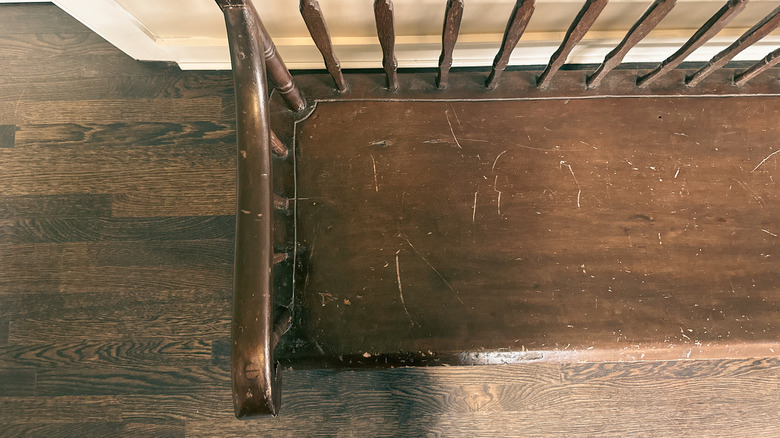
To help you get good results when you attempt to repair a scratch with a wax filler stick, let me dive briefly into the weeds of the finish that is on your furniture. Almost all (99%) of the wooden furniture in your home will have a film finish applied to the wood. The wood itself has likely been stained to a desired color, and then a varnish, lacquer, polyurethane, or some other film coat will be put on the furniture. The film finish is a hard, very thin layer that sits on top of the wood. When the surface of your furniture is scratched, the damage you see is primarily to the film finish. If the scratch goes deeper, you will likely see some wood fibers and even a change in color as the scratch penetrates the stain layer. This raises the question of how a wax wood repair stick fixes that scratch?
Filling the scratch with an appropriate color
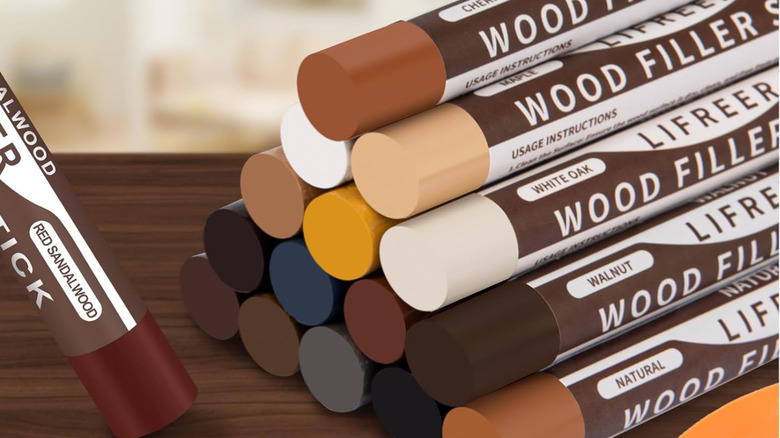
Scratches are obvious because they interrupt the smooth surface of the finish as light bounces off the finish but not the void of the scratch. As mentioned, when scratches enter the wood fibers and the stain layer it'll be more visible. Wax sticks solve both of these problems. The goal of the wax stick is to fill that scratch with properly colored wax, then buff the wax level with the surrounding finish. Wax sticks come in a wide range of colors to match most common furniture hues.
Start by cleaning the scratch area with water and a bit of dishwashing detergent. Dry the area completely. Scrape over the area with an old credit card or the like to remove any splinters. Select a wax stick that matches the color of the finish. The closer the match, the better. Rub the end of the wax stick vigorously over the scratch; the friction and heat it causes will help the wax flow into the crack. Use the credit card again to scrape over the fix to level the wax to the finish. Then take a paper towel and burnish (rub really hard) the scratch and the area around the scratch to remove any excess wax. You might need to repeat the entire process again to get ideal results.
If the scratch is wide and deep, it is a good idea to first use a wood repair marker to color the area before you apply the wax. Once you are happy with the repair, I recommend you apply either a coat of paste wax to the whole piece or follow up with something like Howard's Feed N' Wax to protect and enhance the finish.