

It's Time To Ditch One Go-To Drain Cleaner For A Safer Alternative
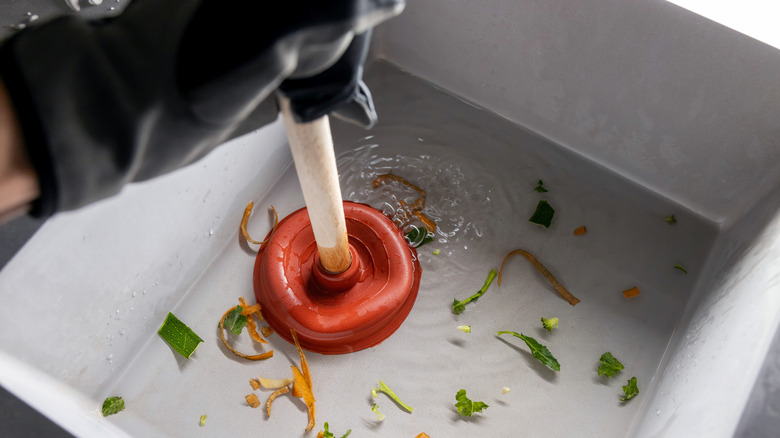
You know the ritual. You notice one day your sink is draining a little more slowly and you ignore it. Then, it's a lot more slowly, and finally, the drain is completely clogged. You're likely to reach for Drano, among the best-known brands of chemical-based drain cleaners. It's effective at clearing clogged drains, but it can easily do more harm than good. You have many safe alternatives, however, to unclog dirt in drains and pipes, one of which you can make yourself with simple household ingredients such as baking soda and vinegar.
Drano's two most potent ingredients are lye (sodium hydroxide) and bleach (sodium hypochlorite). Together, they break down organic matter (all the hair, dirt, food, soap, and other stuff you've washed down the drain), but can also be corrosive of pipes. S.C. Johnson, the maker of Drano, claims the product is "safe on all pipes," as it contains a special ingredient to prevent pipe corrosion: sodium silicate. But tests of sodium silicate have found its use less than fully effective and of short duration in preventing corrosion. Corroded pipes can leak and even break, leaving you with an even bigger plumbing problem than you started with.
A broken pipe is only one of the concerns with using Drano. The Environmental Working Group has given Drano Liquid Drain Cleaner an F grade, noting that bleach and lye can cause severe skin burns, eye damage, respiratory damage, and nervous system effects. Sodium hydroxide also creates a very toxic environment for aquatic creatures and is used to kill invasive marine species and organisms in ballast water on ships. You can do better than washing Drano into your septic system, sewers, and local water supply.
Safer alternatives to unclogging your drain
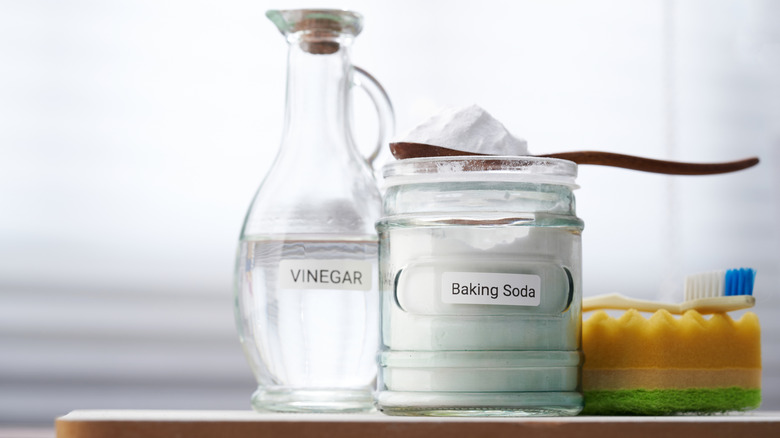
You probably don't even need to go to your local hardware store to create your own drain cleaner. You can use the time-tested method of cleaning a drain with baking soda and vinegar. Mixed together, they create carbon dioxide gas — the bubbly stuff found in carbonated drinks — which breaks up clogs. It's important to mix the two correctly, as adding too much vinegar can create a highly acidic gas which can irritate your skin or eyes. But other than adding minor amounts of carbon dioxide to our already over-carbonated atmosphere, the process is safe and creates no environmental hazards.
To unclog your drain, begin by pouring boiling water into the drain. The extra heat helps loosen the clogged particles. Pour 1 cup of baking soda into the drain. Follow that by slowly pouring 1 cup of vinegar and 1 cup of water into the drain. Cover the drain with a clean cloth or drain plug to keep the carbon dioxide in the drain. Let the mixture sit for at least 30 minutes. Remove the cloth or plug, then slowly pour more boiling water into the drain. Run the top to see if the drain is cleared. If not, you can repeat the process, or in persistent cases, contact a professional plumber. Finally, use your sink not only for your own good hygiene but for the drain's hygiene as well. You can also fix a slow-draining sink by pouring a cup of hydrogen peroxide down the drain.