

Here's Why Your Garage Is Always So Hot

The garage is one of the most versatile spaces in the home because it can be used for everything from storage to car parking or even as a workshop or gym. However, many of us find ourselves fleeing this space in the warmer months when it becomes inexplicably and uncomfortably hot. If your garage is attached to your home, excess hot air can even be transferred into the rest of the house. However, knowing the reasons why your garage is baking in the summer can help you begin to combat this issue and reclaim this useful space in the summer.
The key reason that your garage is heating up could be a lack of insulation. Having extra layers between the inside and outside of a structure isn't just for keeping warm in the winter; it also helps to keep it cool in the summer. It could be worth weighing up the pros and cons of insulating your garage, then, to help trap in cool air better. While you're checking for insulation, it is also a good idea to look for any leaks. Large gaps in between bricks or empty holes in plasterboard could be drawing hot air in from outside without you even knowing it. By plugging up those holes, you can help keep heat out. But did you know that the actual contents of your garage could also be contributing to its rising temperatures?
What's in your garage matters
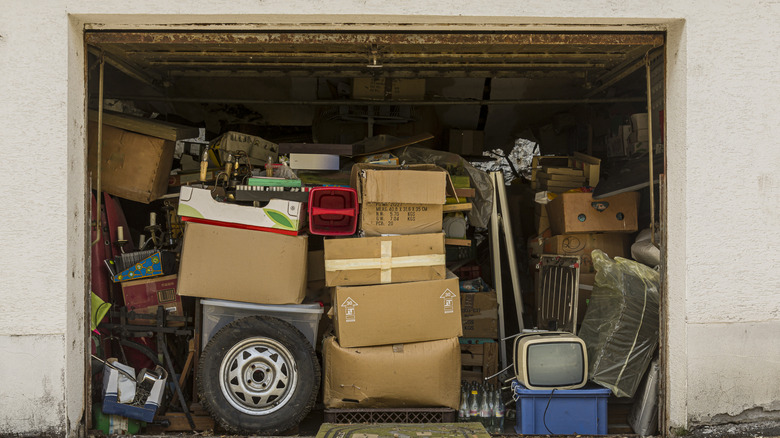
Though it may be tempting to look to the edges of your garage for the cause of boiling temperatures, the items stored inside could be contributing just as much. For example, clutter is the enemy of coolness, and a room that is overpacked can actually end up being hotter because of inhibited air flow and retained heat. To help cool it down, consider the things you can throw out from your garage for a tidier space or think about investing in some shelving to get items off the floor and improve air circulation.
Appliances are another cause of overheated garages; machines such as fridges and water boilers emit heat when in operation, so unplugging what you can or moving them to a different location can help to seriously cool down your space. Believe it or not, one possible culprit of this could actually be your car. Many people don't realize that vehicles continue to emit heat even after they are turned off, so the heat from a car that has been running for a while ends up getting released into the garage as it cools down. To avoid this happening, it is a good idea to park your car outside to allow it to cool off before moving it inside. Finally, there is one item that you may want to actually add to your garage to help manage heat, and no, it isn't an AC unit. A simple dehumidifier may help keep your garage more comfortable because a high level of humidity can often make intense heat feel even worse.
What's outside your garage matters, too
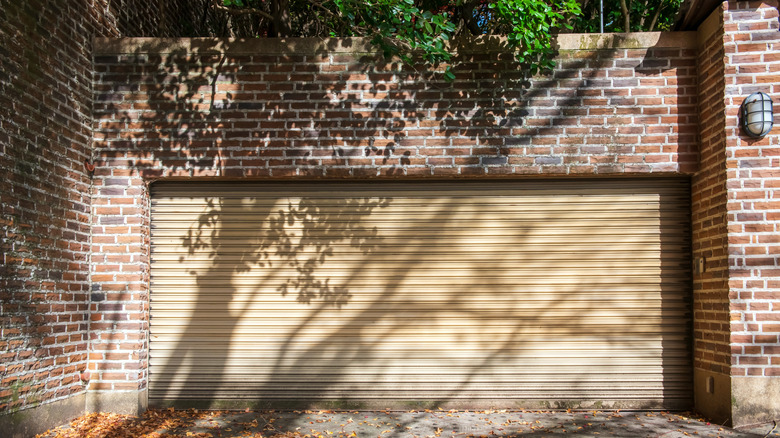
The outside of your garage actually has the power to vary the internal heat levels, too. A garage that is in full sunlight all day is likely to become overheated, and it can be difficult to cool it down, even after the sun has set. If yours is exposed to the elements and is therefore climbing in temperature, you may want to consider adding some shade by planting a tree nearby. Alternatively, installing an awning or some blinds over any windows can help mitigate the amount of hot sun that is beating down on the outside and causing excessive heat.
The color of your garage can matter, as well. Dark colors like black or grey absorb more light and therefore retain more heat, while lighter colors like white reflect light and tend to stay cooler as a result. So, if your garage is overheating in the summer, a simple paint job can actually make a huge difference.