

Say Goodbye To Your Old Shower Curtain: There's A Cute, More Unique Way To Add Privacy
We may receive a commission on purchases made from links.
Shower curtains can be one of the most unglamorous details of the house, yet one of the most important. They keep shower water contained so you're not slipping and sliding all over the bathroom. And when your goal is privacy, they're simply more practical than transparent glass shower doors. Traditional shower curtains are often bland and minimal, ranging from botanical patterns to muted colors. But just because this item is functional doesn't mean it has to be boring. Luckily, social media users have found an inexpensive way to upgrade bathroom privacy: turning a duvet cover into a whimsical shower curtain.
Understandably, the bathroom might be the last place you'd imagine your bedding, but after this project, you'll wonder why you didn't think of it sooner. This DIY will potentially require a bit of sewing know-how. There are multiple ways to hang this curtain, so depending on your preference, you'll need a duvet cover of your choice, scissors, a sewing machine, needle and thread or a grommet kit, and shower curtain rings or hooks. You'll also need a plastic shower liner and curtain rod if you don't have shower doors.
This shower curtain alternative is the perfect solution for renters. You won't have to worry about hauling out shower doors or making a huge investment in a renovation project. It can be done in under two hours and swapped out at low cost. If you're looking for a unique shower curtain idea that makes a bold statement, a duvet cover may be the way to go.
Pulling the curtain on boring bathroom decor
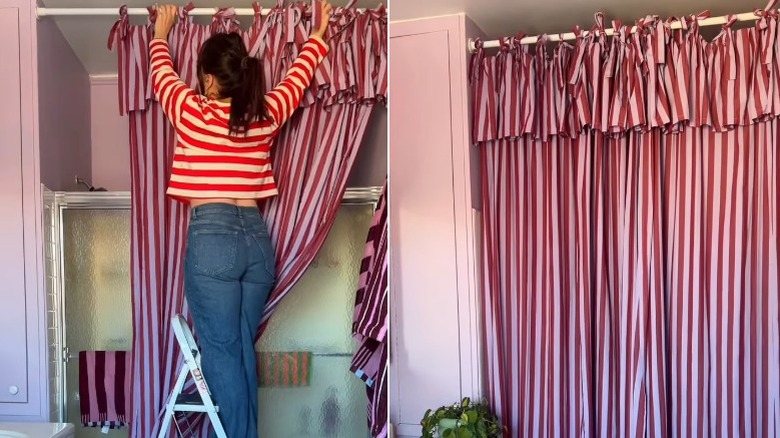
A standard shower curtain is 72 inches long, but look for a duvet that will work for your shower's specific size. For example, a tall shower or a ceiling-high rod will require more length, so a king-sized one might work best, while a twin-sized one may be better for compact stalls. Then, assess your shower type before committing to a hanging method. If you have shower doors already, you'll need an extra shower rod. If you have a tub style, you'll need to include a plastic shower liner to keep moisture away from the fabric.
Next, prepare the cover for hanging. One option is to fold over the top four or five inches of fabric and sew along the seam to slip the rod inside, as you would a regular window curtain. The second option is to cut holes along the top edge to attach grommets to hang it. A set like Hapden's Grommet Tool Kit is convenient for this step because it acts as a heavy-duty hole punch to attach a few different grommet sizes.
If you choose the second hanging method, you'll also need curtain hooks or rings. Decorative ones, like Titanker Shower Curtain Hooks, can play off the duvet's pattern and come in a variety of colors to match your vibe. Or, instead of traditional curtain rings, you could also use any extra fabric to create tie closures that pull through the grommets and hang on the rod.
Soaking in the whimsical beauty of this DIY
Because this project is meant to add character to the bathroom, have fun with sourcing your duvet cover! Secondhand stores often sell mismatched bedding, so you can sift through vintage styles, quirky prints, and bold colors. Plus, you can end up with a shower curtain that's both unique and affordable. Etsy is also a great place to source unusual or maximalist sheets.
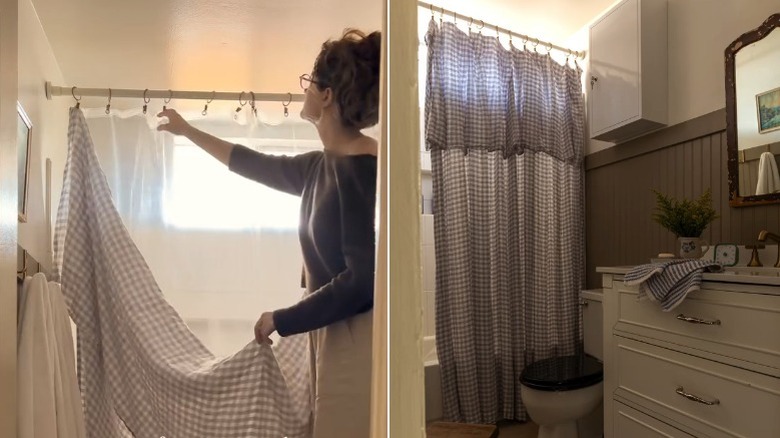
You could also use other types of bedding for this DIY. Instagrammer Chloe.rey actually shopped her own linen closet for a top sheet she just didn't reach for anymore. It was extra long, so instead of busting out the scissors, she folded the sheet over enough to not touch the floor, and hung it with cafe clips, such as these Metal Curtain Rings with Clips. As a result, she had a cottagecore shower curtain complete with a top ruffle, no tools required.
Just remember to wash any fabric curtains on a regular basis and let them dry thoroughly. You'll also want to ensure the bathroom has proper ventilation to prevent mold growth. If you can find bed linens made from polyester, it's a good option because it's a bit more water-repellent than cotton.