

Is It Safe To Use A Showerhead You Haven't Cleaned In Years?
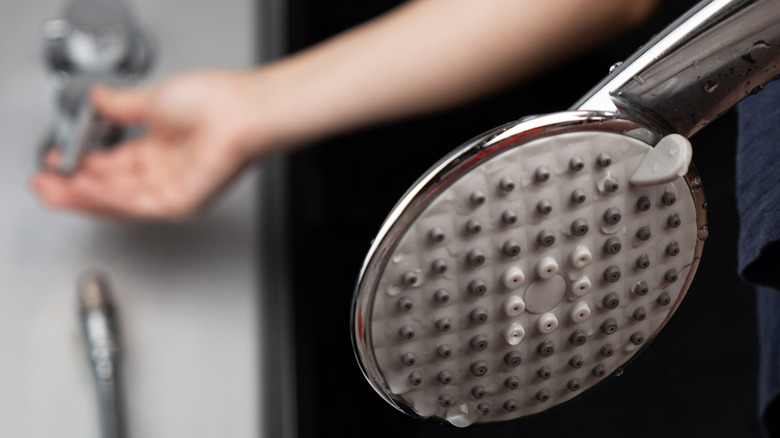
If you follow a regular cleaning schedule, it's a good rule of thumb to clean your entire bathroom at least once a week. This includes cleaning your shower, and the all-important showerhead. Yet wiping the outside of this important bathroom fixture isn't the same as deep cleaning to tackle the interior, too. If your own showerhead hasn't been cleaned from the inside out in years, it's best to err on the side of caution and avoid using it to avoid exposure to potentially dangerous pathogens.
Chances are that many people use their showers without giving a second thought to the safety of the water coming out of the showerhead. While the actual tap water may be safe in your home, your showerhead can unfortunately turn into a breeding ground for harmful bacteria. As the BBC explains, this situation unfolds when bacterial biofilms are formed from a combination of microbes, warm water, and minerals. These can then become dislodged when you turn on the shower, when you might unknowingly be exposed through both contaminated water aerosol and spray.
While most of the bacteria are harmless, there's a real risk that more sinister pathogens could be lurking in showerheads. Just some of these include Legionella bacteria linked with both Legionnaires disease and Pontiac fever, Malassezia fungi that may contribute to skin, scalp, and eye diseases, and even Mycobacterium species linked with digestive diseases. These can all be dangerous to anyone, but especially those who have chronic illnesses or are immunocompromised.
The risk of catching a serious illness from a frequently used showerhead is low in healthy adults. Nevertheless, to help reduce the risk of illness, it's recommended that you deep clean your own showerhead at least once to every few months.
Cleaning tips for safer showerheads (and when to replace them)
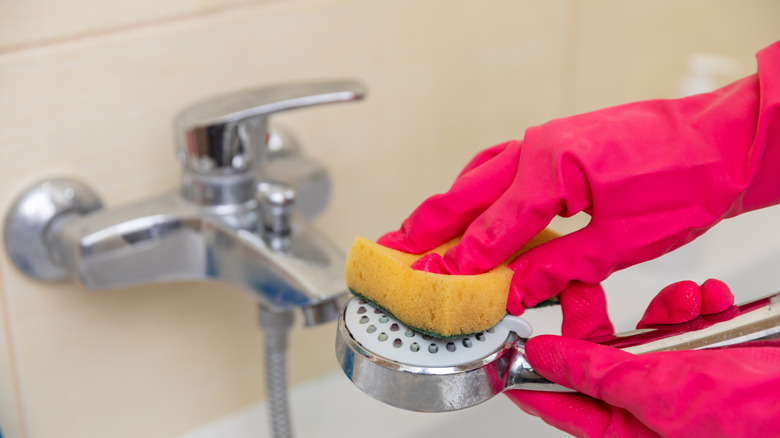
If your showerhead hasn't been cleaned in months (or even years), you might consider avoiding it until you've tackled this important task. You can easily clean a showerhead with one ingredient you likely have: distilled white vinegar. If your showerhead is removable, this process involves placing the entire fixture into a bowl of equal parts water and vinegar. If you cannot remove the showerhead, it's possible to place it in a bag filled with vinegar by tying it to the fixture with a rubber band. Depending on the amount of buildup, cleaning time can take several minutes or hours, per the New York Times. Rinse the showerhead in clean water and scrub any remaining spots with a clean cloth or sponge before replacement. Not only will regularly deep cleaning your showerhead help to reduce the number of harmful microorganisms, but doing so can also increase the efficiency of the fixture by improving water flow.
As another helpful rule of thumb, the BBC also notes you might reduce your exposure to showerhead pathogens by allowing the water to run for at least 60 to 90 seconds before stepping in the shower. The process may help flush out some of the microbes, especially during times when the showerhead has gone unused for extended periods of time. Finally, if your showerhead is beyond questionable due to possible years of neglect from a previous homeowner, for example, you might consider replacing it altogether.