

The Space-Saving Alternative To Baseboard Heaters That Gives You Better Warmth Control
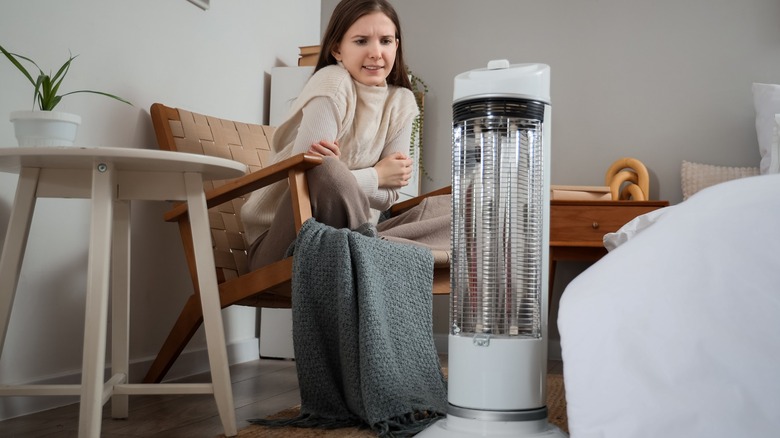
If your heating system doesn't pump out enough BTUs to keep you warm in the winter, you can install auxiliary electric heaters in rooms that get especially cold, and baseboard heaters are a popular option. In fact, some houses rely exclusively on them, but they create problems. They rely on air circulation, so you can't put furniture in front of them, and because they can get very hot, you have to keep kids and pets away. Moreover, you can't let curtains hang down over them. Built-in wall heaters are an alternative that will keep you warm and create more usable floor space.
Many electric wall heaters work by convection in much the same way as electric baseboard heaters. A resistive coil heats the air, and because warm air rises, it comes out from the top of the unit while creating an updraft that sucks cold air in through the bottom. Unlike baseboard heaters, however, wall heaters can have a fan that blows the warm air into the room, greatly reducing the amount of time it takes for the room to warm up. Models with fans typically have a control that allows you to adjust the fan speed, and thus the temperature.
A wall heater increases available floor space by occupying only a small part of the wall instead of stretching for several feet like a baseboard heater. It uses the same amount of electricity — typically 1,500 watts —- although some have eco settings that draw less power.
Pros and cons of electric wall heaters
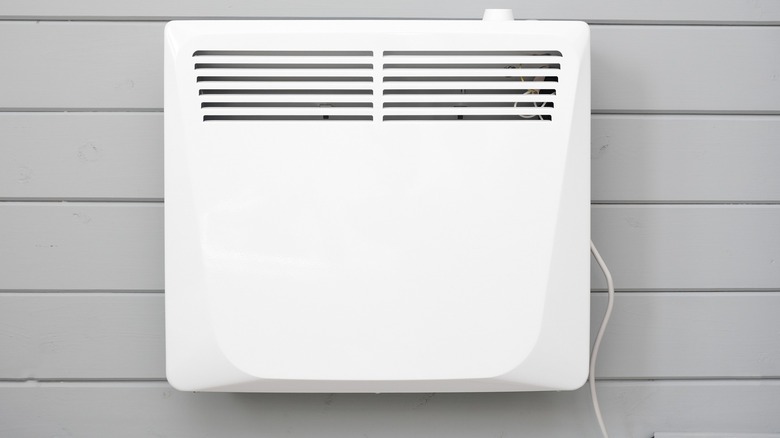
Wall heaters come in several formats. Some hang directly on the wall and plug into an outlet, which makes installation very simple, and some are designed to be recessed and hardwired to the home's electrical system. Either way, the coils that produce heat are typically enclosed in an insulated housing, making it unlikely for anyone to come in contact with them. You still can't put furniture in front of one, because that blocks air flow, but it's okay to put it to the side, as long as you allow about three feet for clearance.
Instead of resistive coils and a fan, some wall heaters produce infrared radiation from a bulb or heating element, and some produce a combination of convection and radiant heat. Micathermic wall heaters (or wall panels) feature a mica cover that emits infrared radiation when heated by an internal coil, while staying cool and in some instances safe to touch. Infrared radiation instantly warms any solid body it touches, and convective heat circulation ensures the air also gets warm. Micathermic heaters don't have a fan, so they don't make much noise or reduce humidity in the air.
Compared to baseboard heaters, the heat that comes from wall heaters is more focused, and you may need more than one to heat a large room. Because they have moving parts, fan-assisted wall heaters also tend to have a shorter lifetimes than baseboard heaters.