

The Window Upgrade That Could Save You $350 A Year On Heating And Cooling
Your home's windows let the light shine in. Unfortunately, in the winter, they often let the heat seep out. Replacing older windows, such as those with a single pane of glass, is one way to increase your home's energy efficiency and lower your energy bills, but it can be expensive. The average cost to have a pro replace a single window is around $800, according to Consumer Reports.
If you don't have the budget to replace older windows with more energy efficient ones, an affordable option is available. Installing storm windows, notably those that are Energy Star certified, can help you save about 10%, or $350, on your annual heating bill, according to Energy Star. The windows are installed over your existing windows, creating a pocket of air between the storm window and the regular window. The air pocket becomes a buffer that blocks drafts and minimizes heat transfer. Storm windows can also help to reduce condensation on your windows in winter.
To earn an Energy Star certification, a storm window needs to have low emissivity, aka "low-e" glass, which has a special coating on it that improves insulation by reflecting heat either into or out from your home. You can can install interior storm windows or exterior ones. Interior storm windows may be ideal if you live in a historic home or are renting, as they don't change the look of your home's exterior.
Interior or exterior storm windows -- how to choose
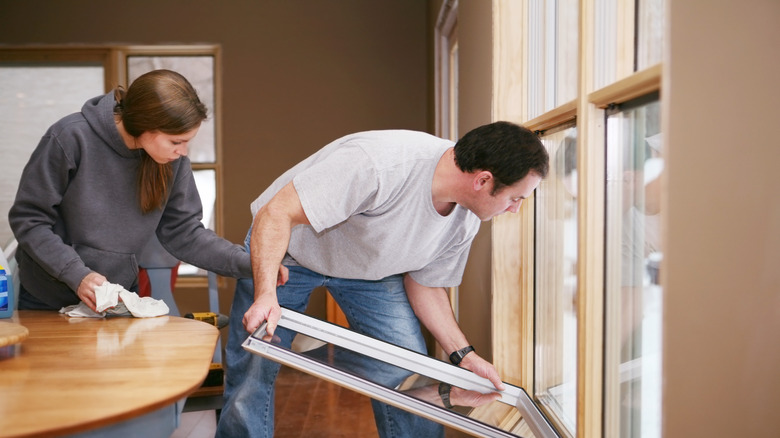
Both interior and exterior storm windows can help to improve your home's energy efficiency. Beyond that, there are distinct differences between the two. The option that may be best for your home depends on where you live, the type of house you live in, your aesthetic preferences, and whether you plan on doing the installation yourself or not.
One notable benefit of Energy Star-certified exterior storm windows over interior-mounted ones is that they offer protection against multiple types of weather, shielding your home's main windows from damage caused by wind, hail, snow, or rain. Since they are on the outside of the home, they may also offer better thermal protection compared to interior storm windows. If you live in an area that experiences frequent bad weather, such as major winter storms, and deep freezes, exterior storm windows may be the better bet.
That said, interior storm windows have a leg up on their exterior counterparts in the aesthetics department. Since they're on the inside of your home, they won't disrupt historic facades, and are often recommended to people who live in historic preservation districts. They're also easier to install and are usually a DIY project. Whether you end up installing interior or exterior Energy Star-certified storm windows, either option will help you save energy at home, and make your home a little cozier this winter.