

Trade In Subway Tile: This Elegant Art Deco Design For Your Shower Screams Luxury
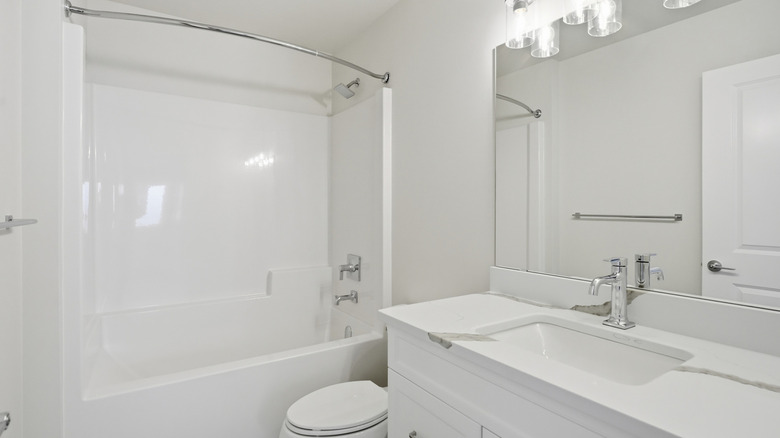
If you're looking for an easy way to upscale your bathroom without having to shell out for a full-scale renovation, replacing the tile in your shower is a great compromise. And when choosing your new tile, you might want to look to the past for inspiration. In fact, almost a century after the heyday of the Art Deco movement, 1920s-style bathroom tiles appear to be making a comeback. A TikToker couple, brownstoneboys, took to their socials to showcase their stunning design, which features a vibrant blue tile that would look right at home in a Parisian café. The luxurious finished product is far more striking than a basic subway tile and makes the perfect upgrade for a shower.
The Art Deco style gained international recognition with the 1925 Exposition Internationale des Arts Décoratifs et Industriels Modernes in Paris. Synonymous with straight lines and symmetry, the style lent itself well to materials like metal and glass and was particularly compatible with modern machine-age production.
Art Deco, as it came to be known, rose to prominence by the late 1920s and into the 1930s and became particularly popular for bathrooms, which were undergoing modern transformations during these decades. Colored fixtures arrived in the 1920s, with the Universal Sanitary Manufacturing Company leading the way. Kohler and Crane joined in 1928, and Standard's 1929 catalog offered shades such as Ming Green and Ionian Black. Ming Green bathroom fixtures were paired with peach and mauve tiles in the 1930s.
Selecting and installing your tile
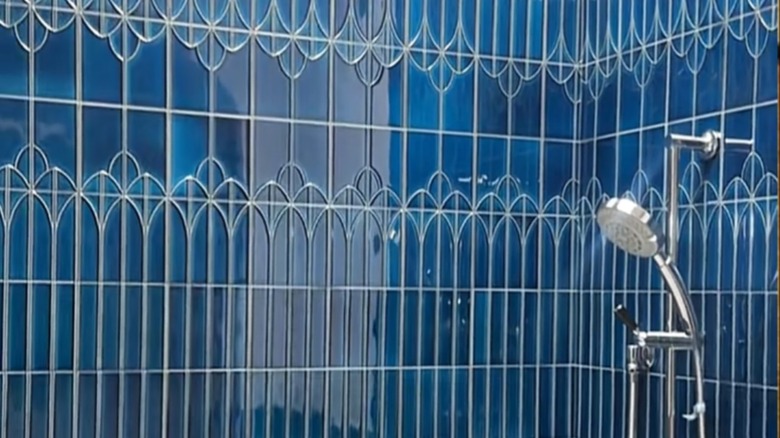
To give your shower an Art Deco makeover, you'll need to start by choosing your period-appropriate tile. If the Art Nouveau tile used by the brownstoneboys appeals to you, it can be found online at Golem. The project requires three tile designs: F 139a.653, F 139b.653, and F 139c.653. However, the Golem website offers a wide variety of other tiles in the Art Deco style, so it's worth shopping around a bit to find a pattern that speaks to you. Some styles offer a more whimsical or modern take on traditional Deco patterns, while others, like the one used by the brownstoneboys, are far more traditional.
When it comes to installing your tile, the most important element is the base layer — something no one will ever see, but which will make or break the solidity of your shower tile. Start by screwing cement board to the wall studs according to the manufacturer's instructions, then cover the seams with mesh tape and fill them as directed. Next, apply a waterproofing membrane according to the product's instructions. RedGard, for example, requires two coats, with a full drying period between applications. To ensure your tile is level, use a straight board as temporary support beneath the second row without screwing through the waterproofing membrane, and apply your tile from that row up rather than starting at the floor. Then, trim the bottom row to fit afterward. Spread tile mortar with a notched trowel and press each tile into place, using spacers to ensure the lines are even. Follow the mortar manufacturer's instructions for how long to wait before grouting, then follow the grout and sealer instructions for whether and when to seal the grout. Finally, seal the corners with silicone rather than grout.
You don't have to carry the vintage look through the entire bathroom, either. Let the shower tile make the statement, and keep the surrounding finishes simple.