

Skip Traditional Rods: The Adjustable, No-Drill Alternative For Hanging Curtains

We may receive a commission on purchases made from links.
When it comes to decorative touches that make a room feel finished, very few things have the same visual impact as elegant window treatments like drapes. Their flowing silhouettes add softness, texture, privacy, color, and sometimes pattern, all of which play a huge role in creating a layered, dynamic, functional interior. However, not everyone has the luxury of being able to drill for curtain rods to hang drapery, whether it's because they're renters, don't have access to tools, or don't want to risk bursting a pipe in the wall. The good news is that even though traditional rods aren't an option, there's a landlord-approved, no-drill alternative for damage-free drapery hanging.
Much like the same method as a shower curtain, a rod held up with tension can work for windows as well. While you can certainly use a small standard tension rod for inside the window frame or between side walls, there are also clever decorative adjustable tension rods– sometimes called twist and fit — designed with brackets that grip the inner window frame but offer an extension arm so the rod sits in front of the window (rather than within), such as the Zenna Home Adjustable Curtain Tension Rod for $26 on Amazon.
To achieve a look similar to a traditional curtain rods, they also extend beyond the window opening on each side by several inches and have decorative finials for a more tailored appearance. Because these curtain rods use only tension and zero tools to hang, they are renter friendly with damage-free removal. However, this type of twist-and-fit, adjustable tension rod will only work for specific window frames and drapery types, so let's dive into all the details about how and where to use this unique hanging solution.
How the twist and fit curtain rods differ from traditional tension rods
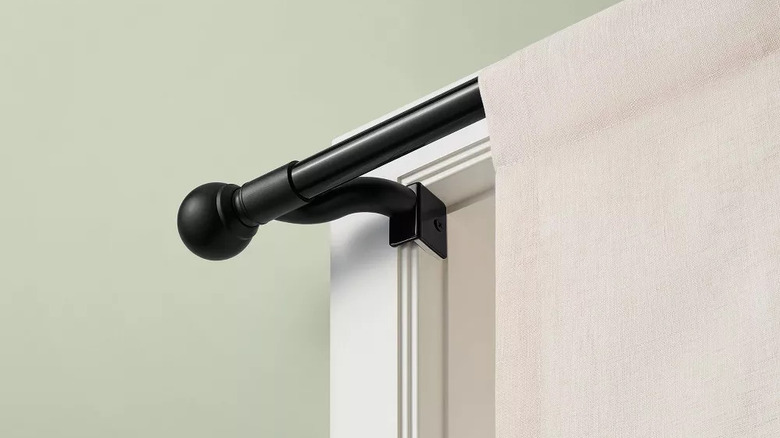
This twist-and-fit extension arm tension rod differs from standard tension rods in a few ways, making them best suited for different types of window setups. A standard rod, like a shower rod, must be braced between two surfaces that flank the window perpendicularly. This means the tension rod can be used to hang curtains either inset within the sides of the window frame or between two side walls of an alcove. The former is really only effective for a small cafe curtain– as most full-length drapes look out of scale when fully inset within the frame– but the latter is a nice application for a standard tension rod. However, most people won't have alcoves, so standard windows may be more compatible with twist-and-fit extension arm rods. The window frame must be flat so the rod can apply even tension. You must also have the required clearance beyond the frame for the extension and finials as specified on your particular rod.
It's important to note that this type of rod is only rated to hold lightweight curtains– such as sheers or thinner cotton drapes with rod pocket or back tab headers– especially those you plan to open and close (which adds extra force when operating). Thinner fabrics will also create a tighter stack on the side(s), which is helpful considering the rods only extend a few inches beyond the window opening and the stack will always block a portion of the window, restricting the view and natural light to a degree. The only thing that gets a little tricky with selecting panels is that the top of the window fully dictates and limits the length of drape that will fit, meaning you may need to plan for some hemming.