

Can Clorox Wipes Kill Mold?
We may receive a commission on purchases made from links.
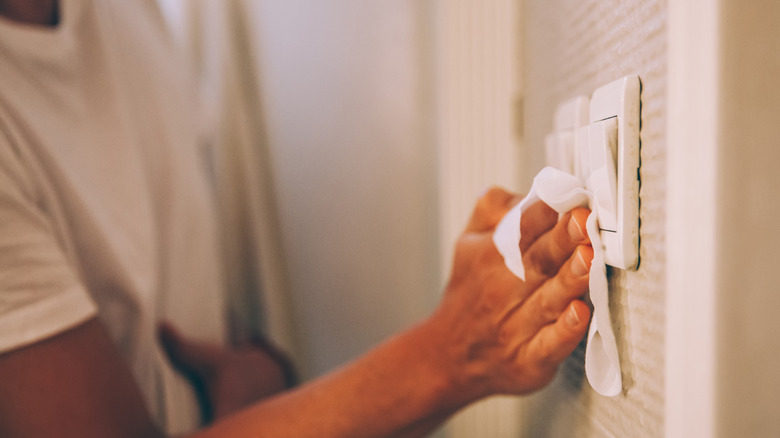
Spotting mold growth requires quick action to prevent further spread throughout your home. Doing so not only helps to reduce the possibility of extensive (and costly) damage, but mold eradication can also decrease the associated health risks. It's important to have an action plan, including the right products to kill mold. While Clorox wipes may seem like an easy and accessible option, these products are disinfectants that are not intended for killing mold beyond a surface-level sweep.
When we mention "Clorox wipes," we are speaking of traditional disinfecting wipes available at many stores. Like other brands offering similar products, these wipes are disinfectants (these are different from sanitizers), which use chemicals to kill germs on a variety of surfaces that are first cleaned with soap and water. Some of the active ingredients in Clorox Disinfecting Wipes are dimethylbenzyl ammonium chloride and isopropanol, which both have antimicrobial properties. The wipes can be useful when someone in your household is ill, or if you're trying to prevent the spread of germs, according to the Centers for Disease Control and Prevention (CDC). You can technically clean with disinfecting wipes, but these chemicals do not kill mold spores directly, states Clorox. Also, while Clorox wipes may possibly allow you to partially clean up mold on hard surfaces, these are not capable of tackling mold growth in porous surfaces. Examples include drywall, carpeting, grout, and wood.
What's more, traditional Clorox Disinfecting Wipes and other common household cleaners do not address the moisture mold needs to grow. You'll also want to address the source of excess moisture causing mold growth in your home directly and dry them completely. Leaking pipes, roofs, and windows are common sources of water and subsequent mold growth in homes.
Solutions that actually eliminate mold
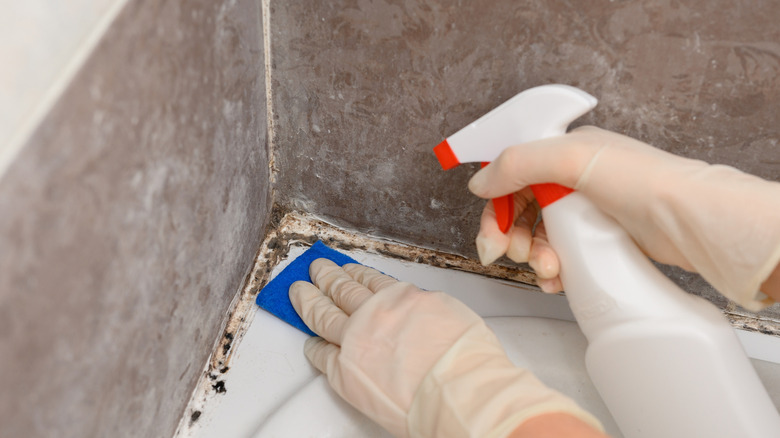
Knowing which products might effectively kill mold spores on specific surfaces is key to eradicate the problem. While traditional Clorox Disinfecting Wipes cannot kill mold on nonporous surfaces, such as glass and plastic, bleach may be an effective alternative. Such is the case with Clorox Plus Tilex Mold and Mildew Remover, for example, which is designed to kill 99.9% of both mold and mildew on non-porous surfaces. You can buy a pack of two, 16-fluid ounce spray bottles on Amazon for $20. Another option is to combine up to 1 cup of bleach per 1 gallon of water, says the CDC. Always follow all product label instructions before use. Bleach-containing products should never be combined with ammonia or other cleaners, including traditional Clorox Disinfecting Wipes. Mixing ammonia and bleach can create dangerous chloramine gasses, which may lead to injury or death. Be sure to wear gloves, a face mask, and eye protection before utilizing such products to clean mold, and be sure to allow plenty of ventilation by opening up windows.
Porous surfaces, on the other hand, cannot be eradicated of mold by cleaning solutions like bleach. Unfortunately, due to the nature of these types of surfaces, mold can quickly grow underneath them. In these situations, it is best to try to clean the mold with water and detergent and to fully dry the affected area. Depending on the extent of the damage, widespread mold growth on carpeting, unfinished wood, and drywall might require complete replacement. Finally, if you're contending with a widespread mold problem, or one that is larger than 10 square feet, the Environmental Protection Agency recommends working with a mold remediation company. This rule applies to both porous and non-porous surfaces.